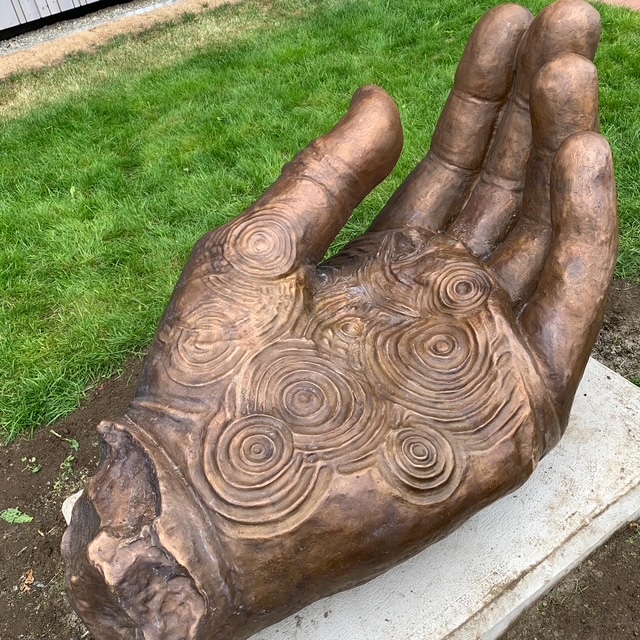
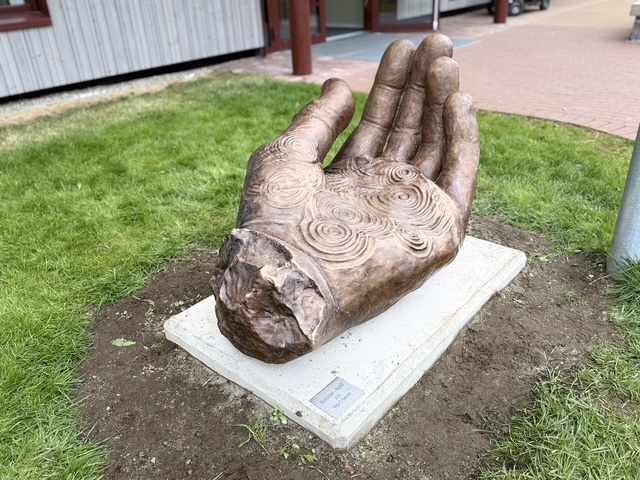
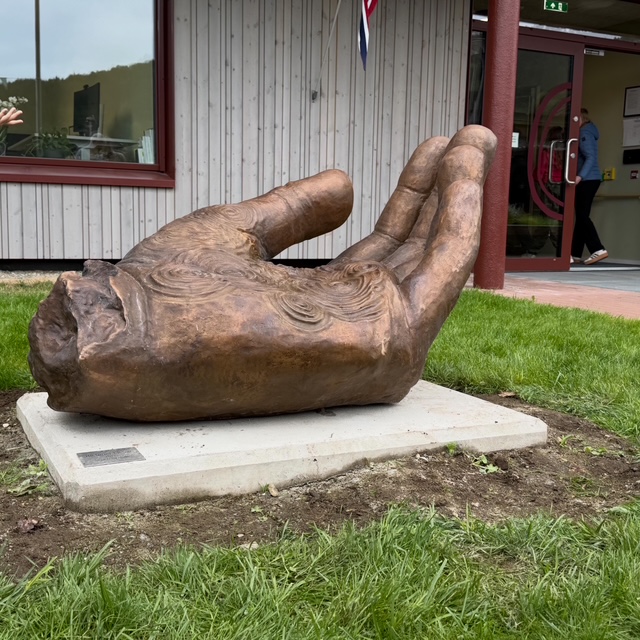
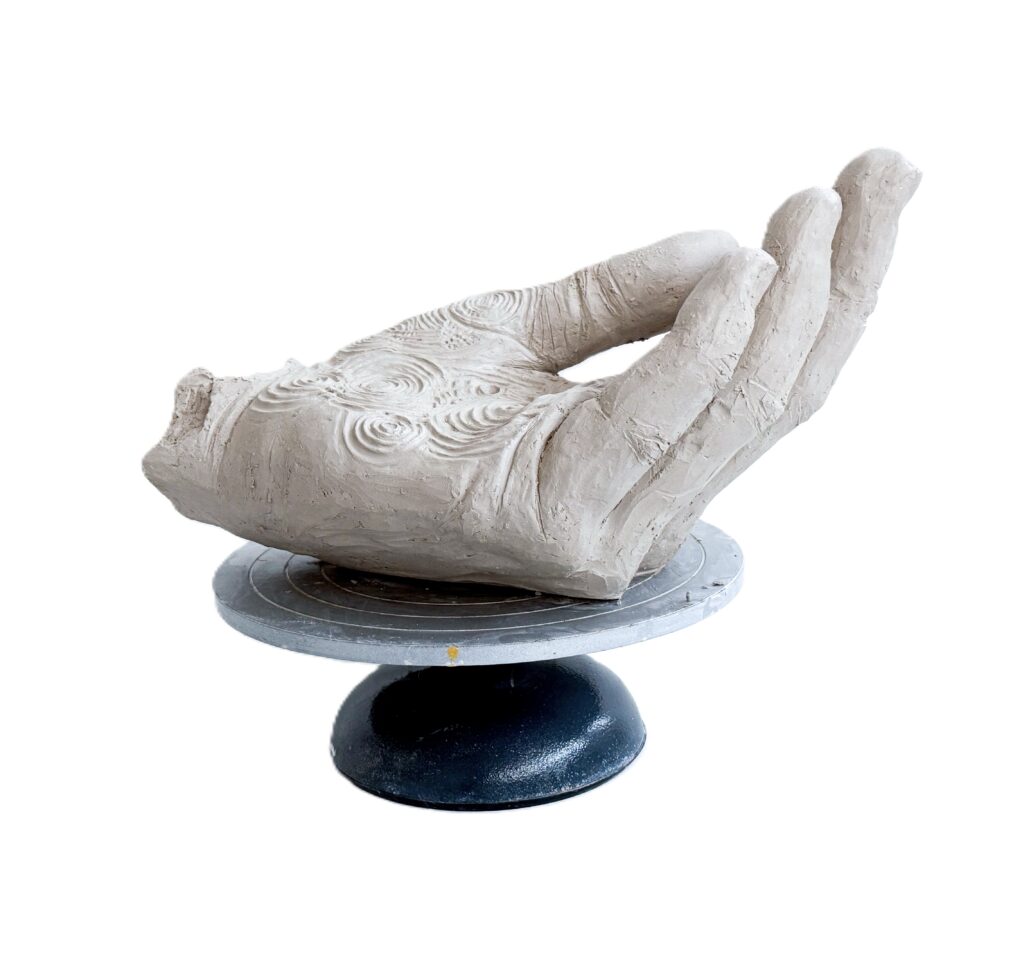
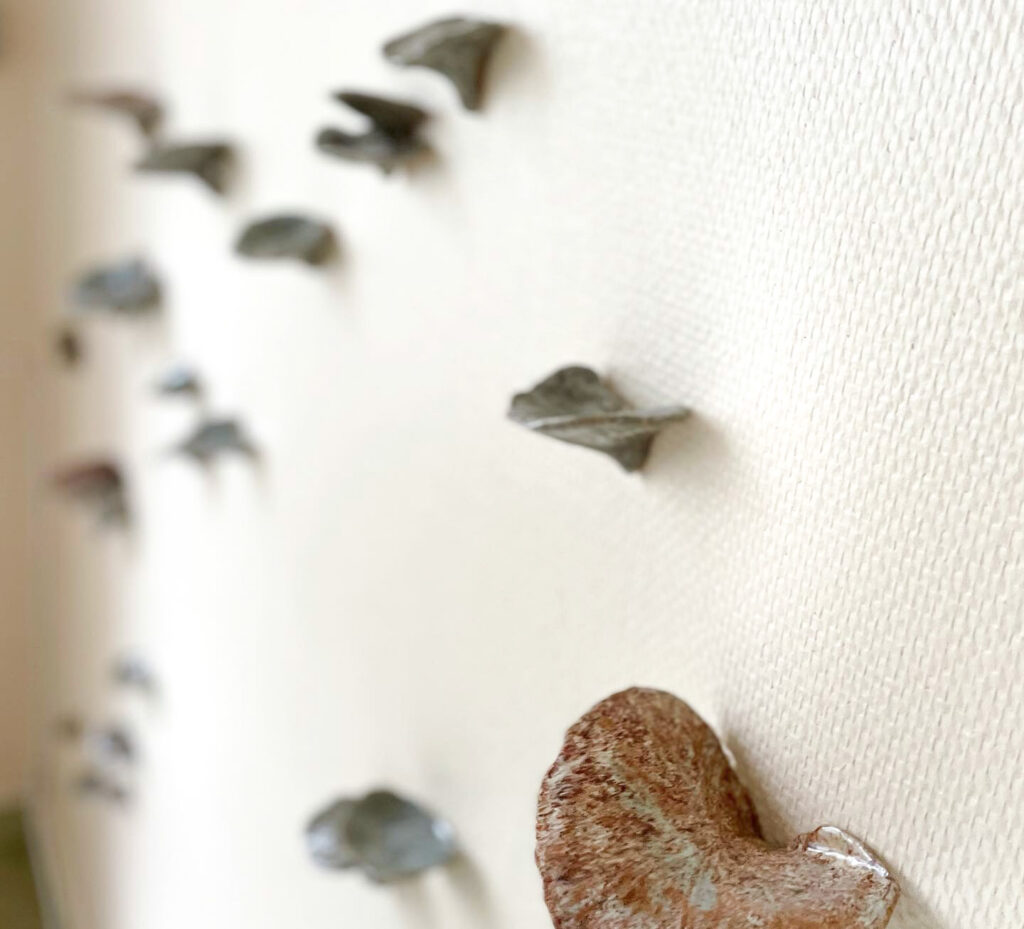
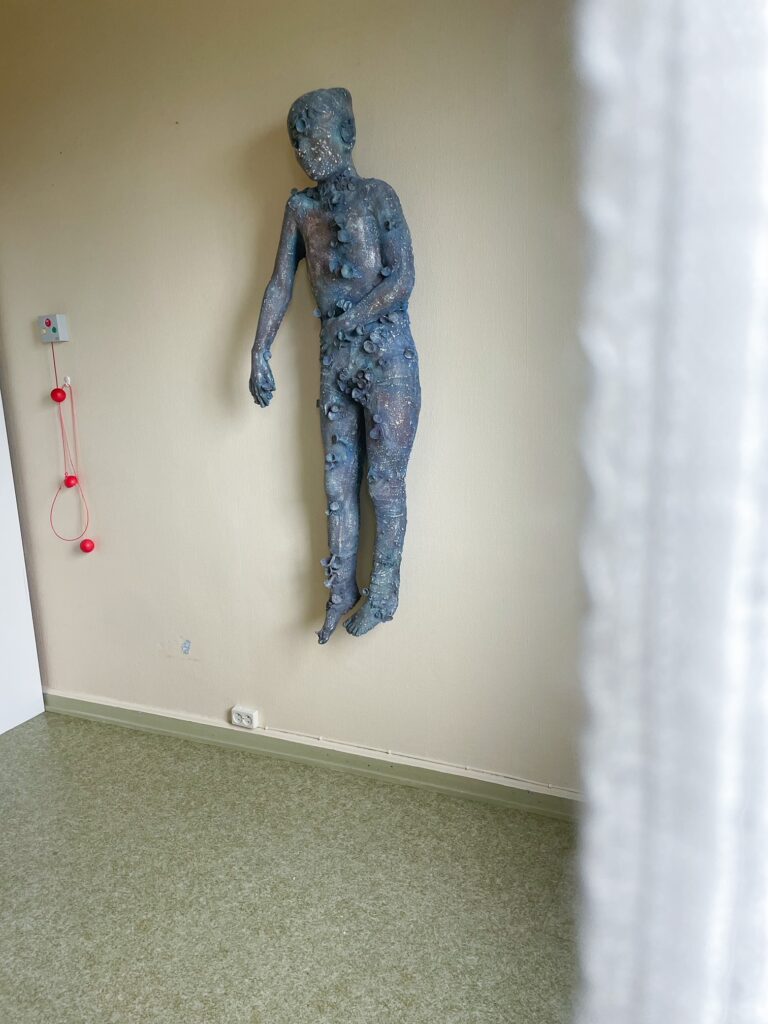
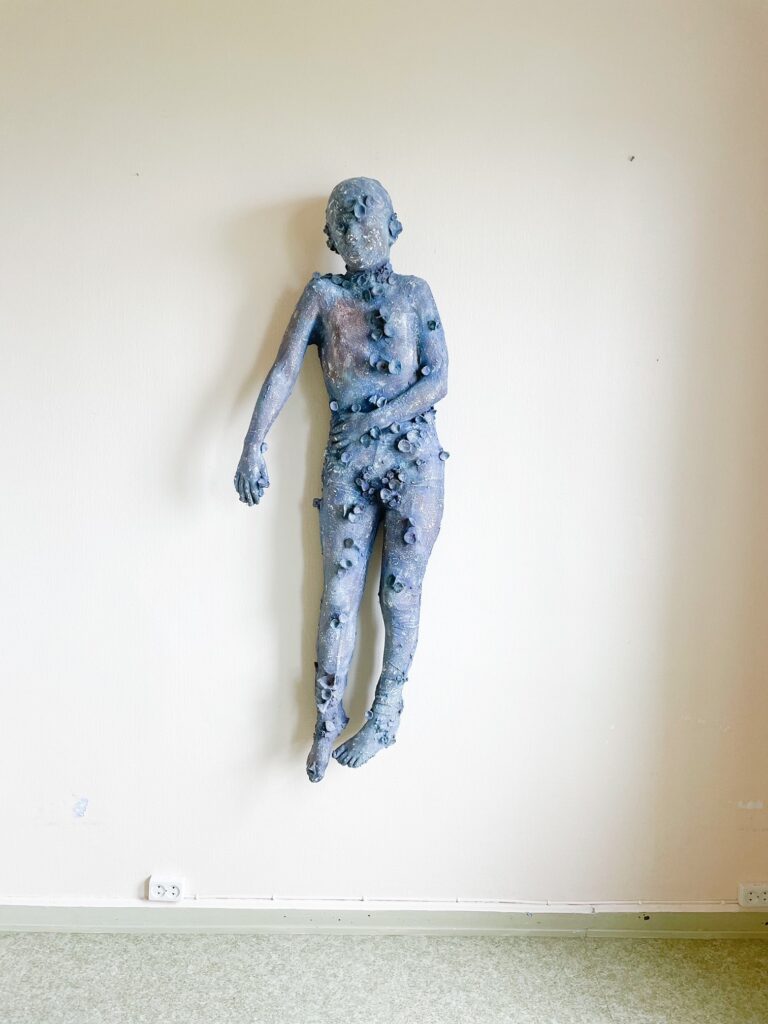
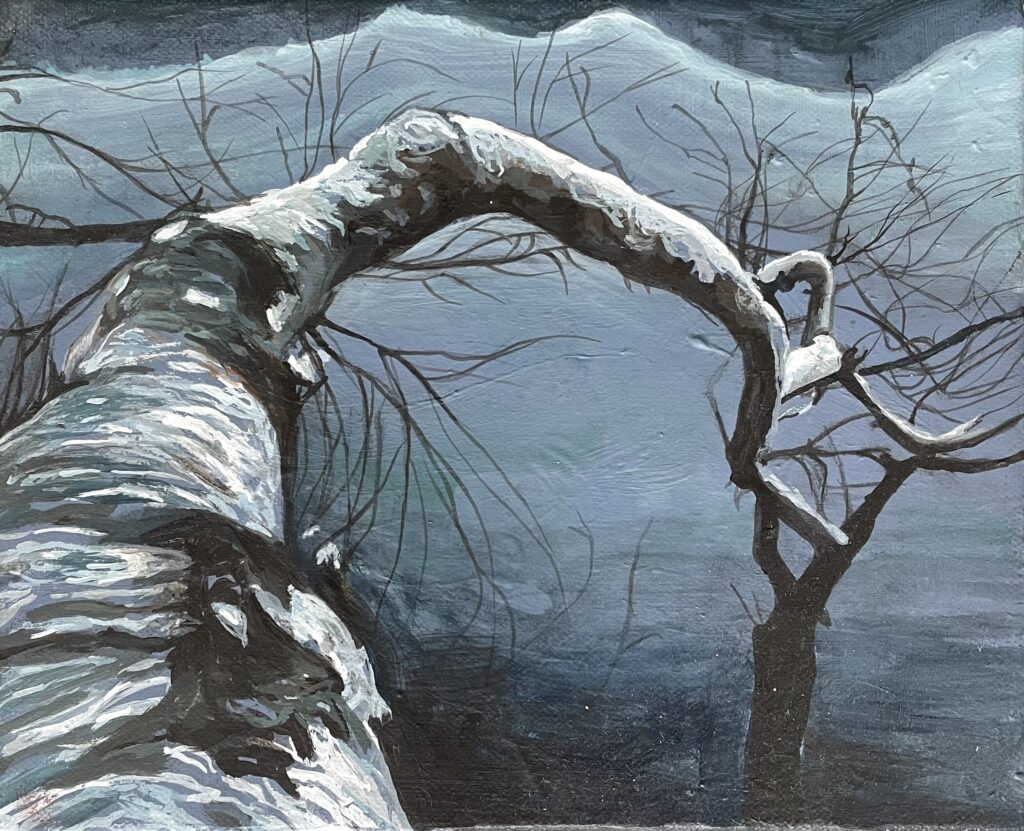
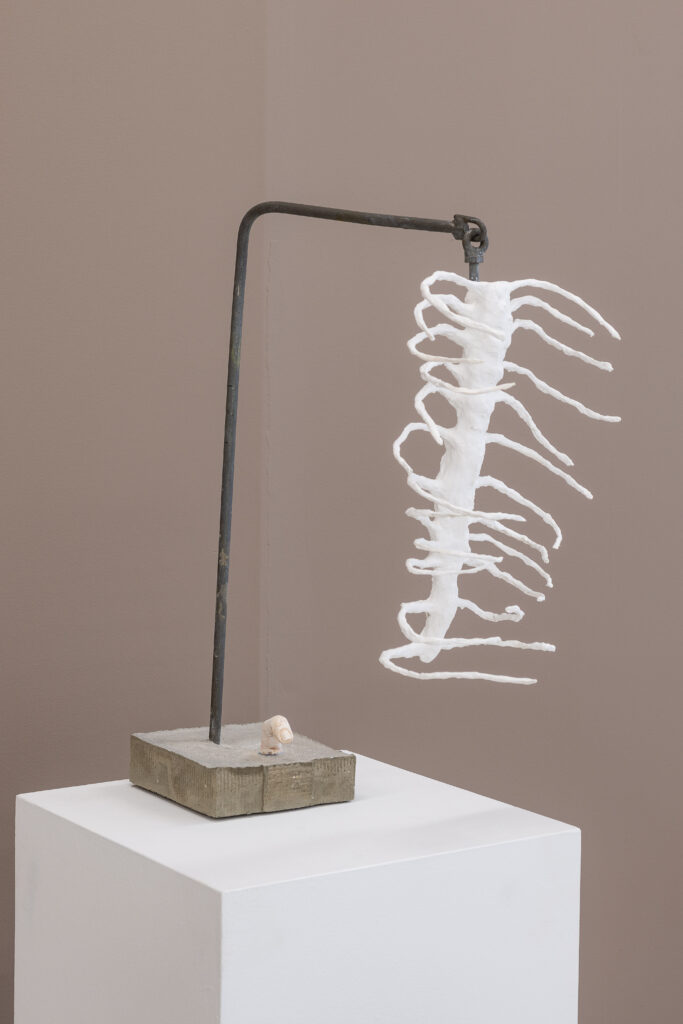
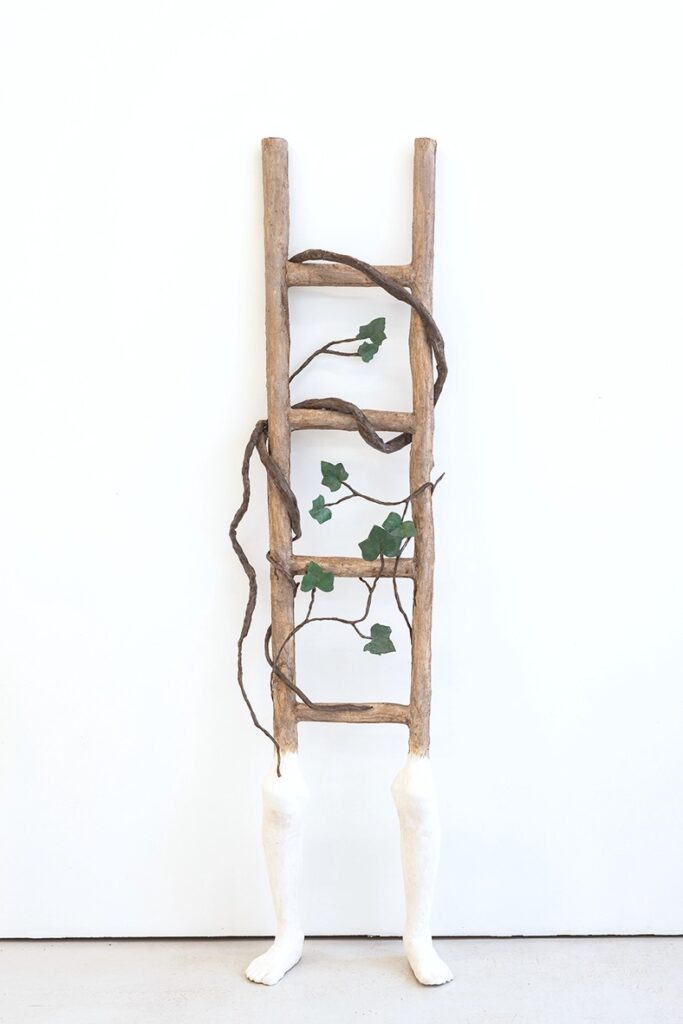
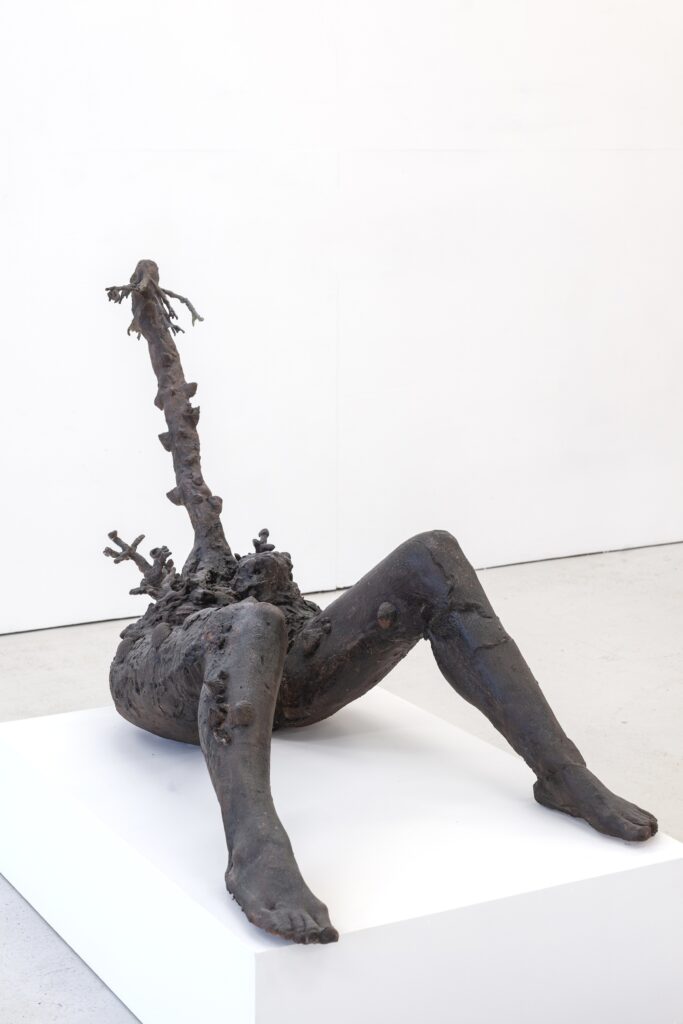
Explore sculptures, canvases and outdoor pieces that trace Inga S. Sørreide’ evolving dialogue between matter and memory.
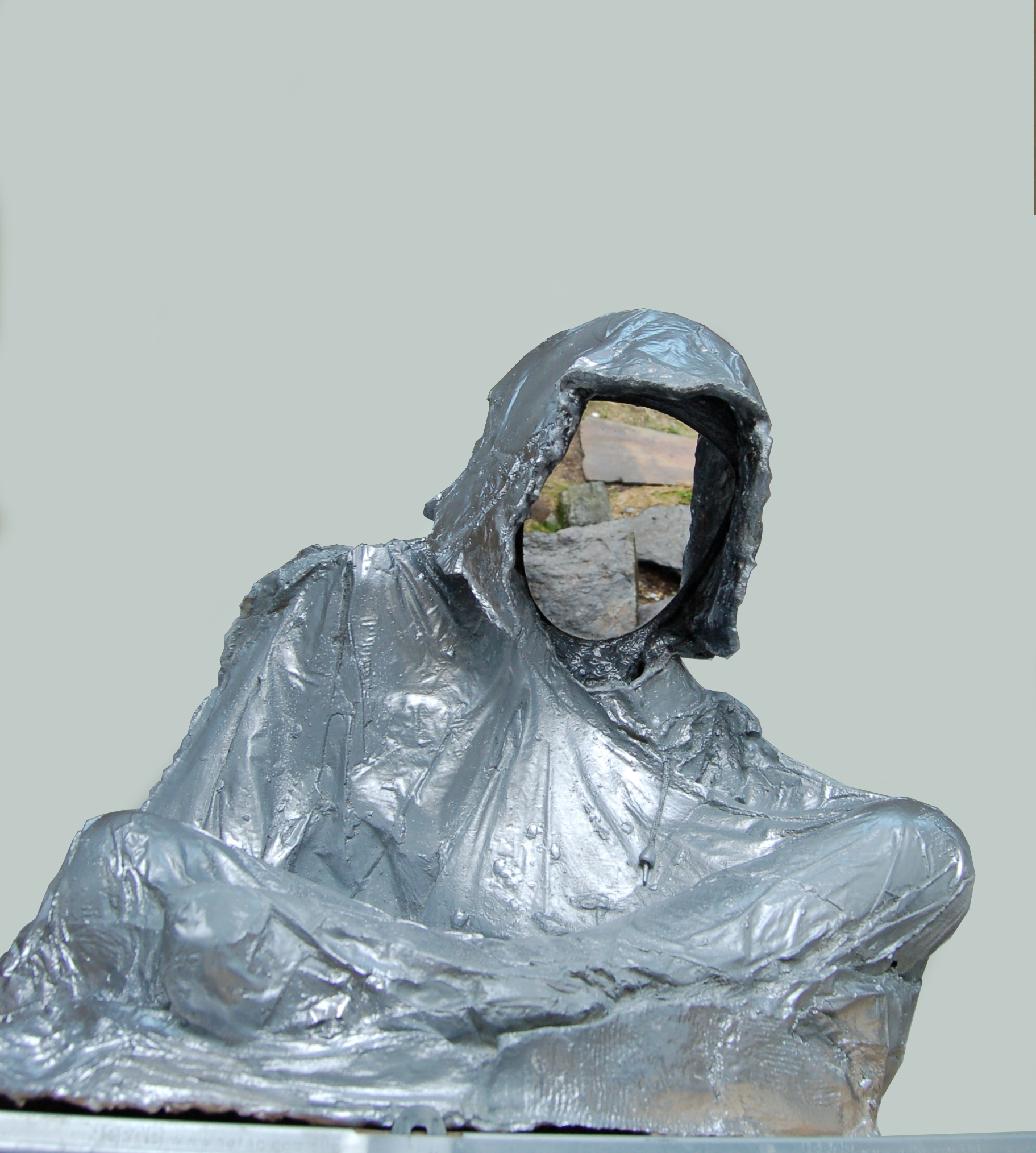
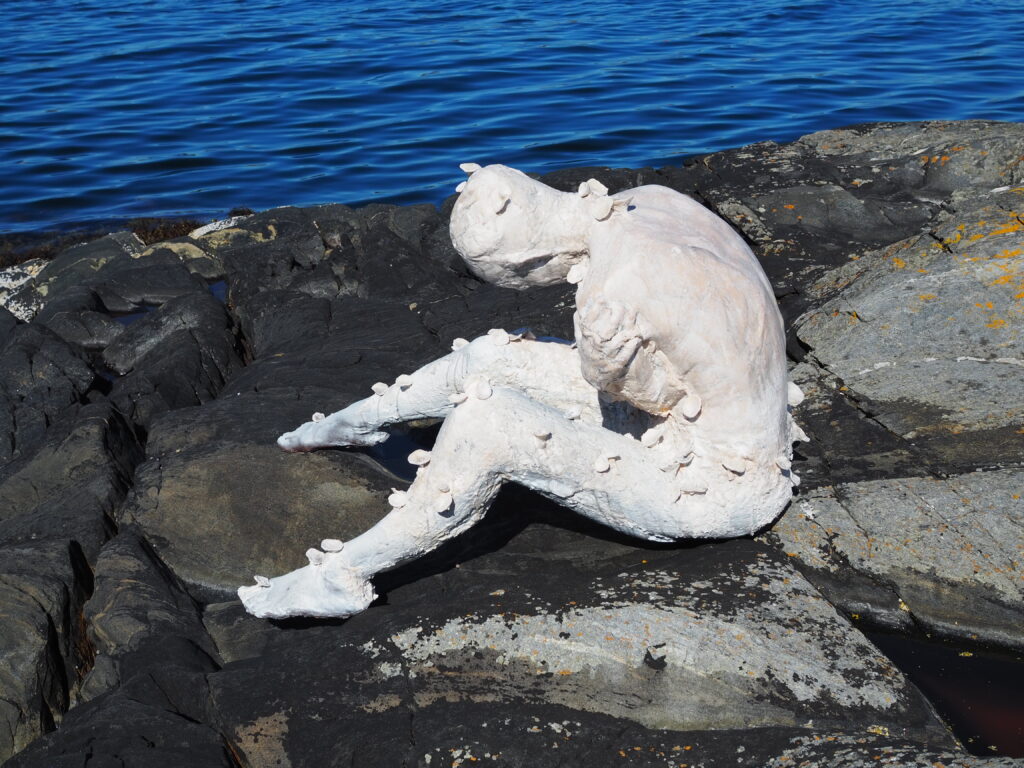
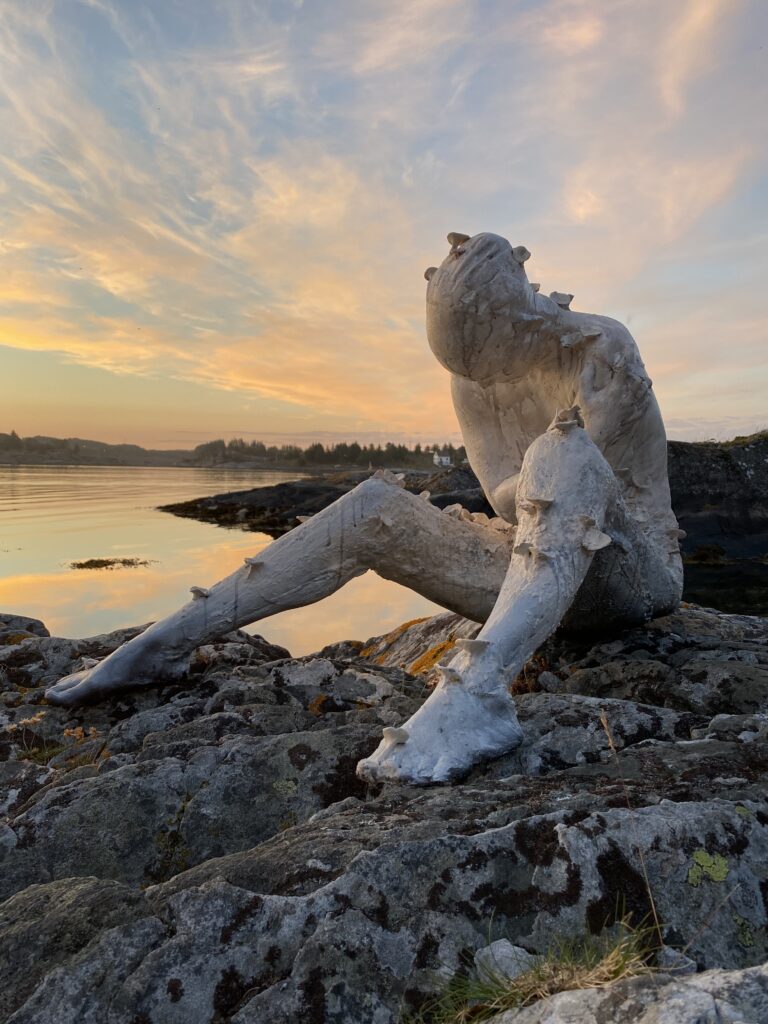
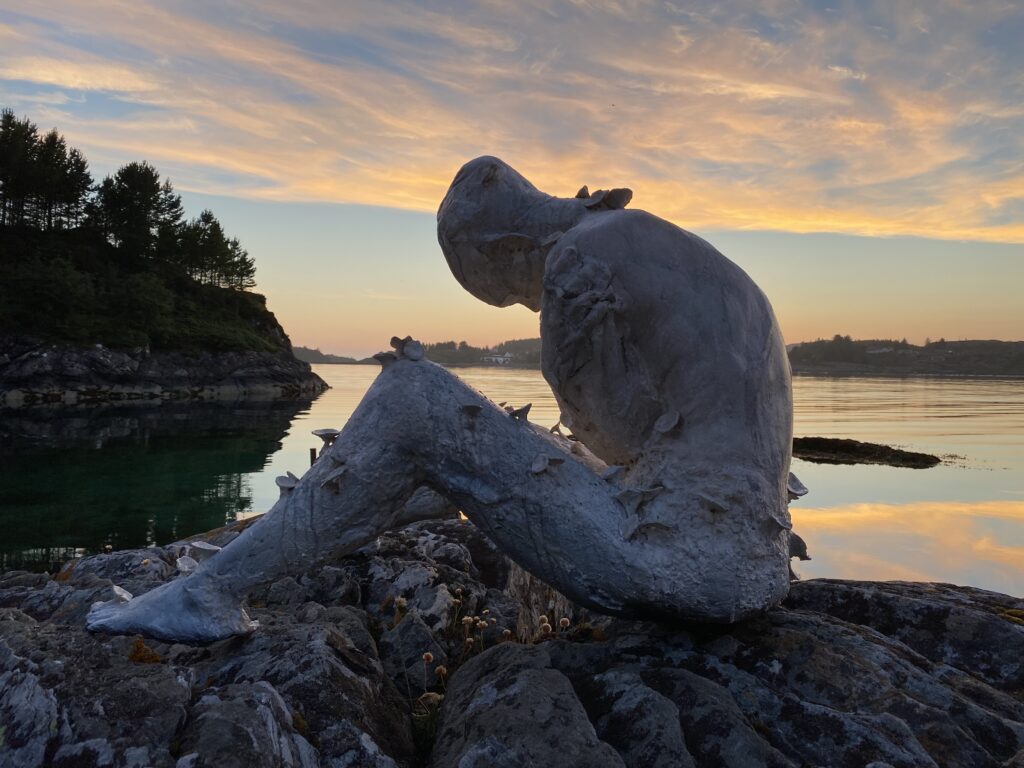
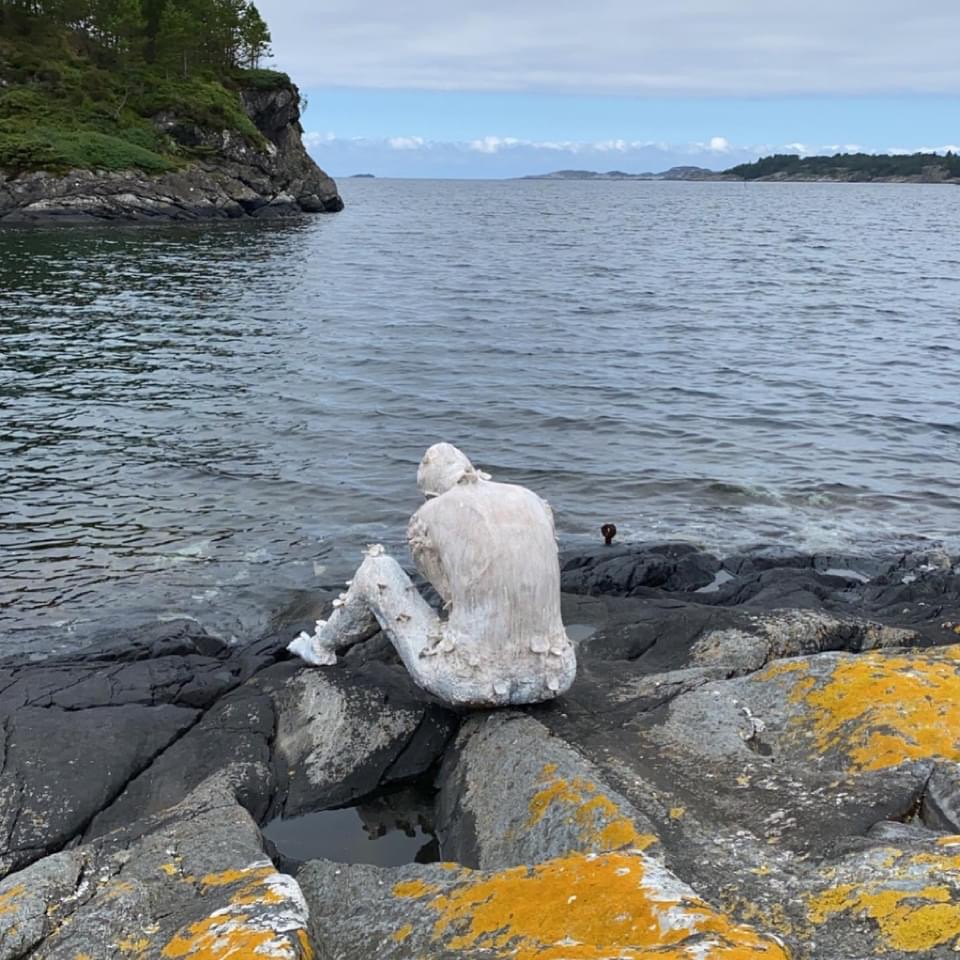
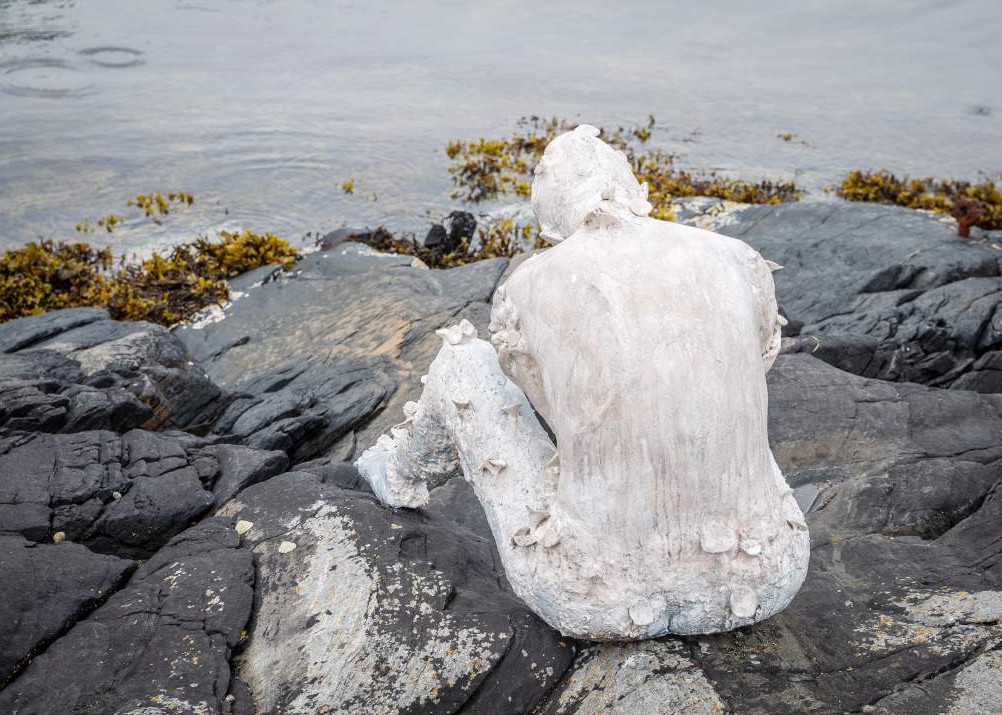
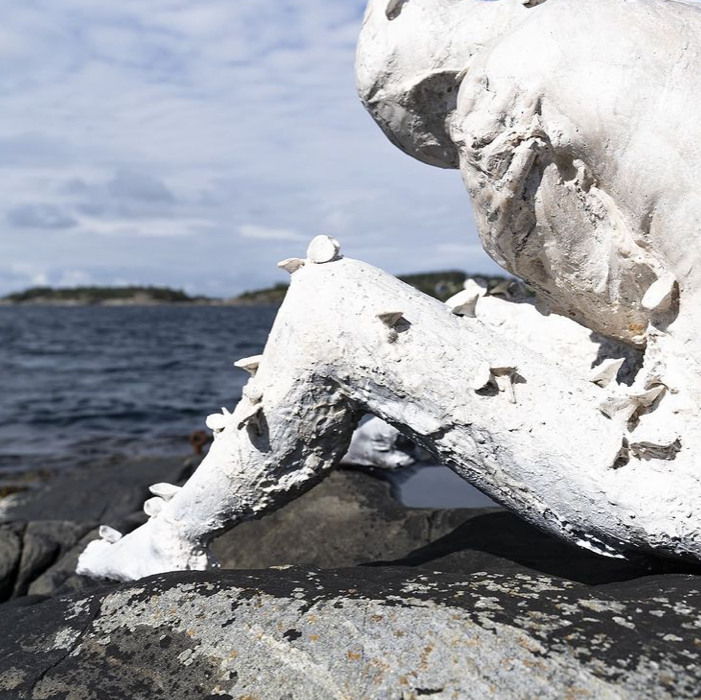
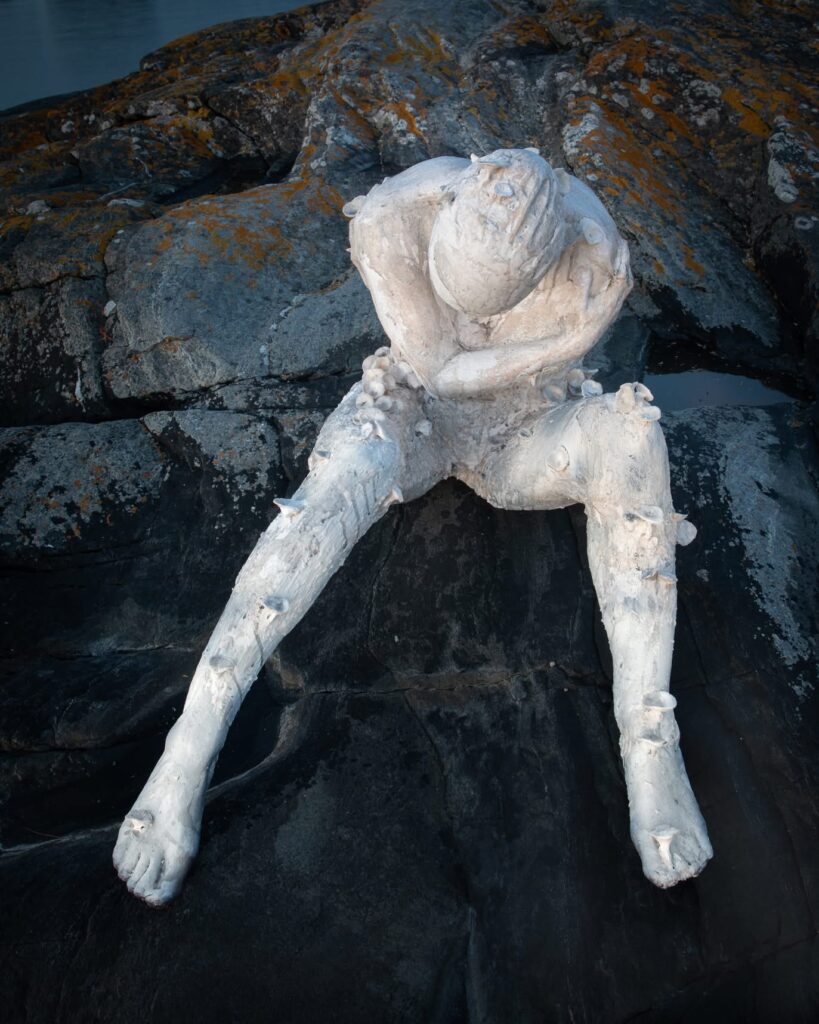
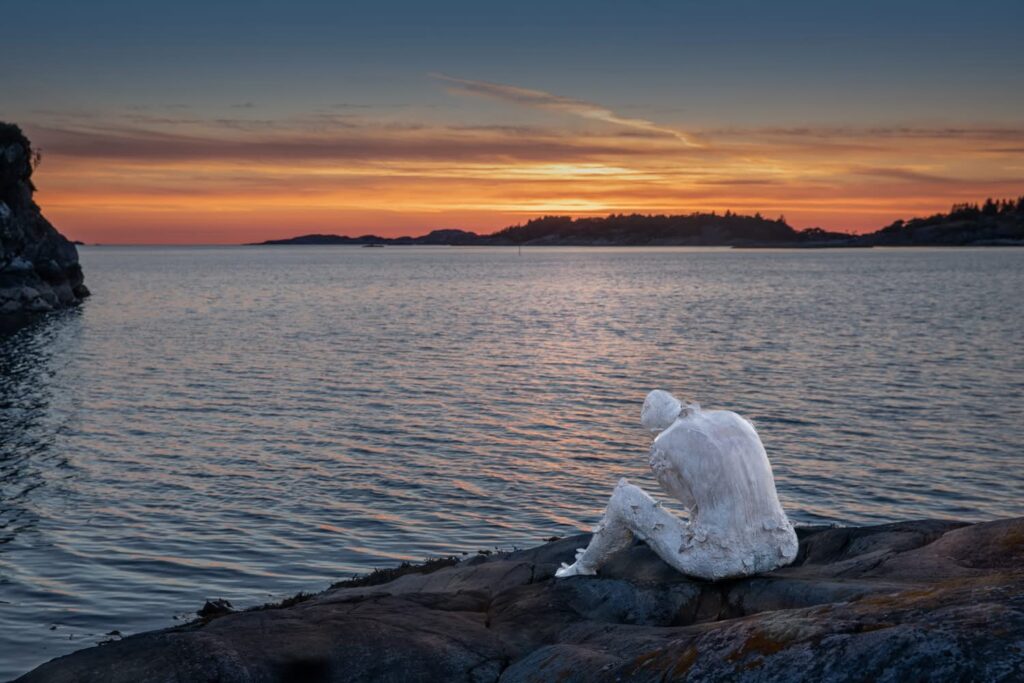
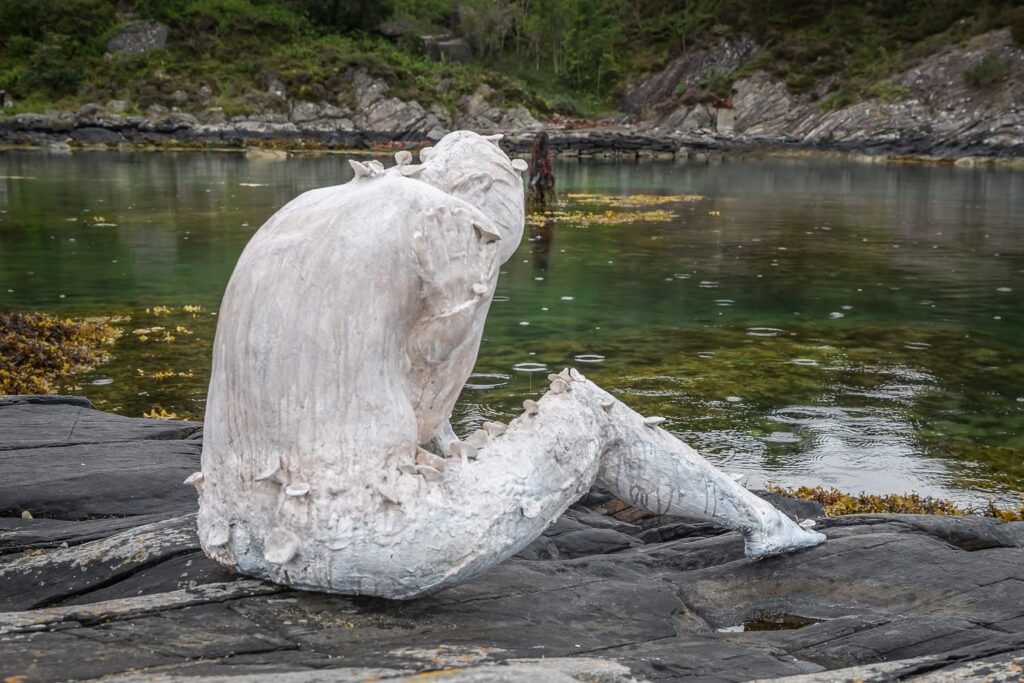
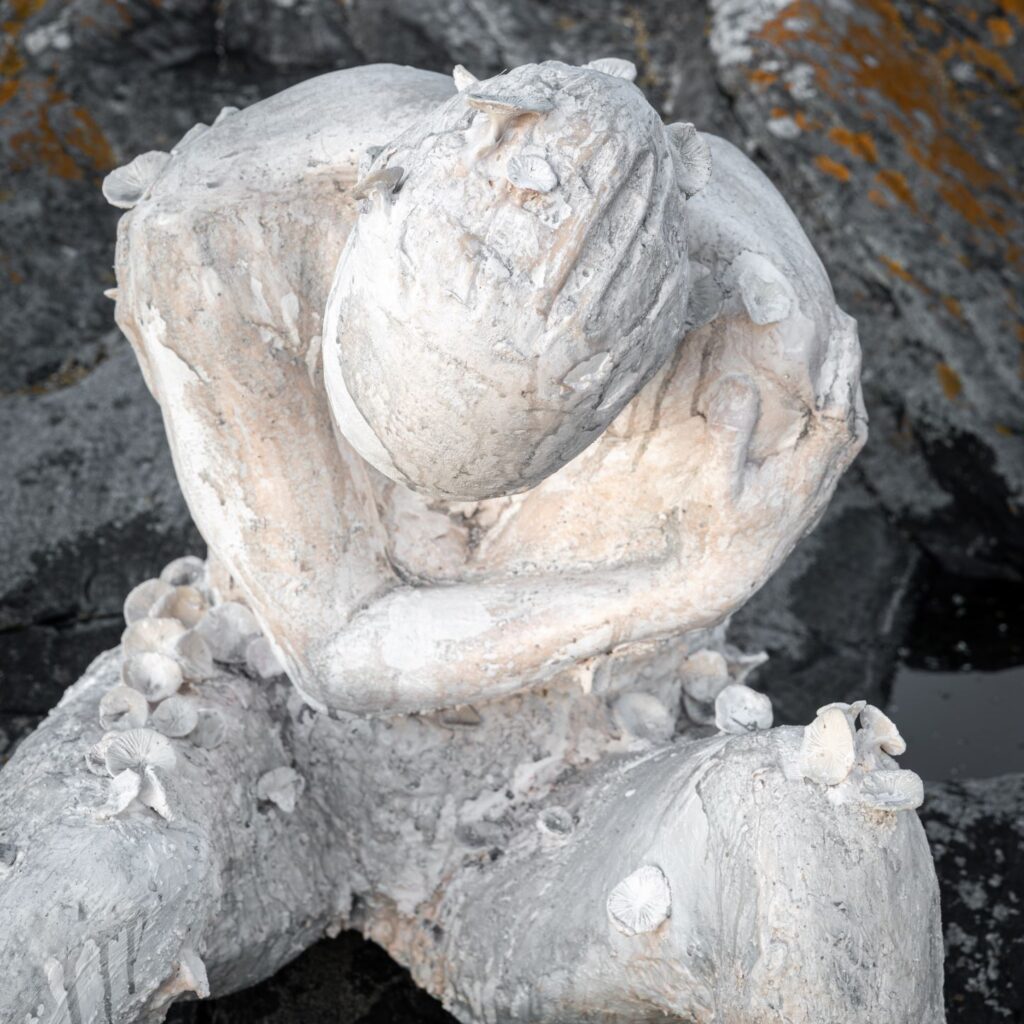
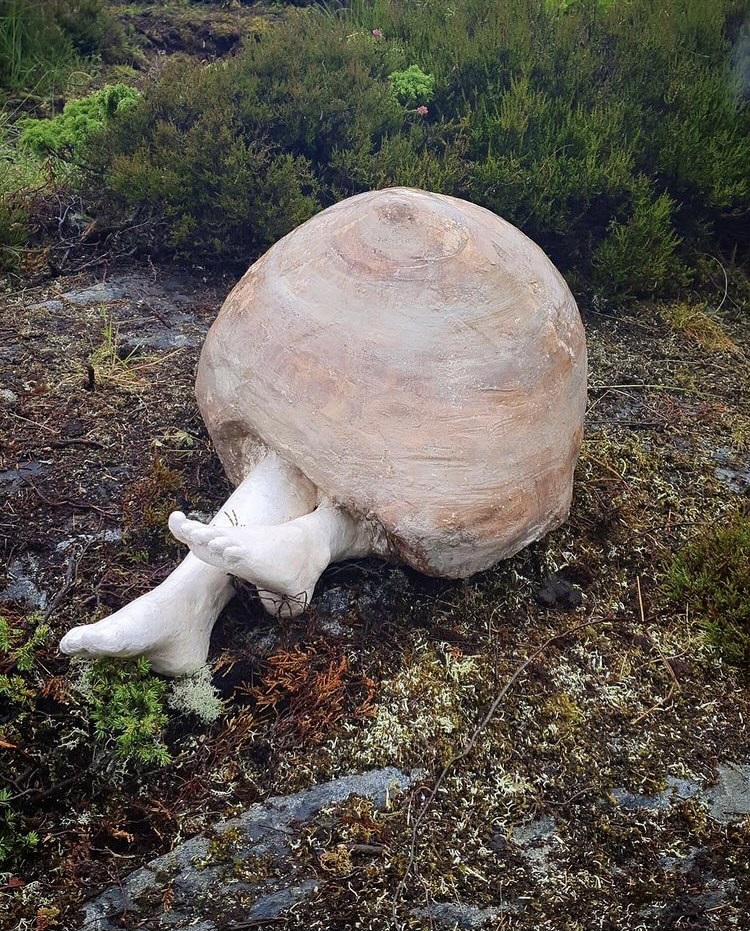
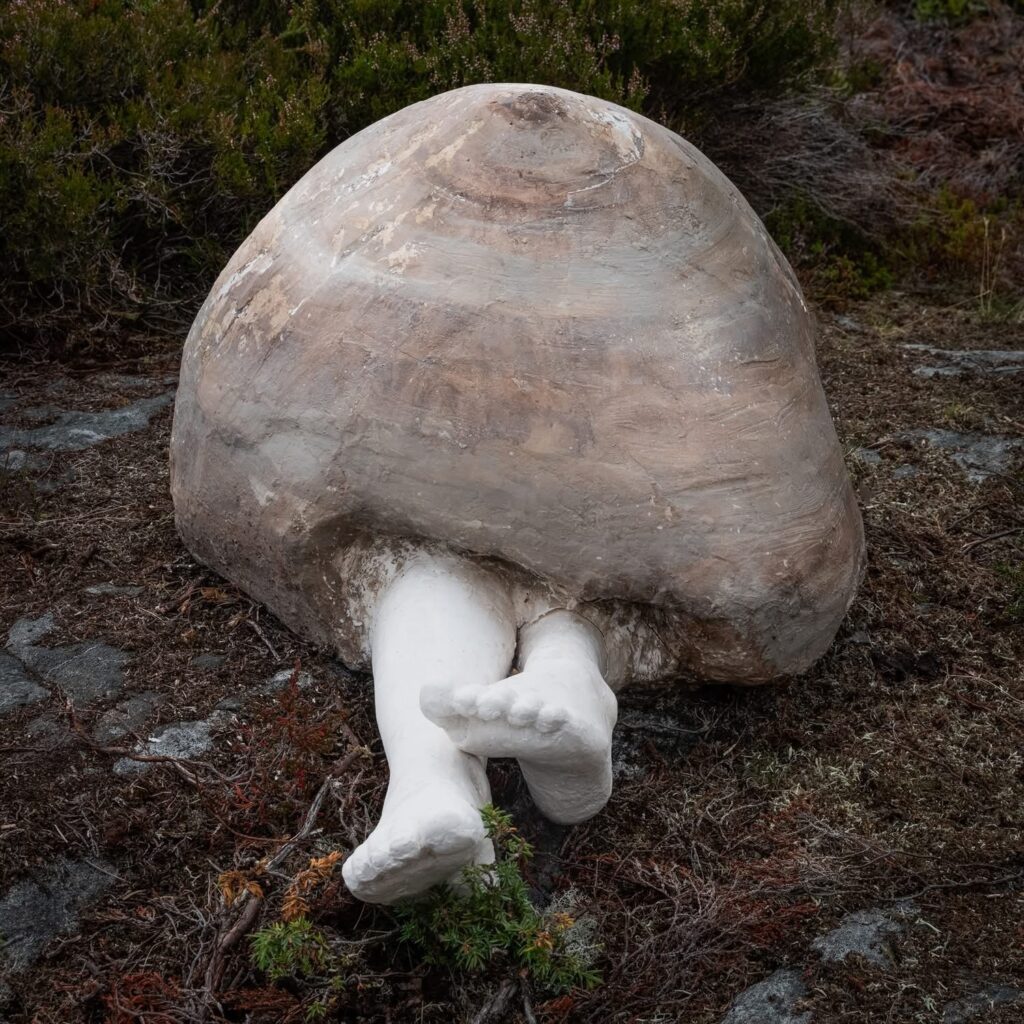
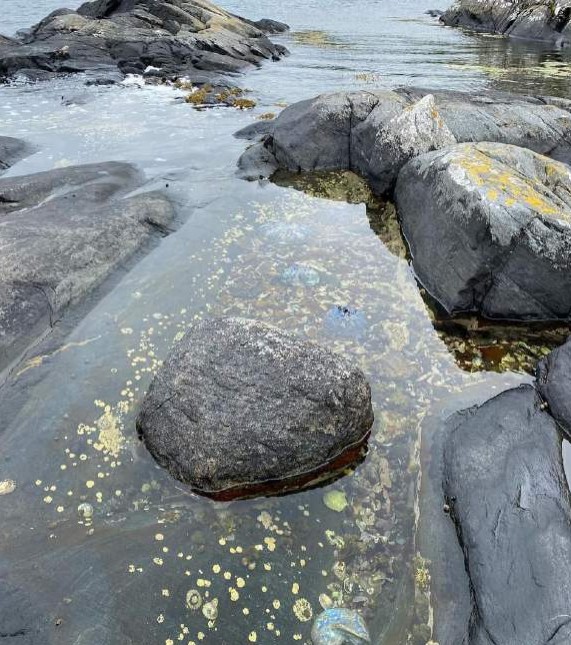
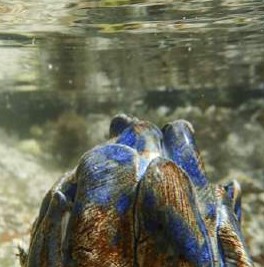
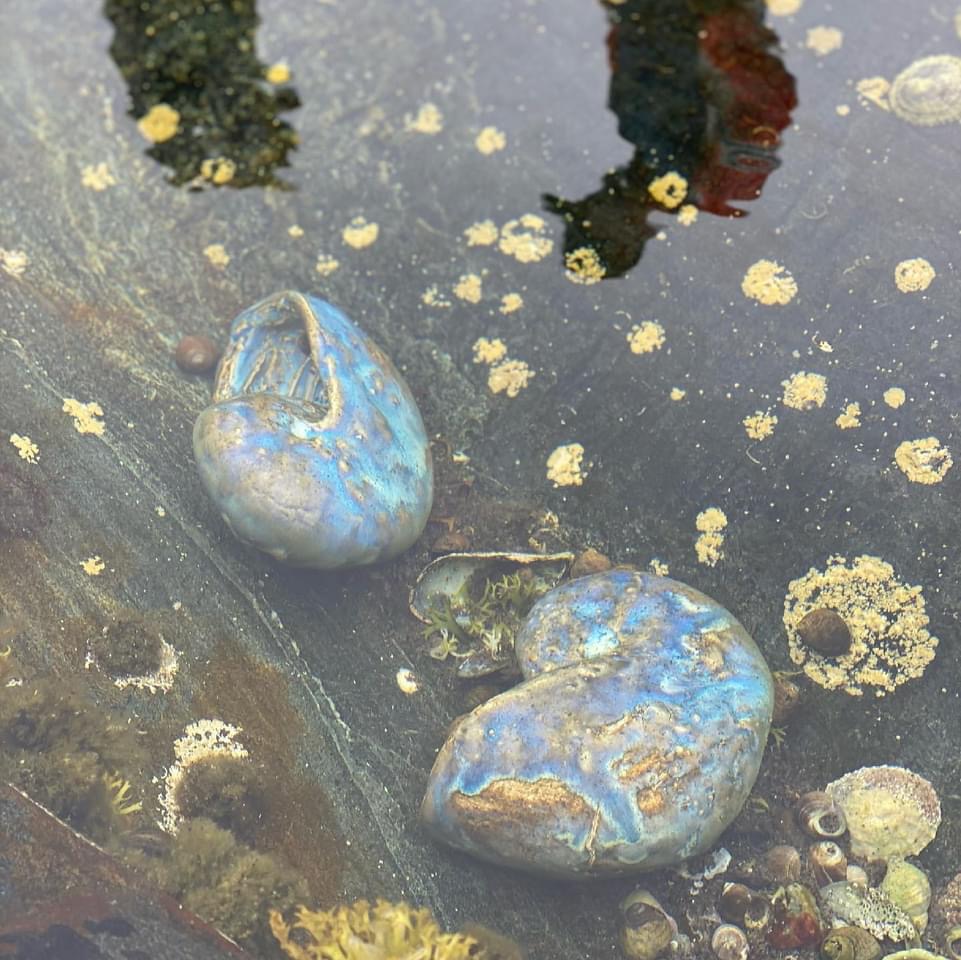
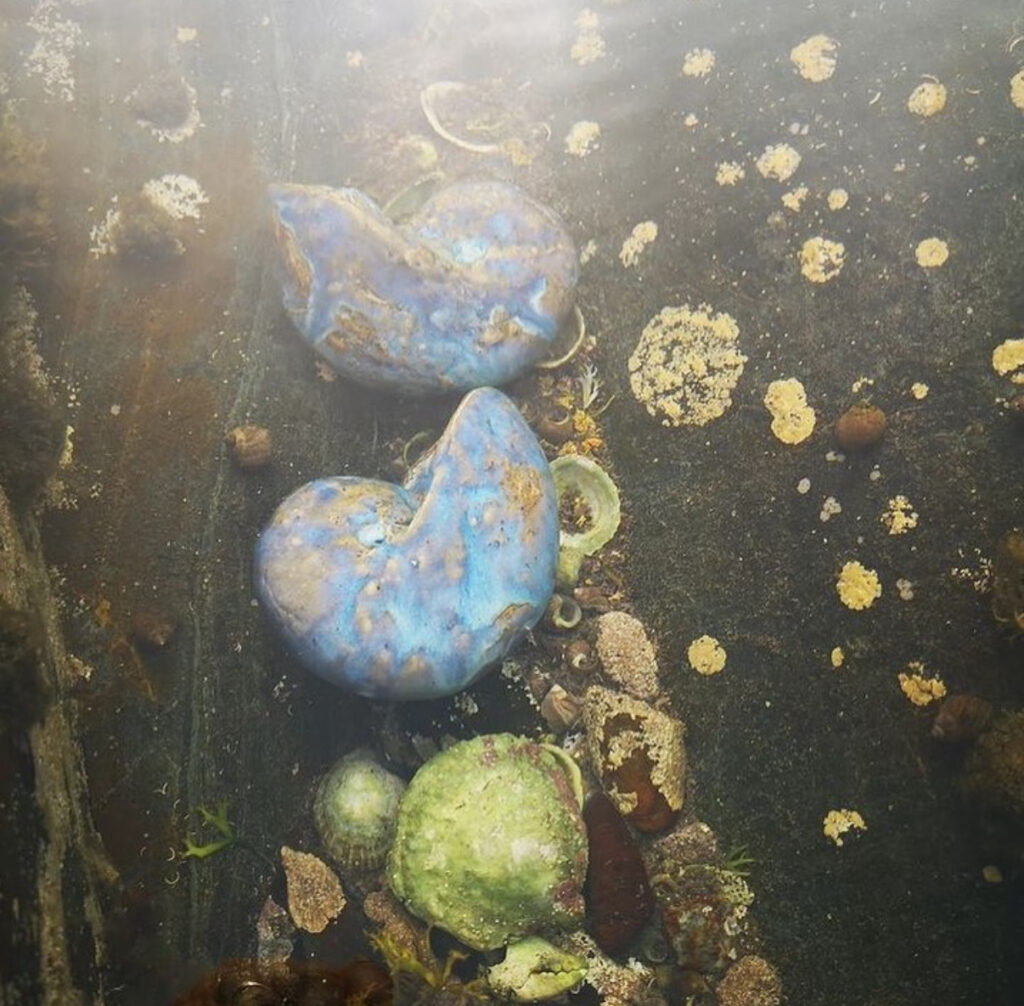
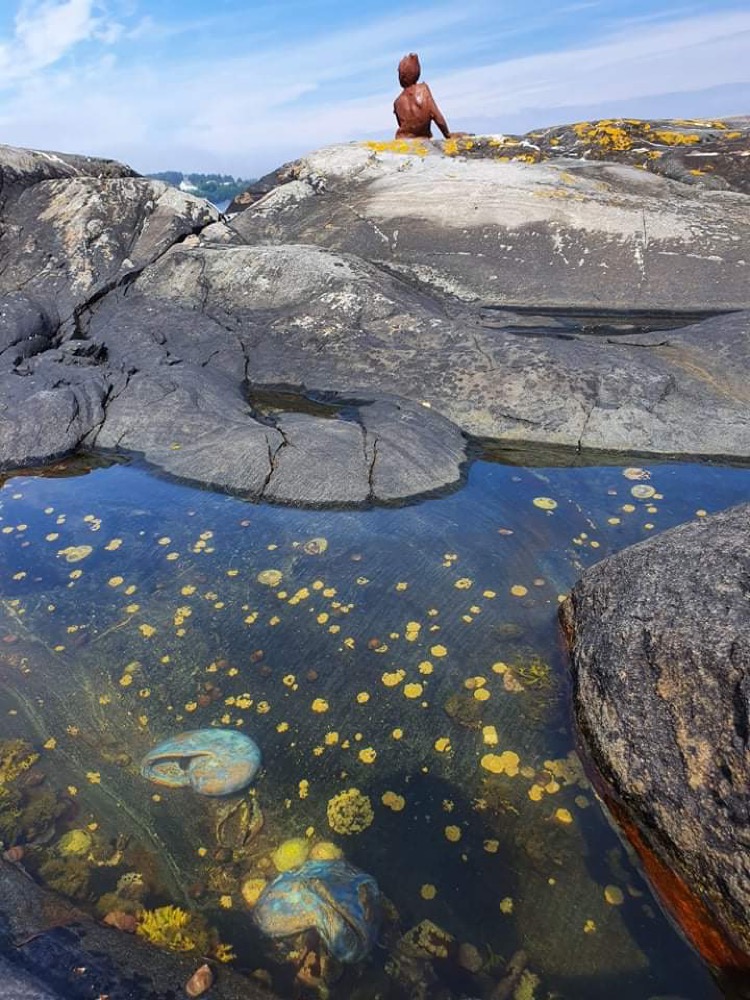
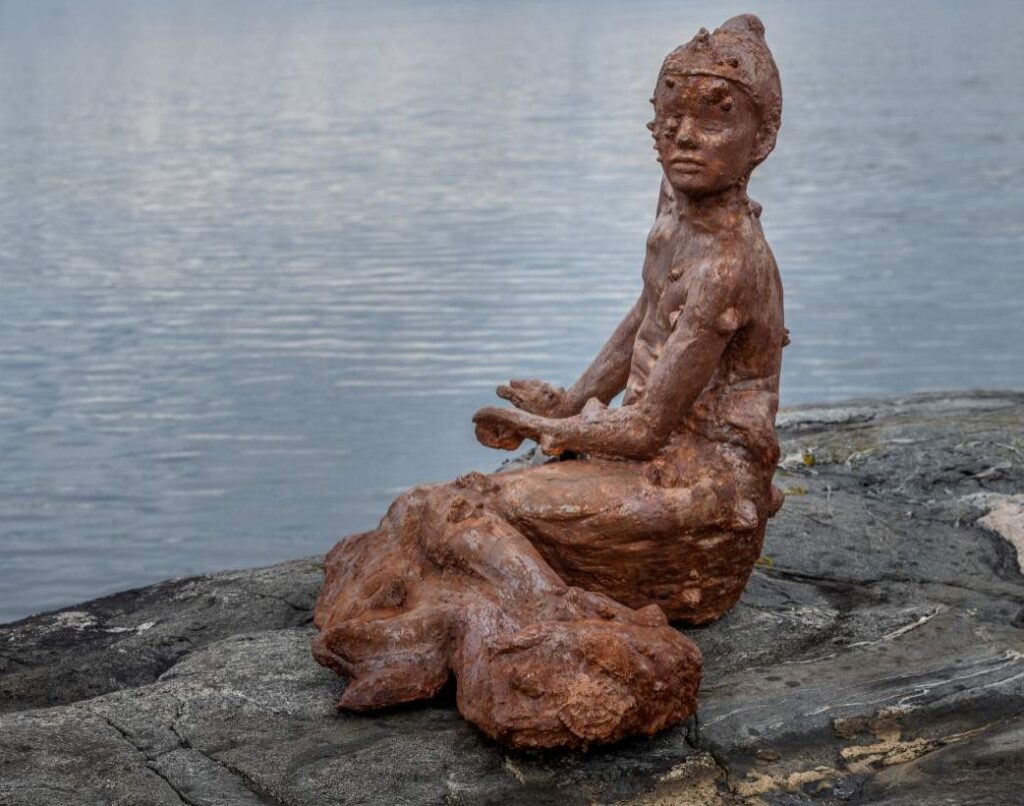
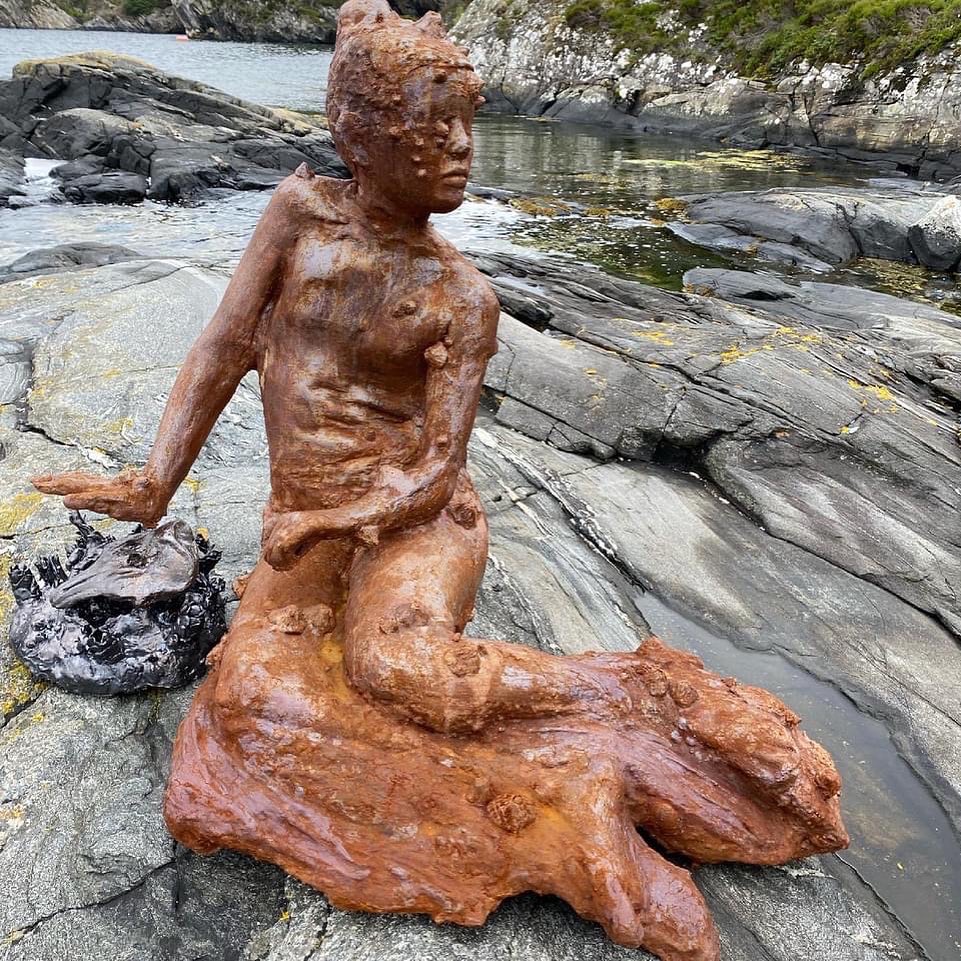
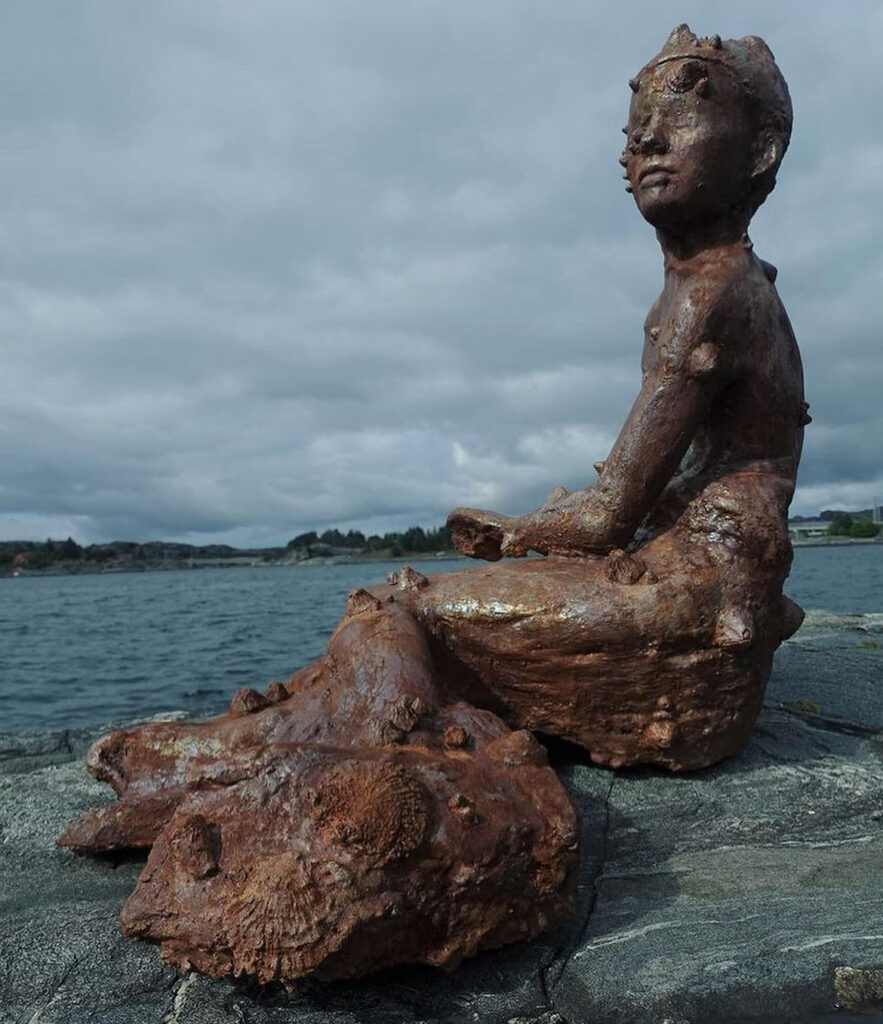
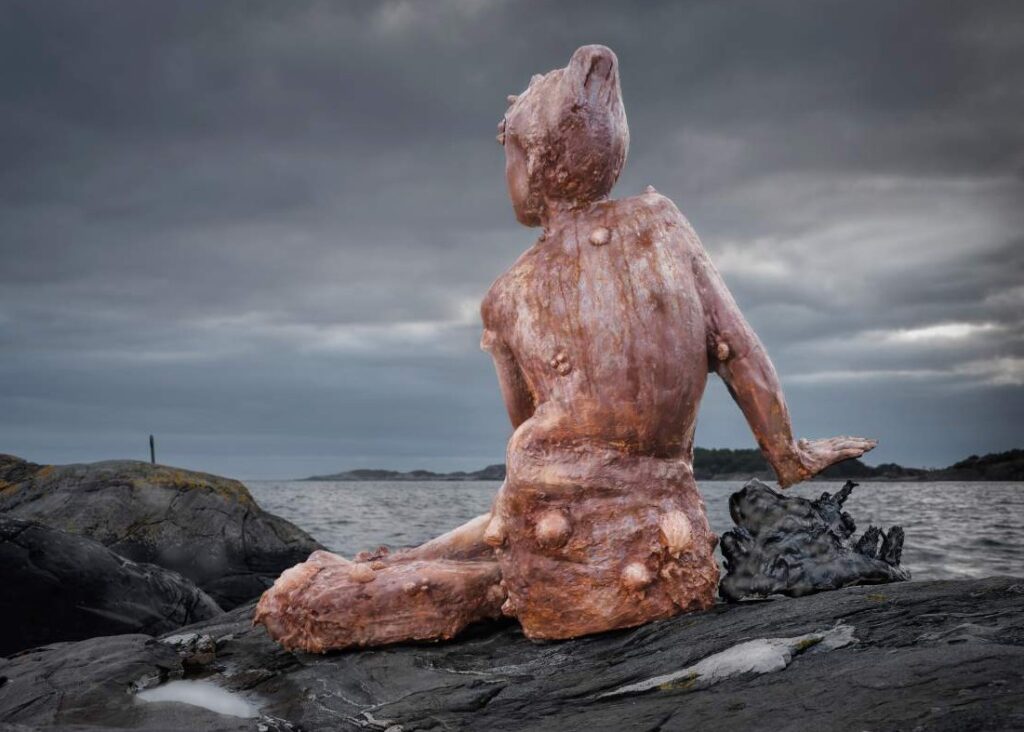
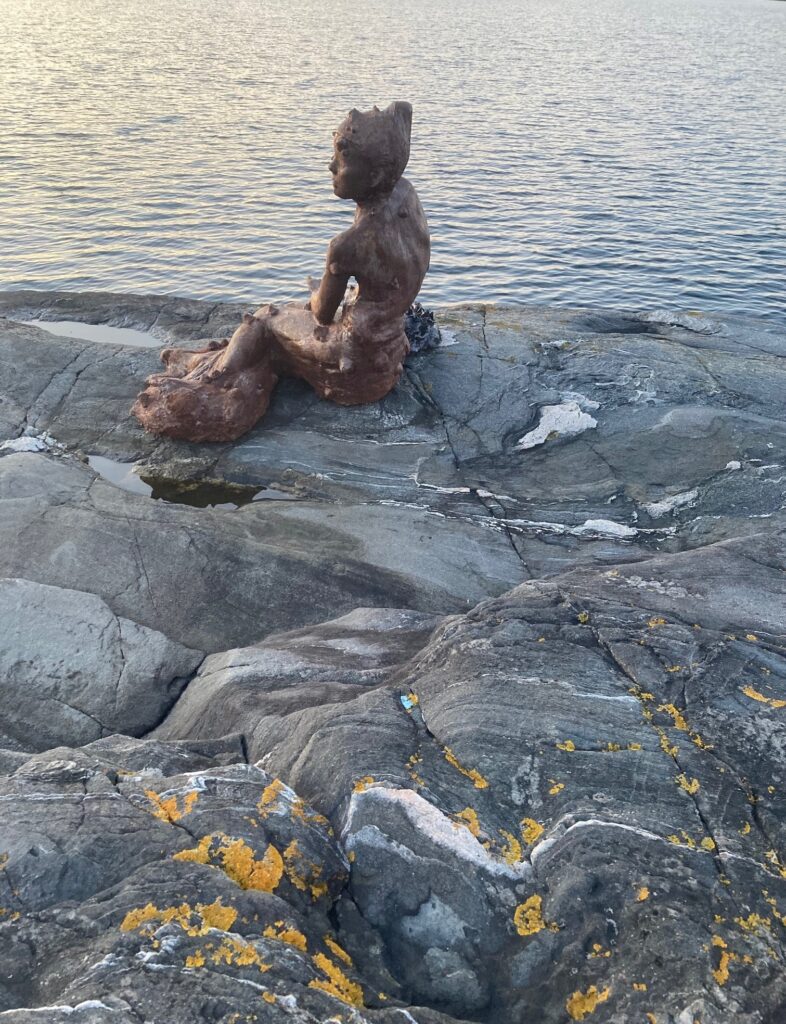
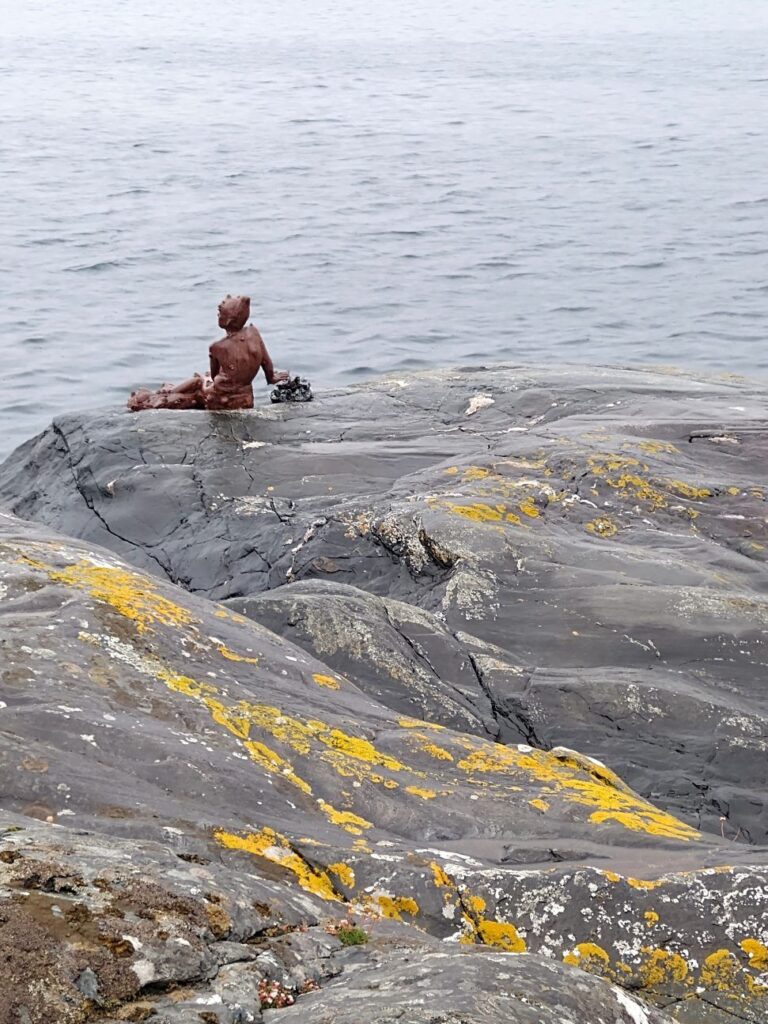
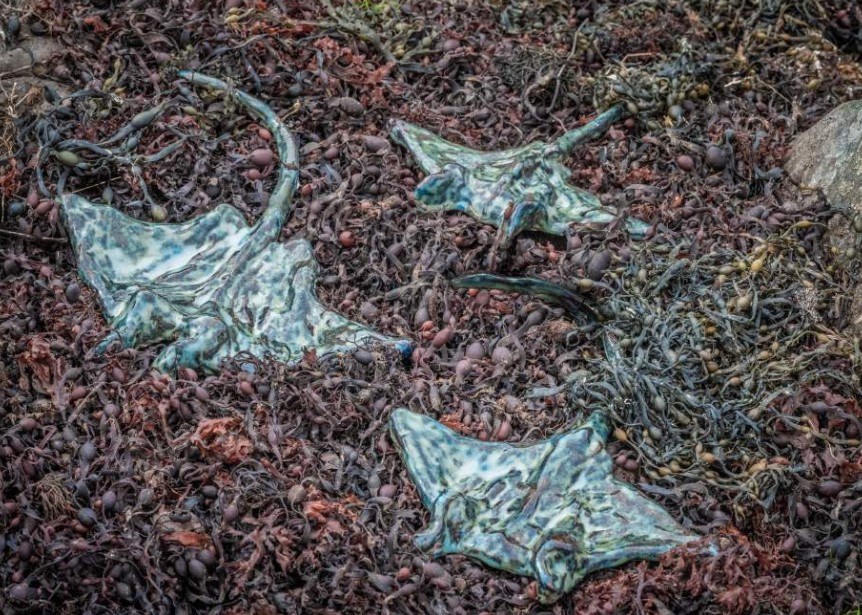
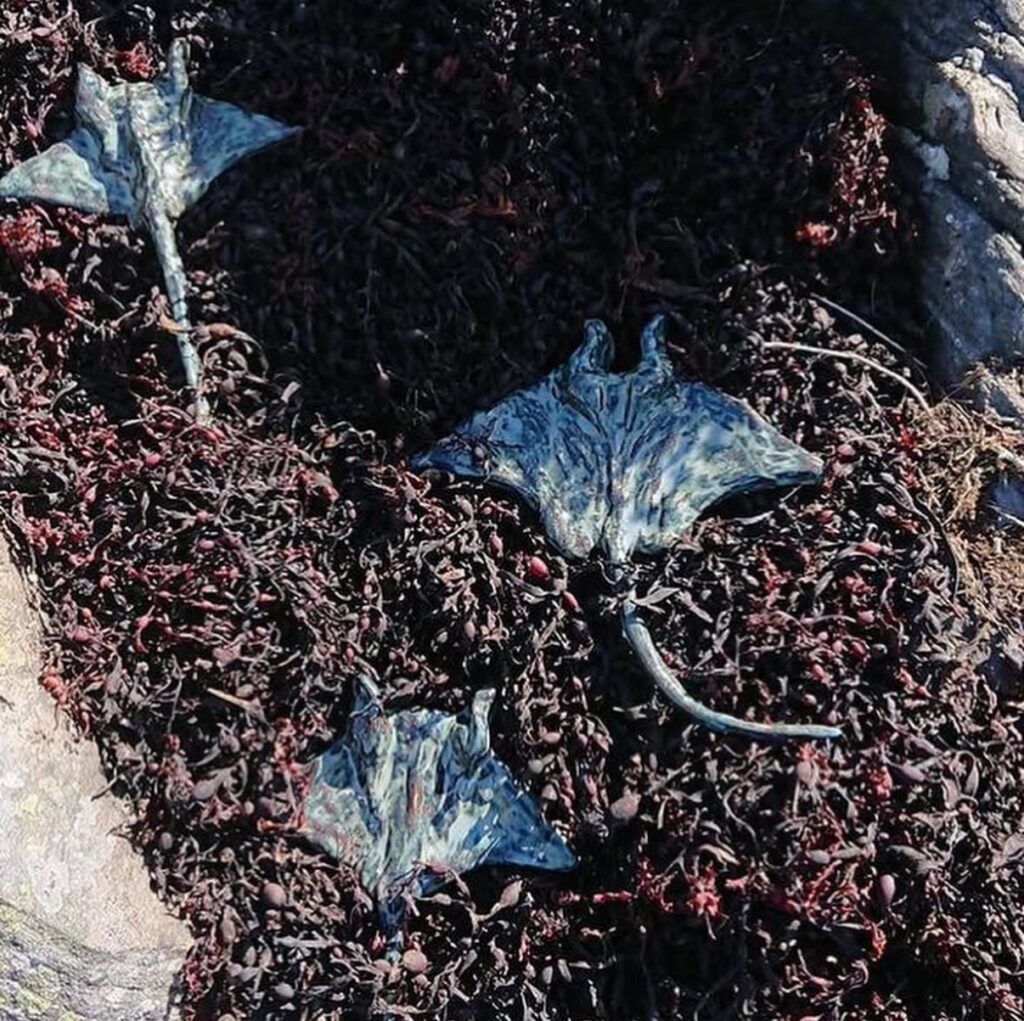
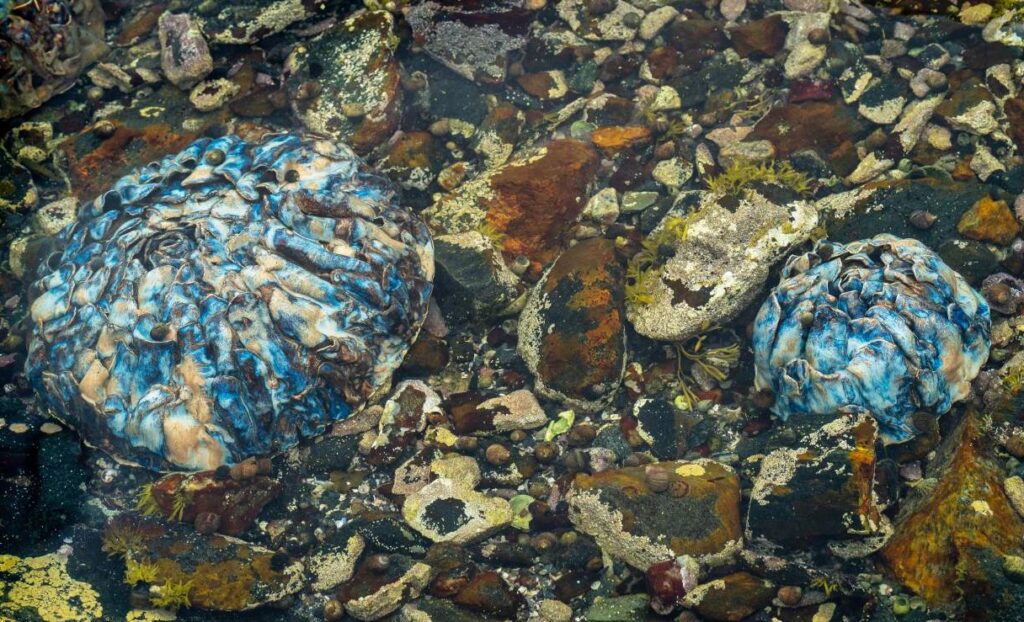
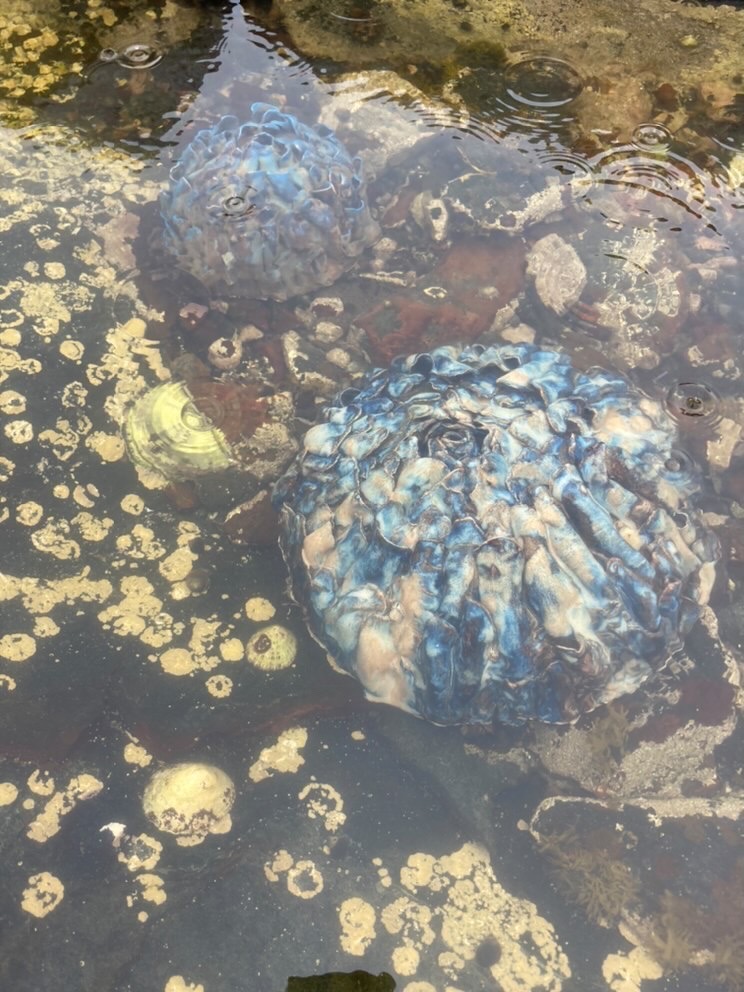
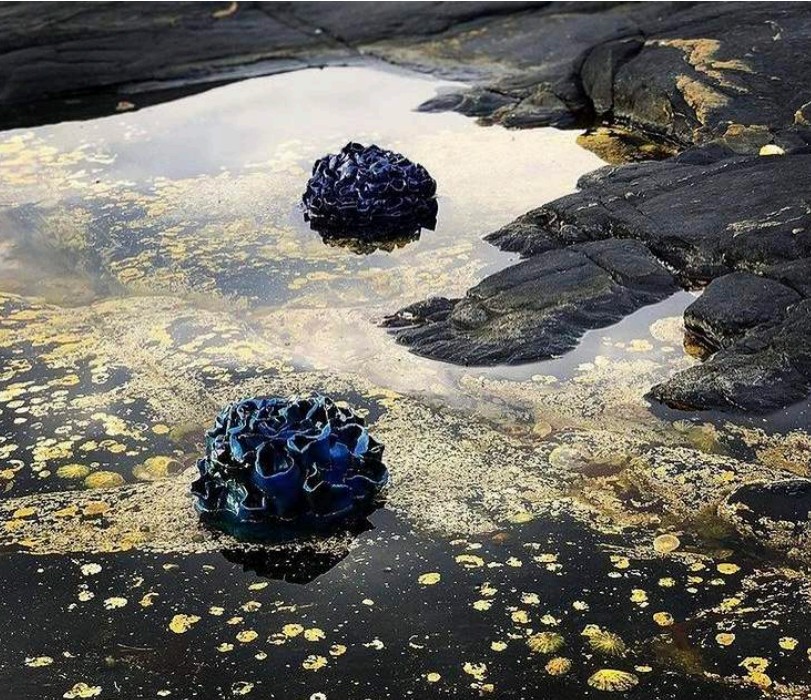
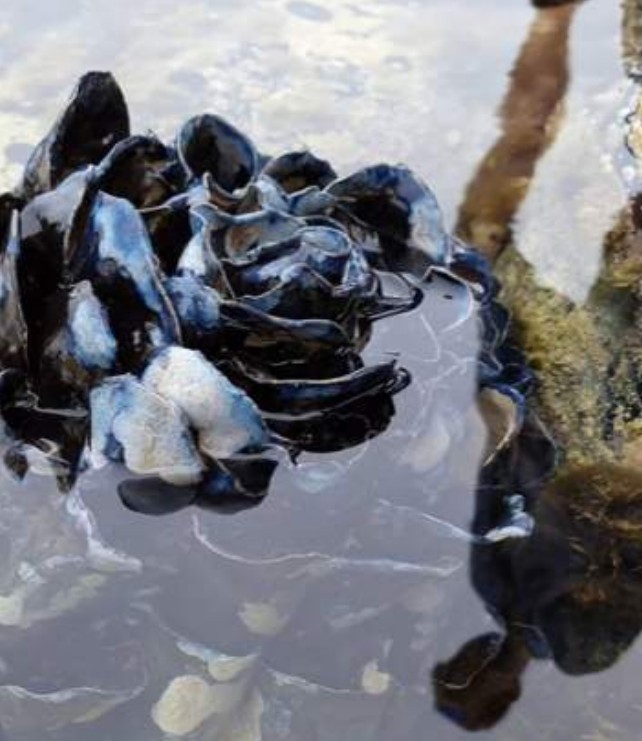
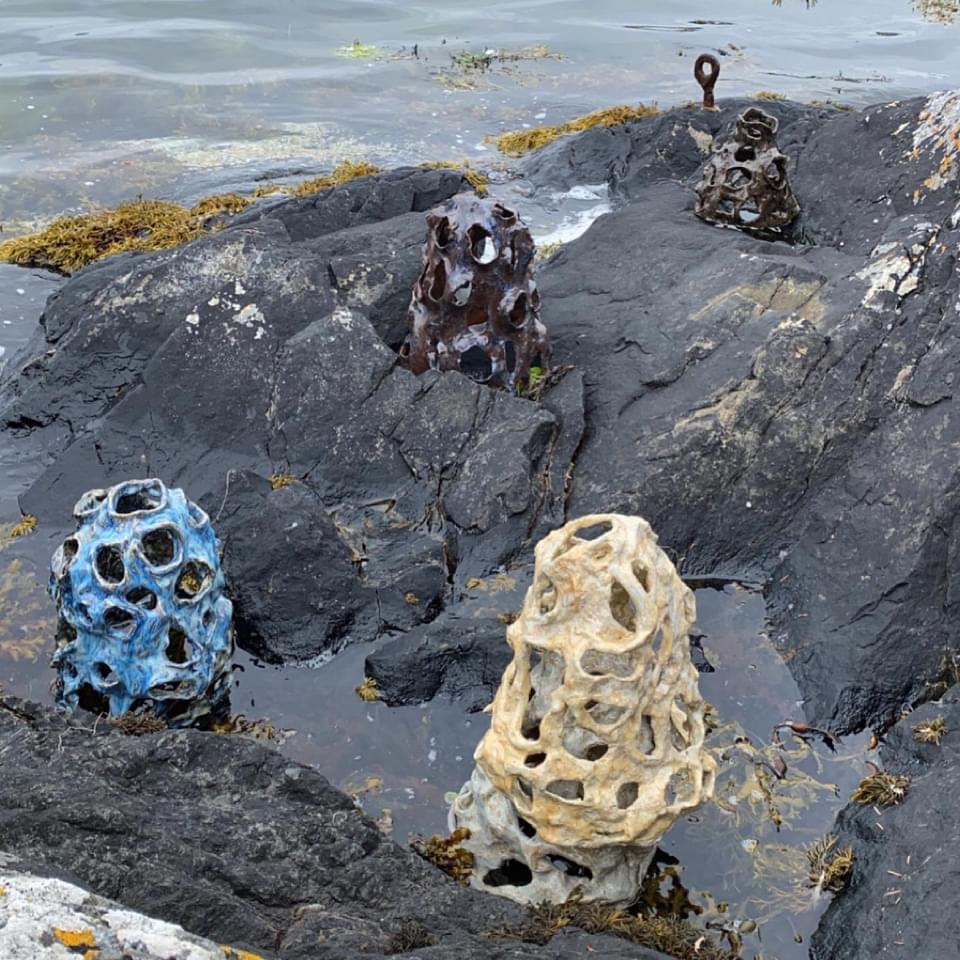
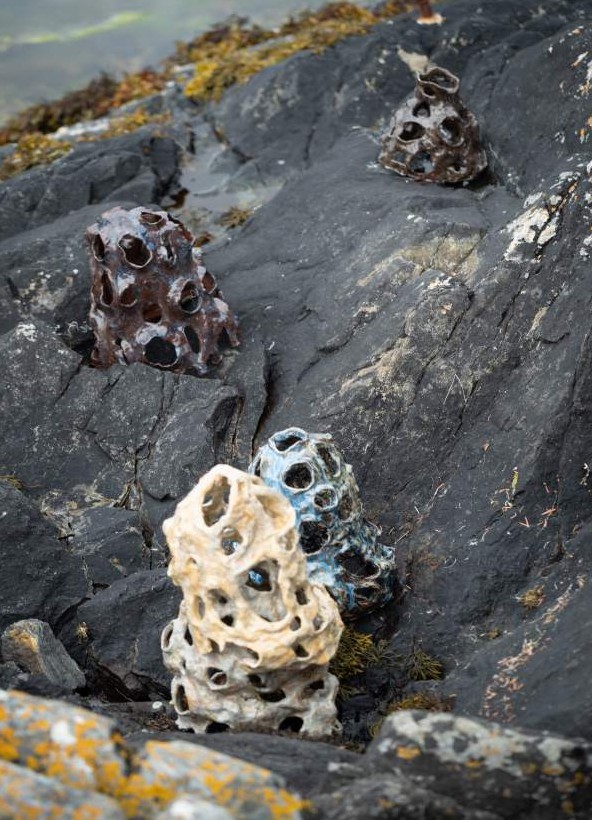
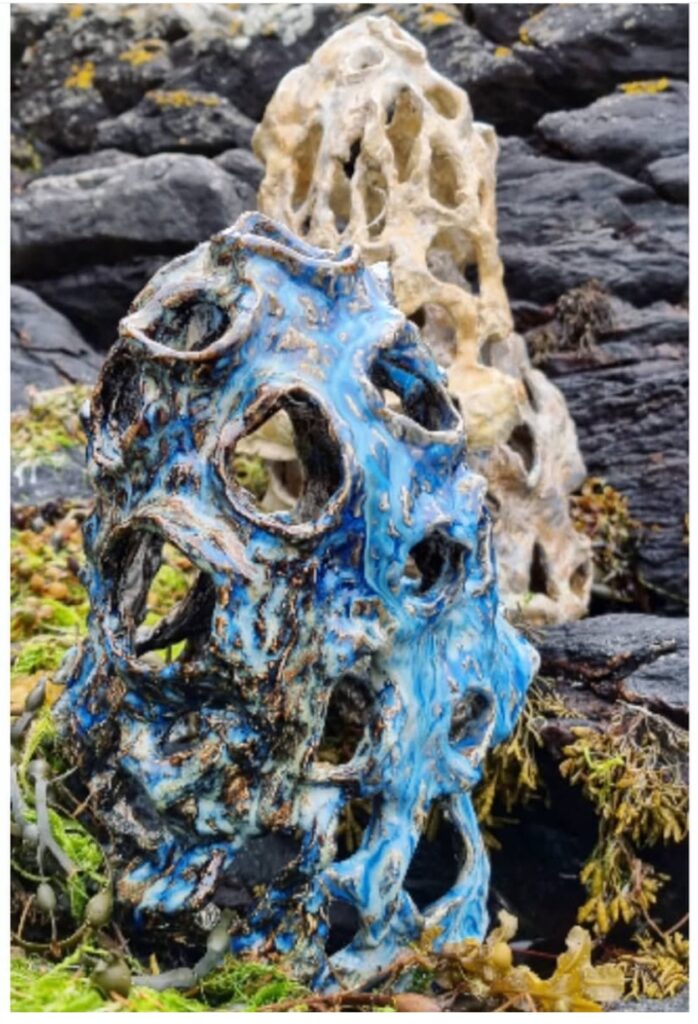
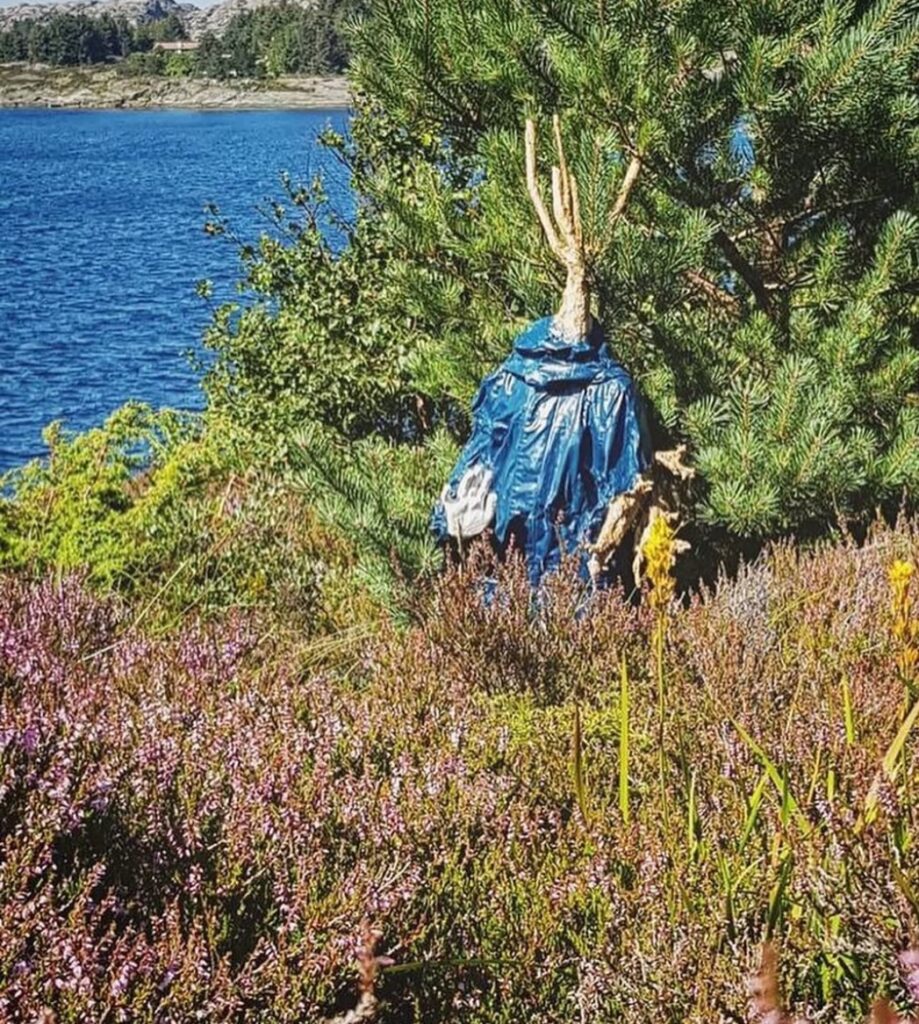
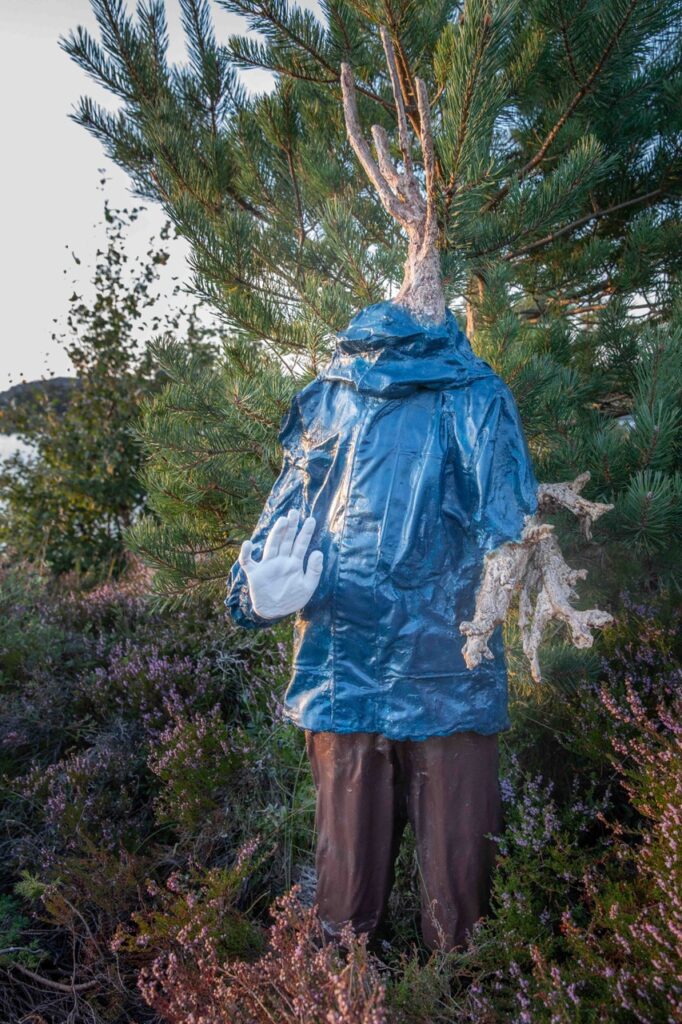
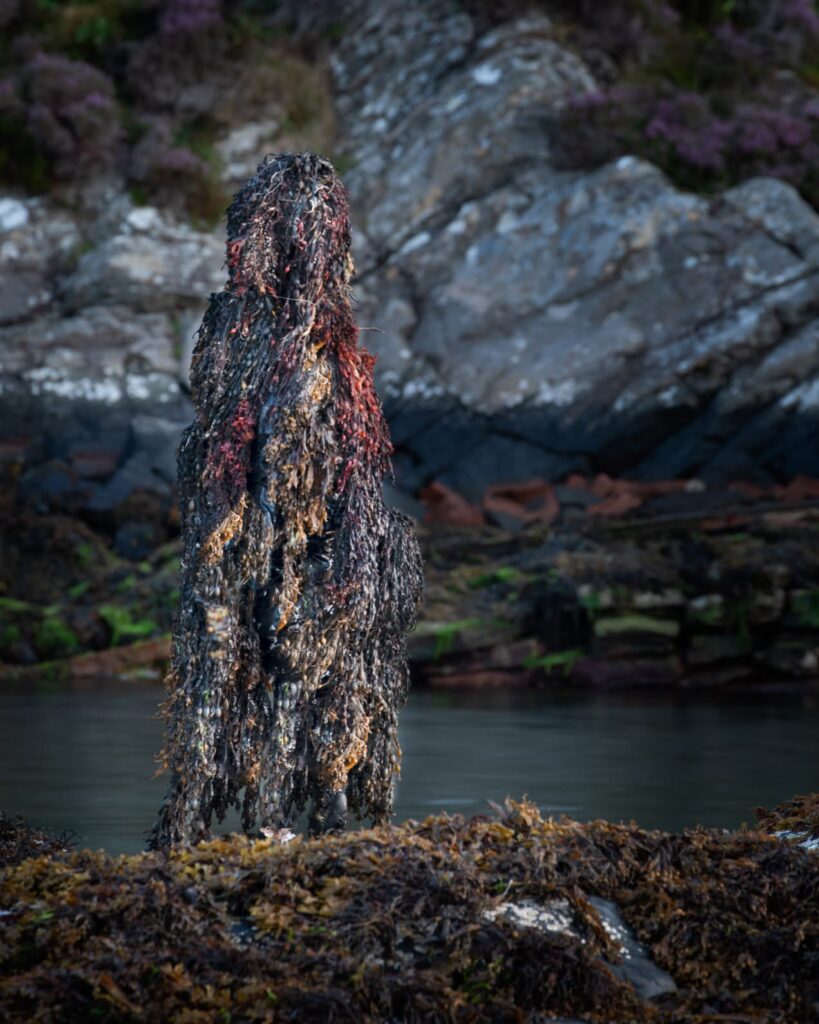
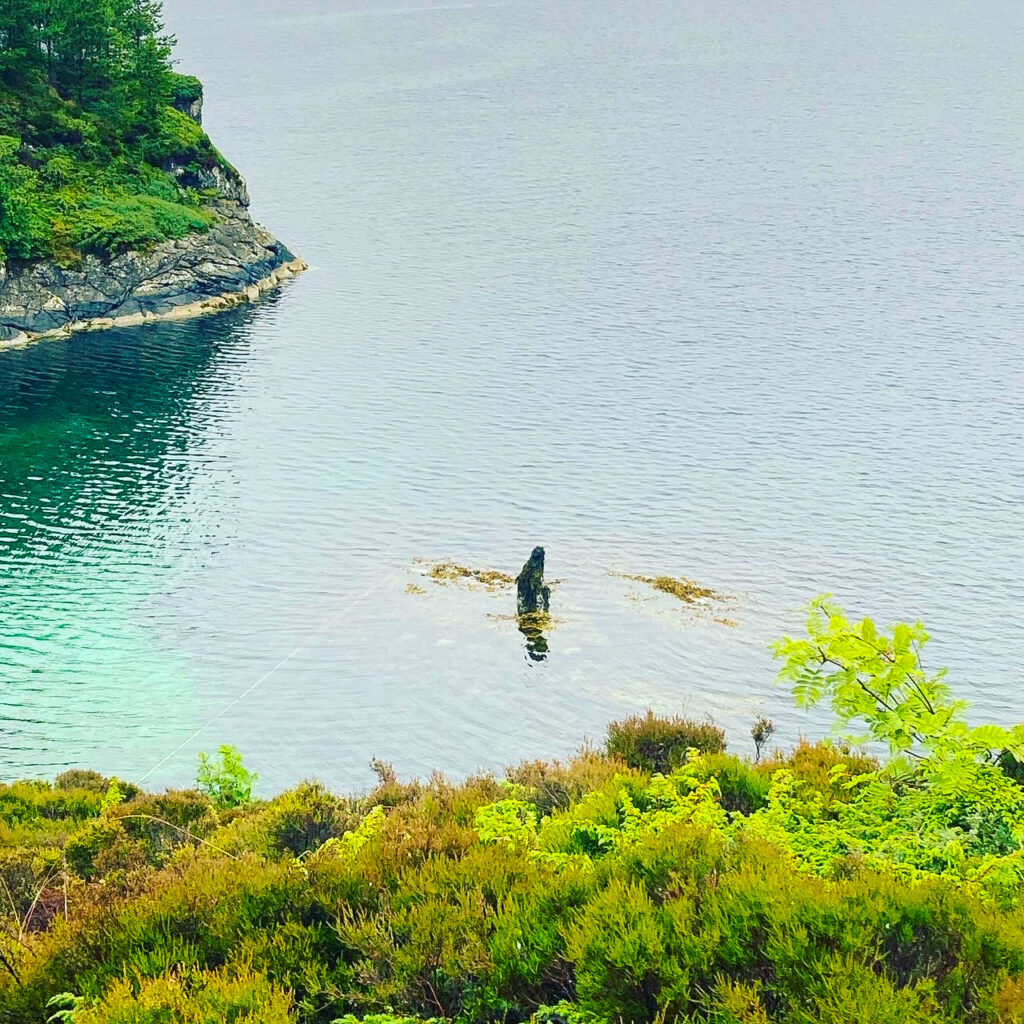
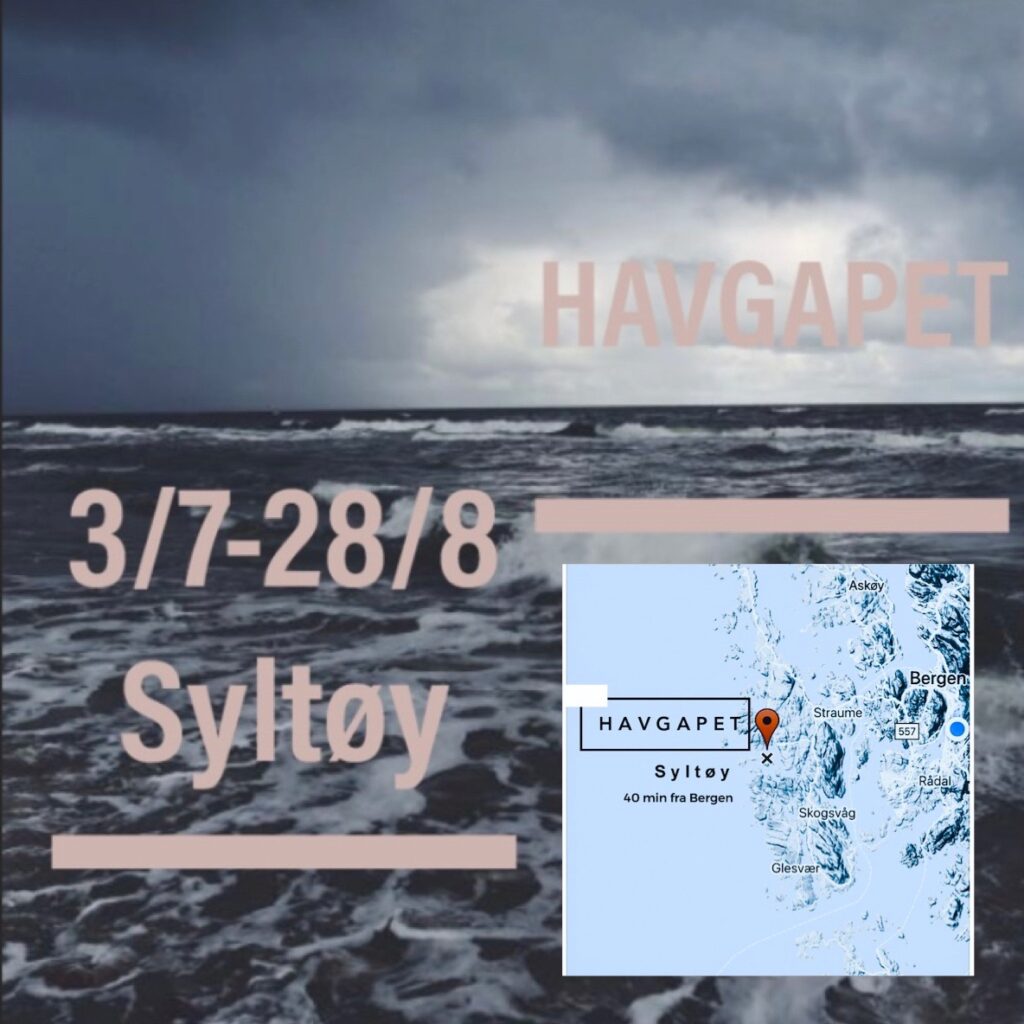
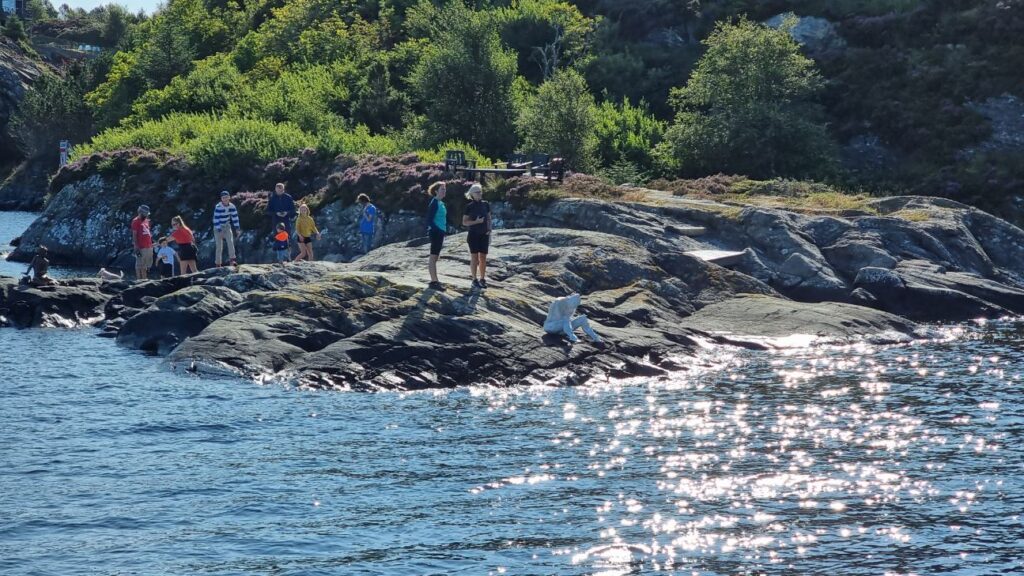
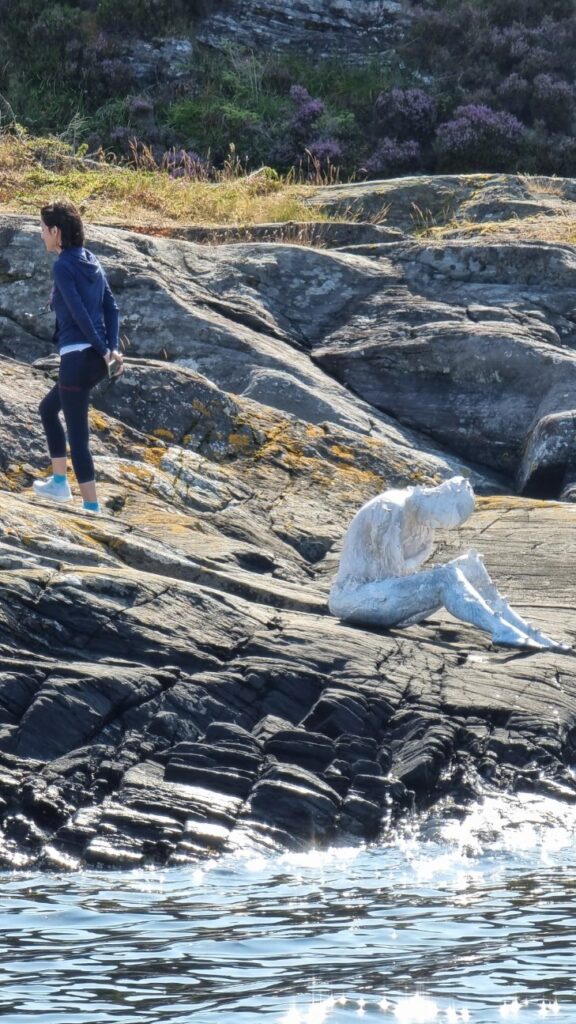
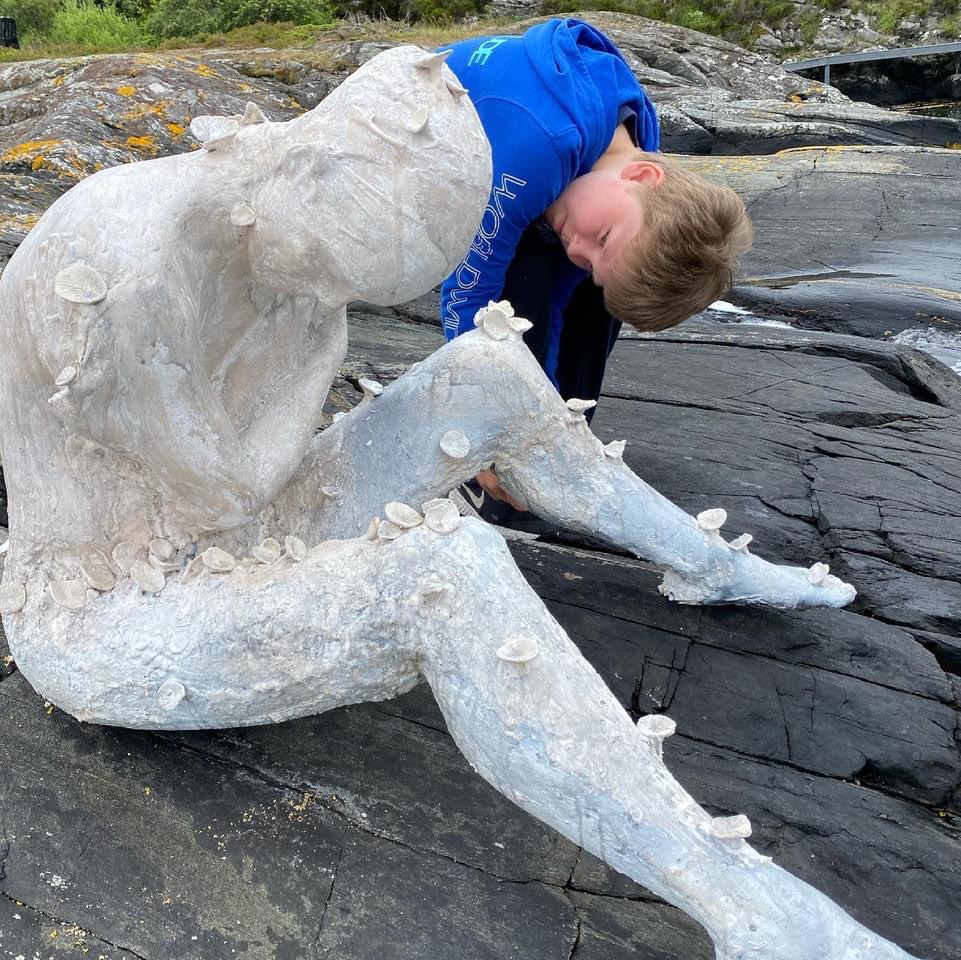
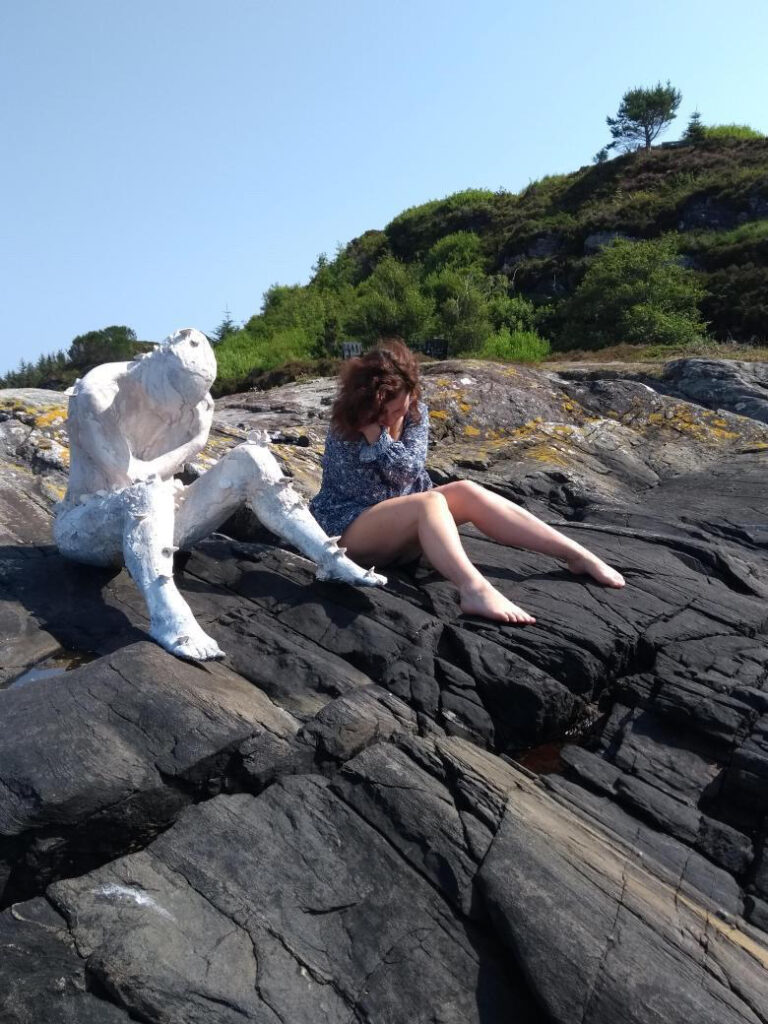
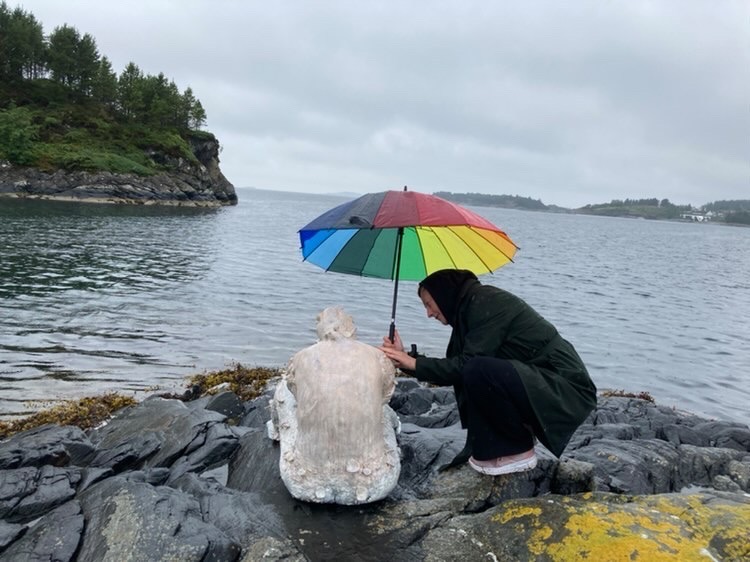
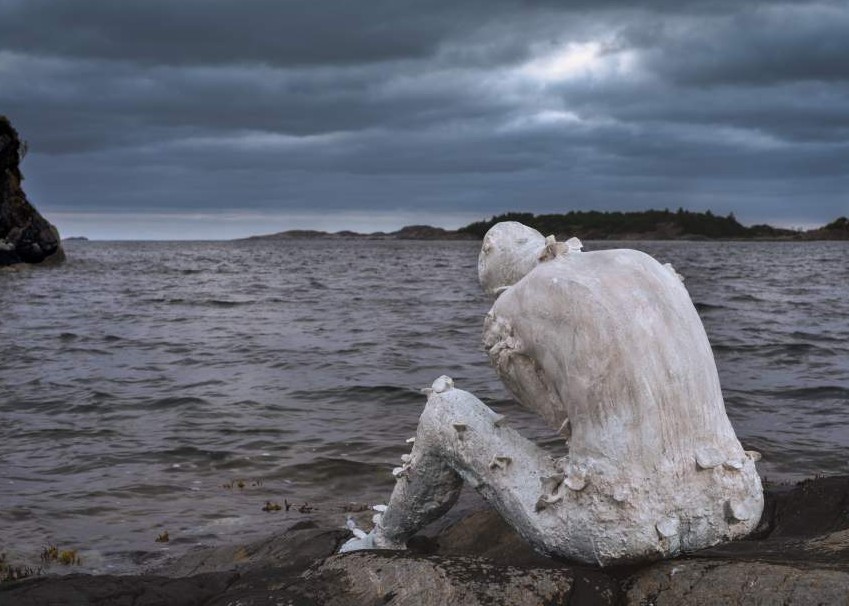
H A V G A P E T was an outdoor sculpture exhibition located on Syltøy, at the far western edge of Øygarden facing the open sea.
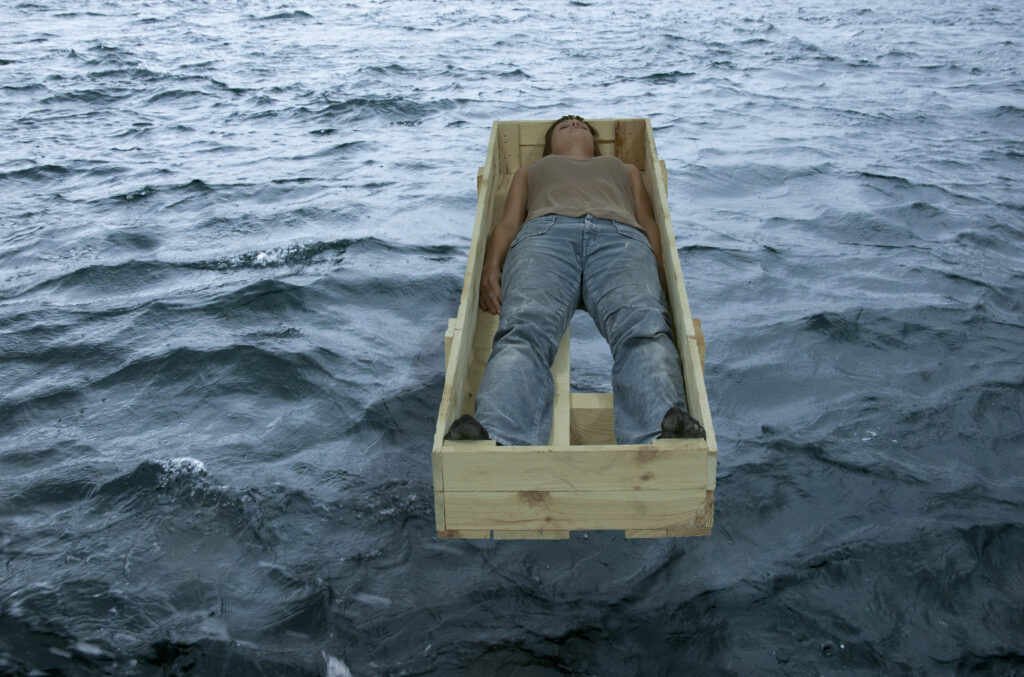
Eleven sculptures were installed across a 3-acre area designated for agriculture, nature, and recreation (LNF). From July 3 to August 28, 2021—a time when much of society remained closed due to Covid—visitors could experience the works in direct dialogue with the elements: wind, weather, and shifting light.
The site was freely accessible 24 hours a day throughout the exhibition period, whether by foot or from the sea.
H A V G A P E T attracted approximately 2,000 visitors and received strong media attention and positive feedback.
The project was initiated, developed, coordinated, and executed by Inga, who also created the sculptures.
EIN GJENKLANG I KRANERIET
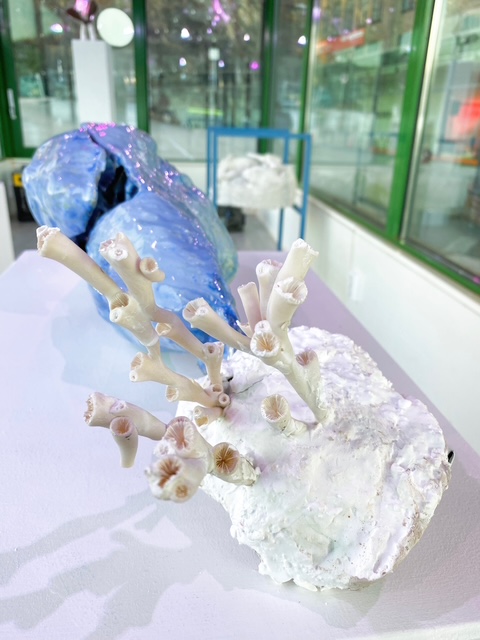
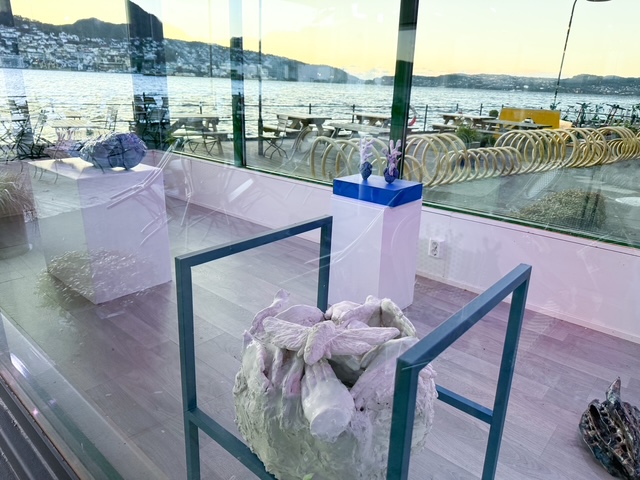
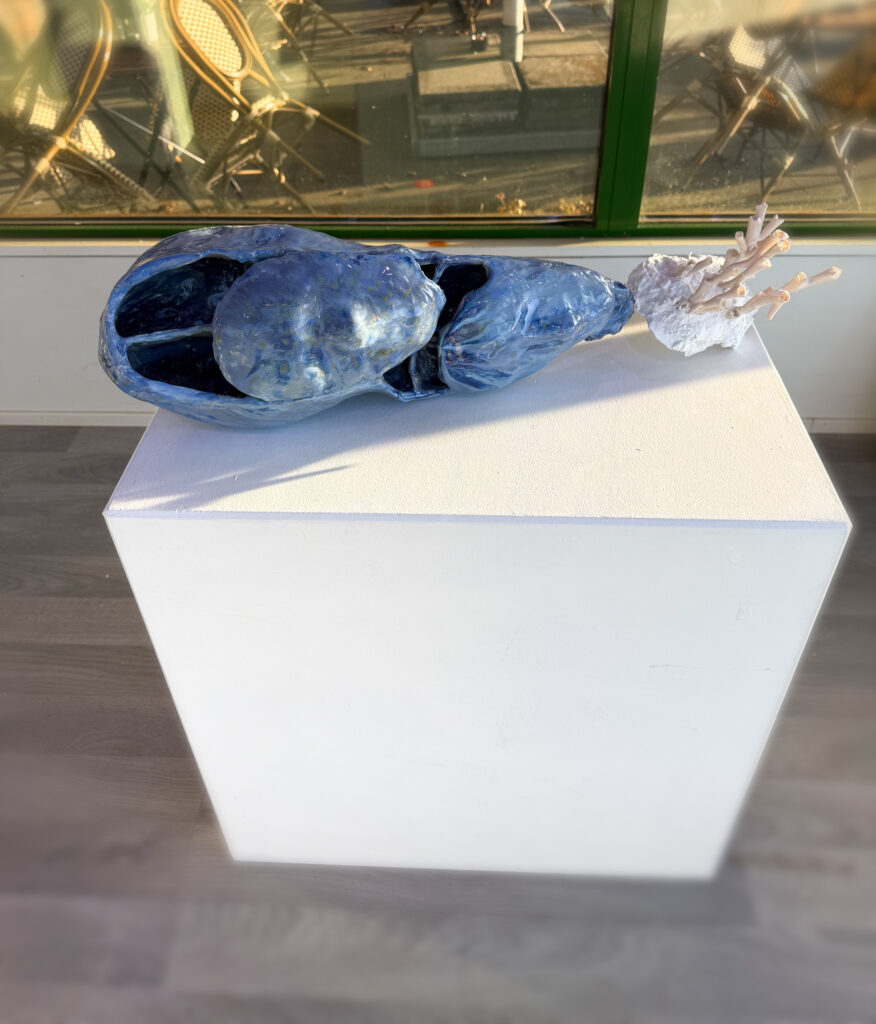
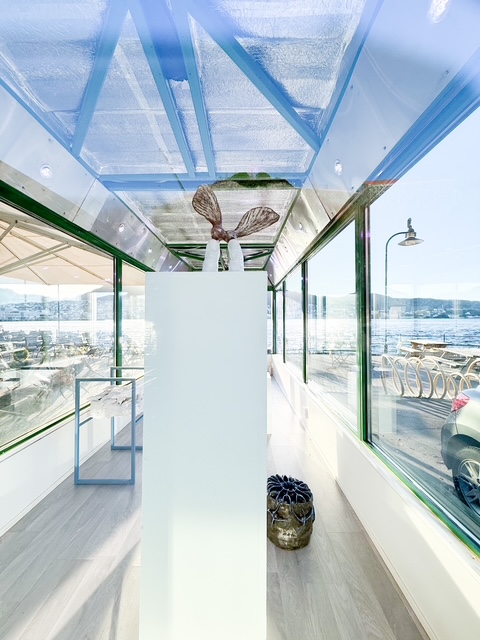
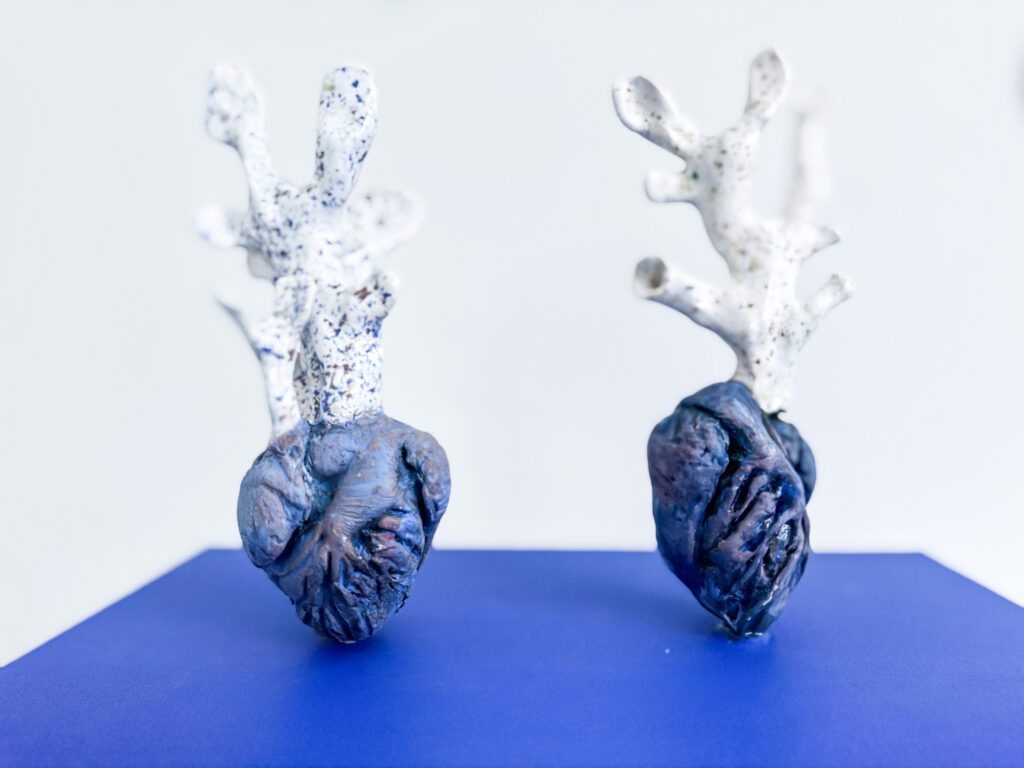
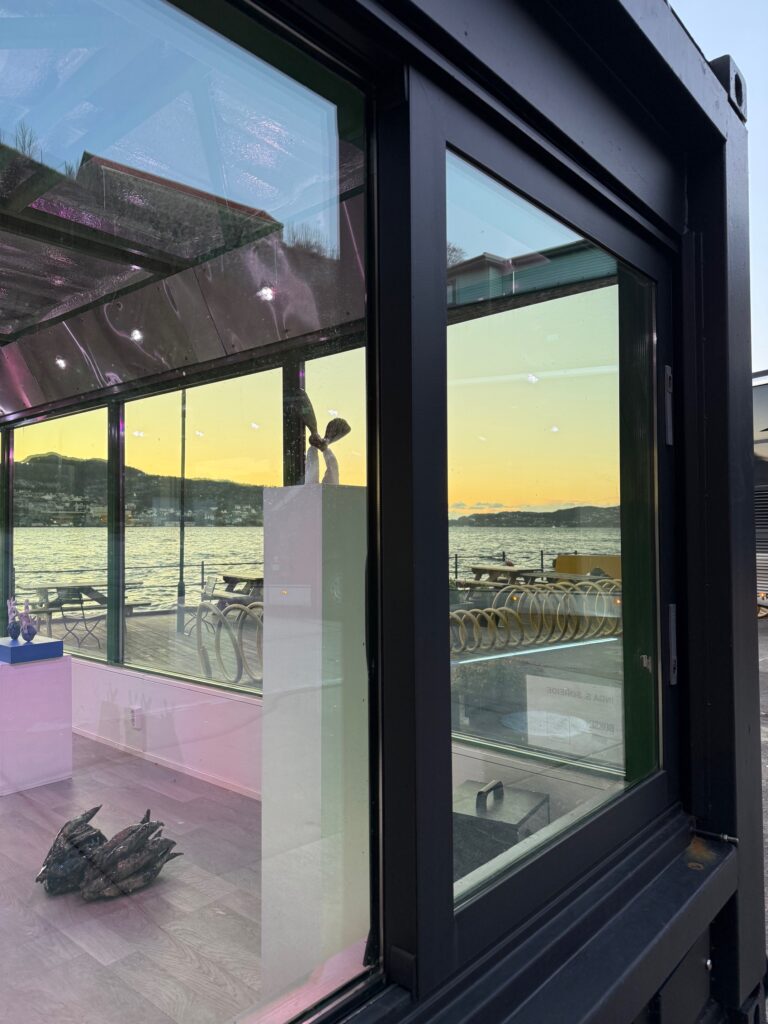
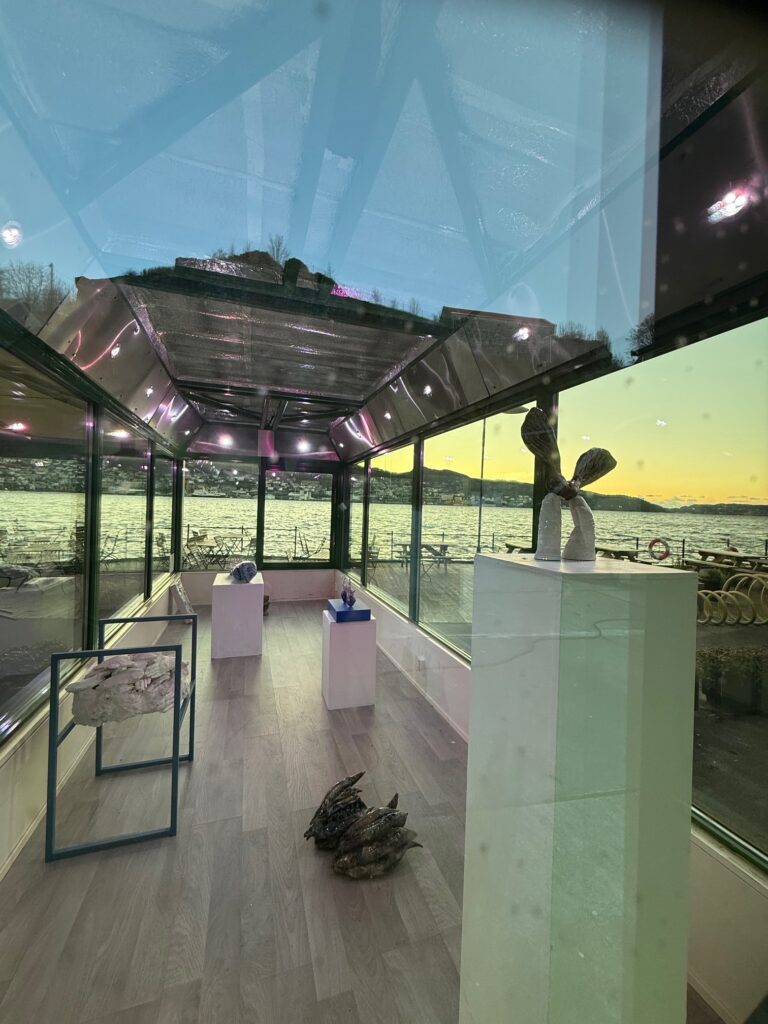
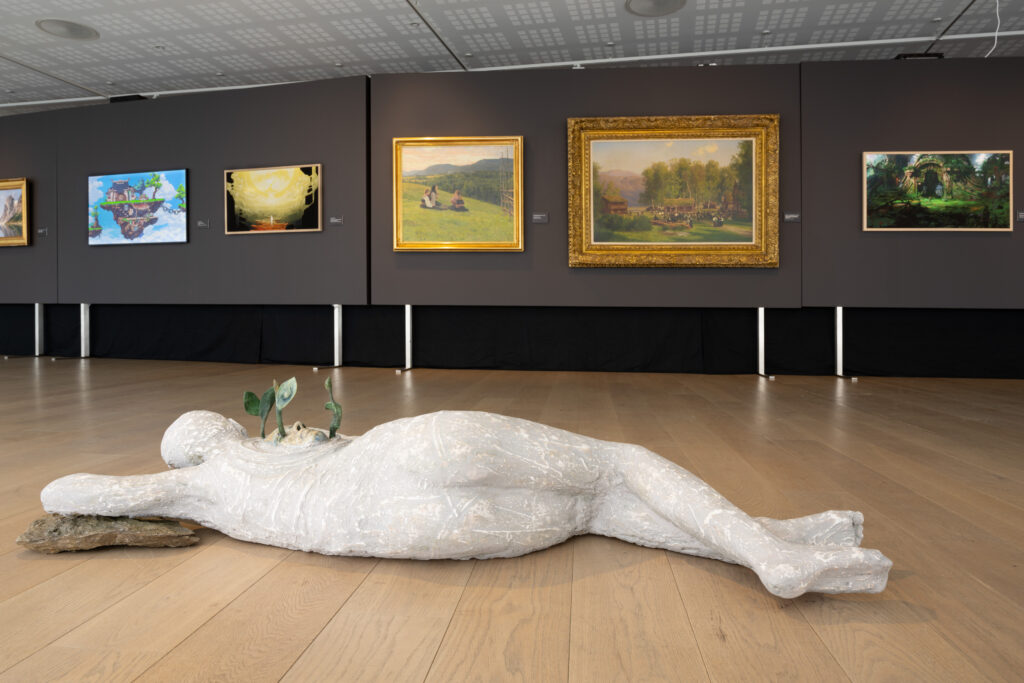
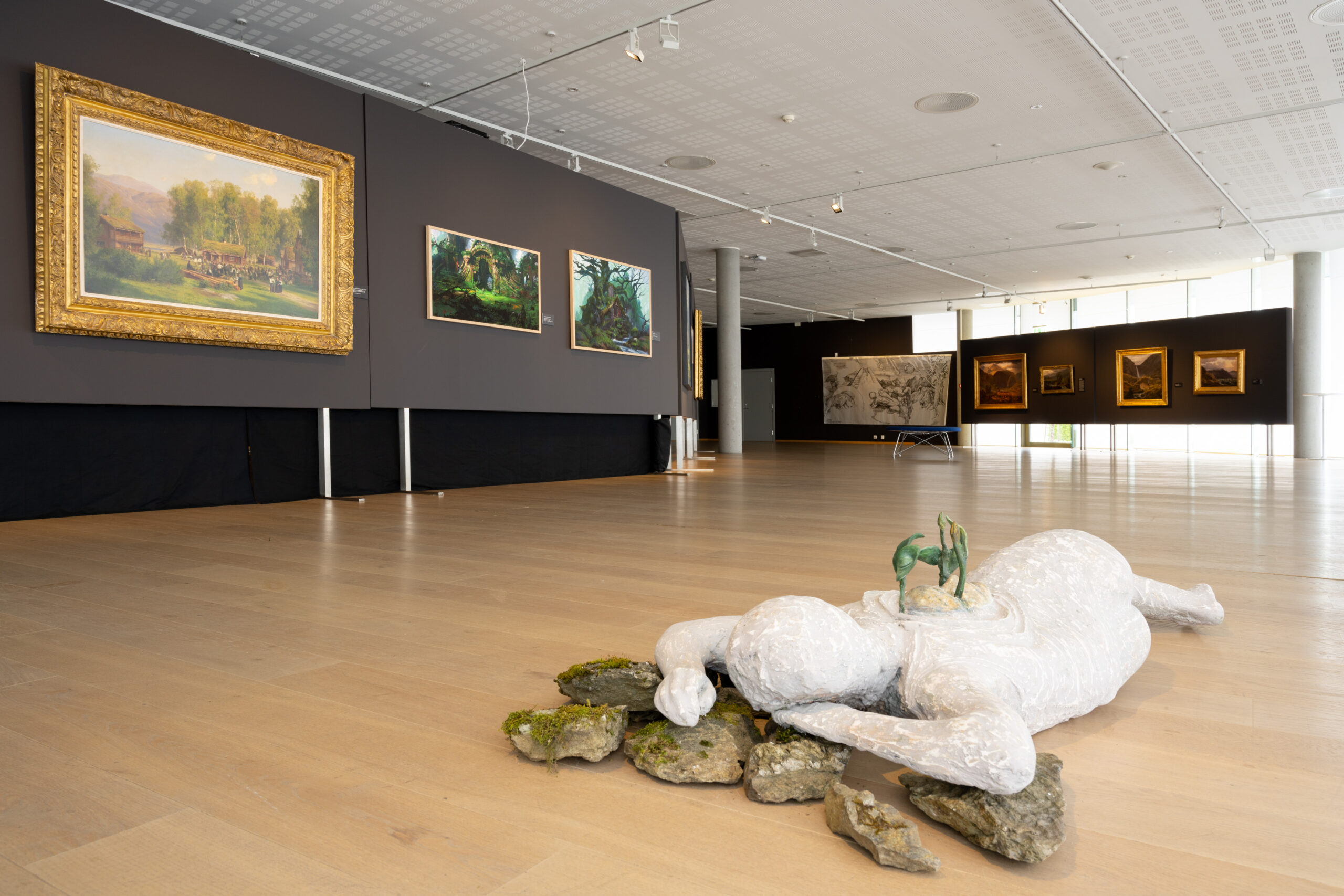
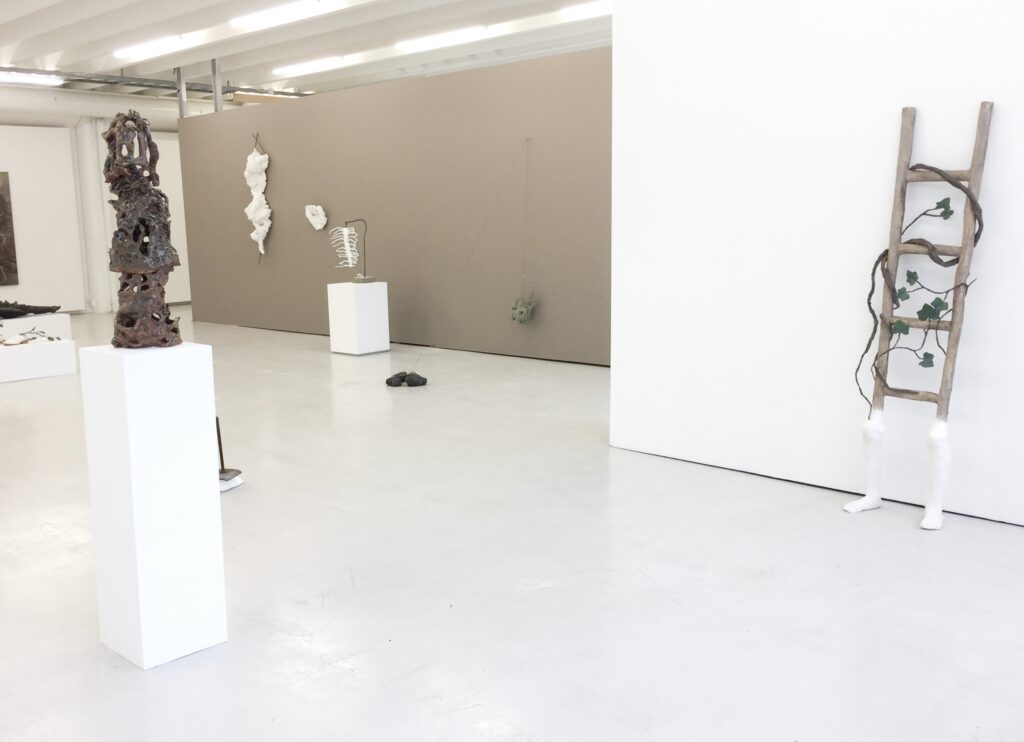
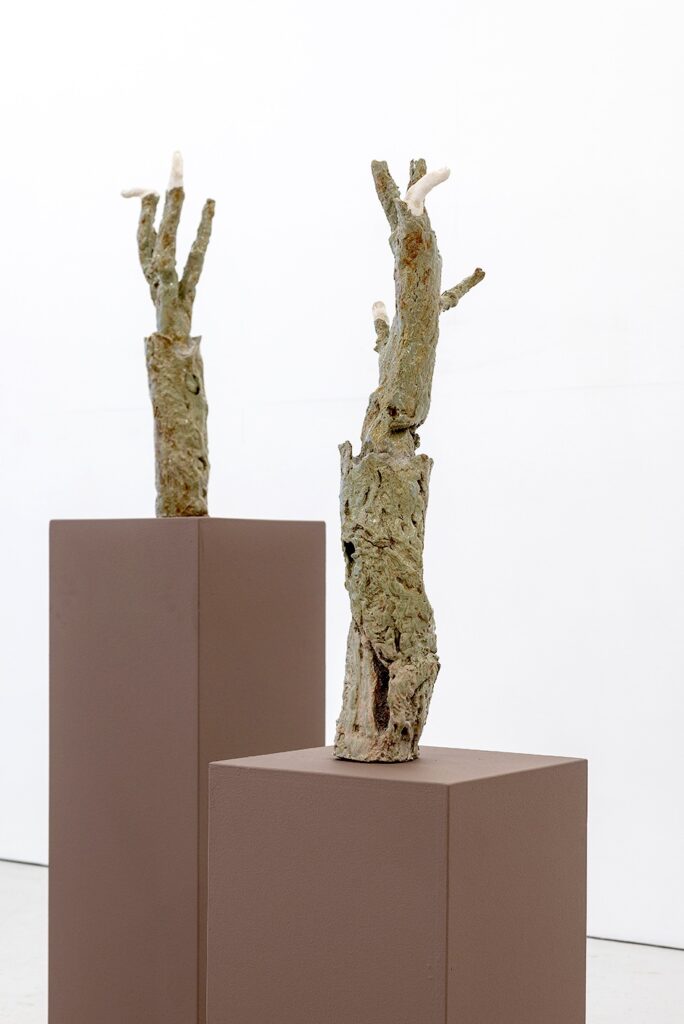
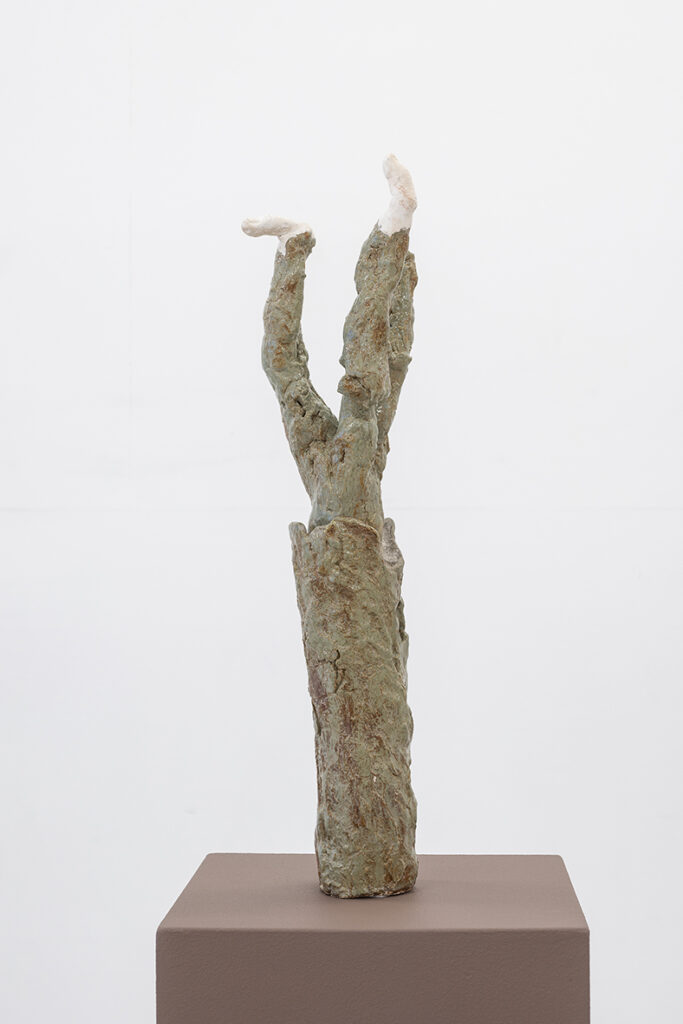
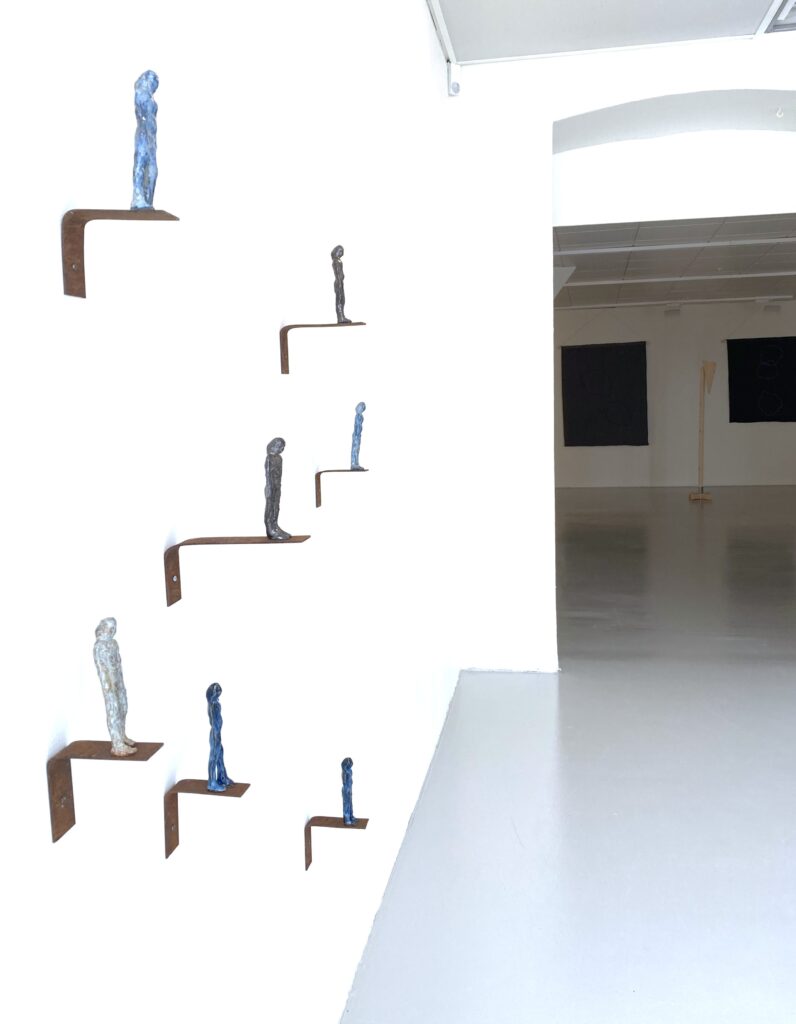
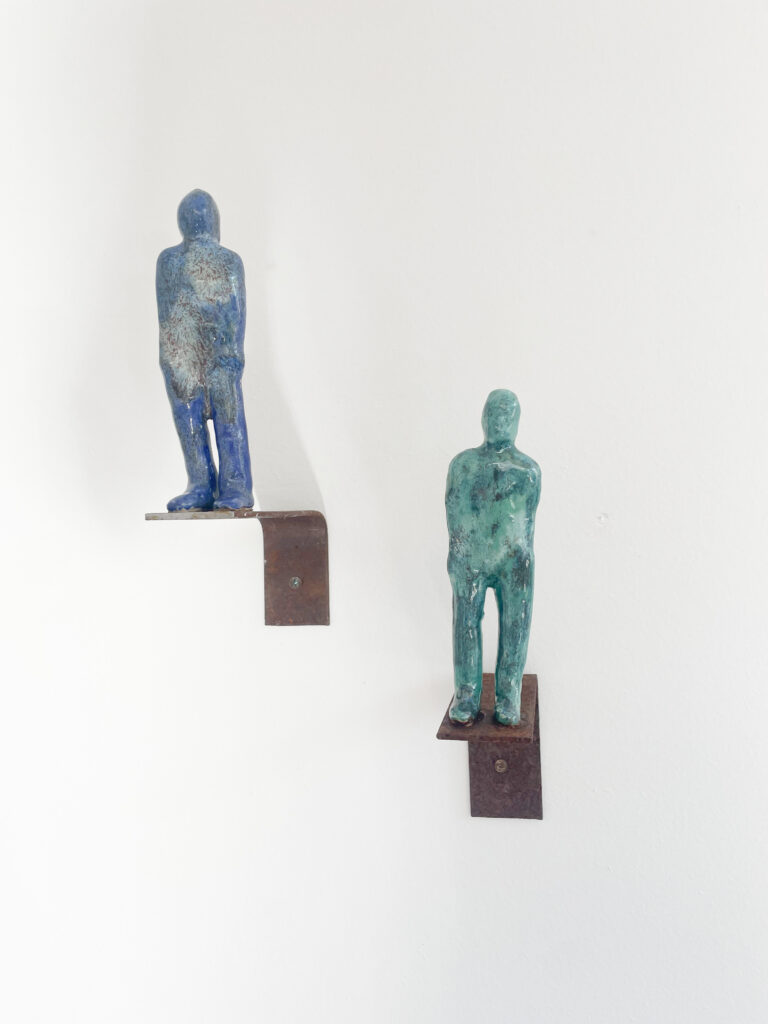
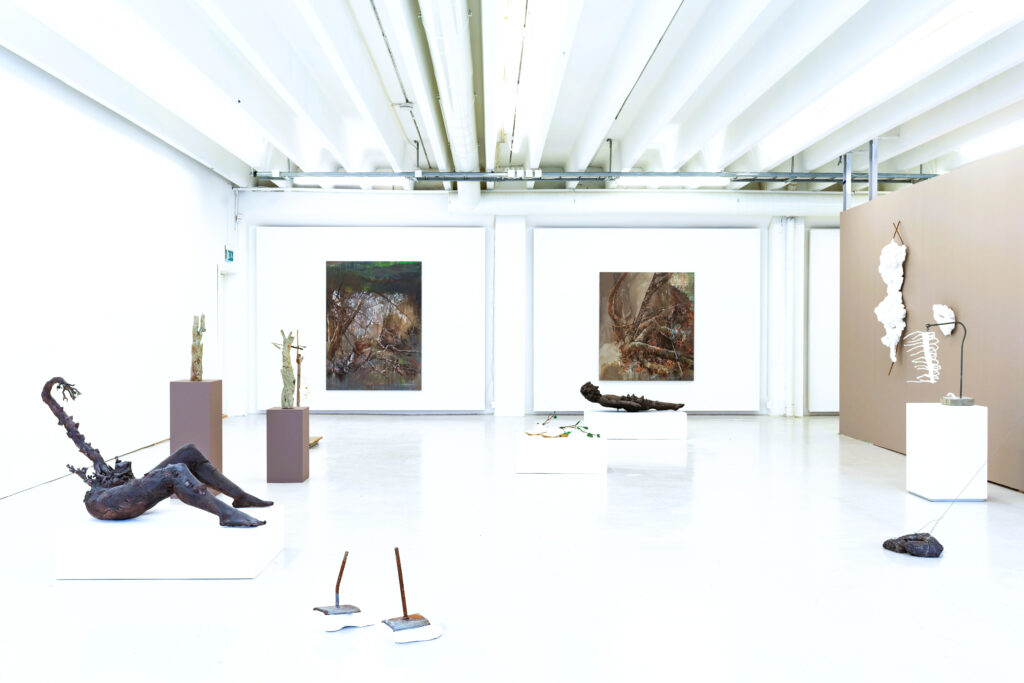
“A Resonance in the Skull” evokes a sense of movement—something echoing, repeating, or reverberating. Perhaps even something on the verge of breaking down, surrendering, or looping endlessly. These words serve as a backdrop for the works in this exhibition: pieces in flux and transformation, echoing themes of evolution and evolutionary psychology.
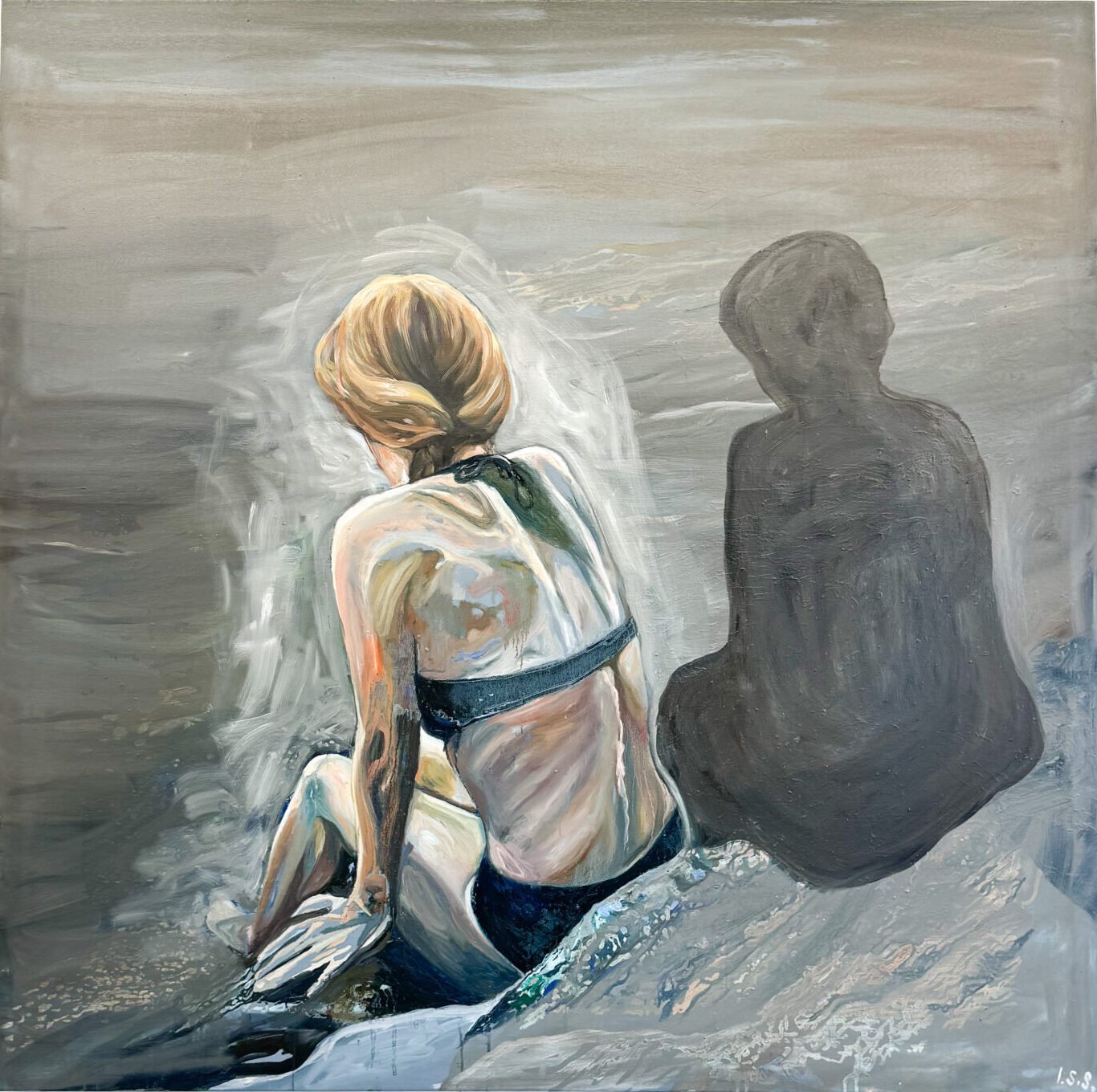
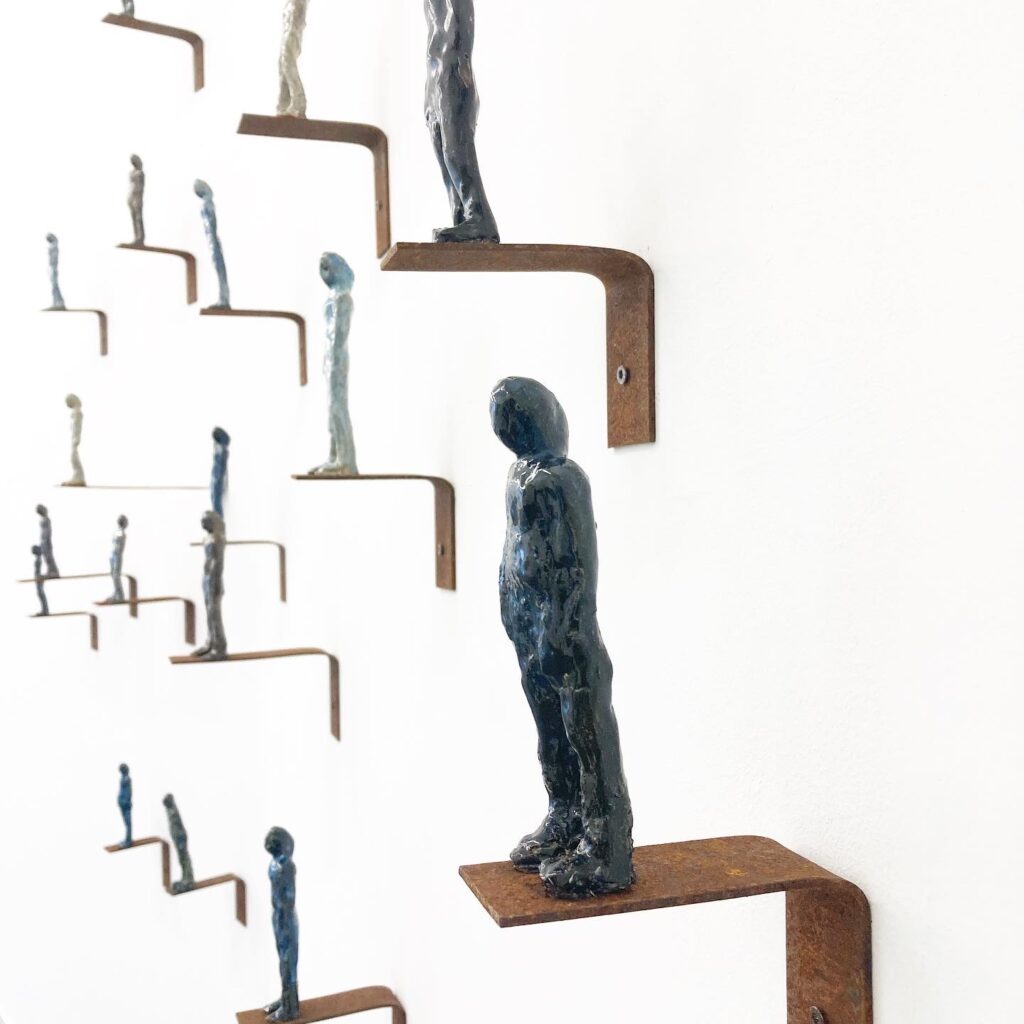
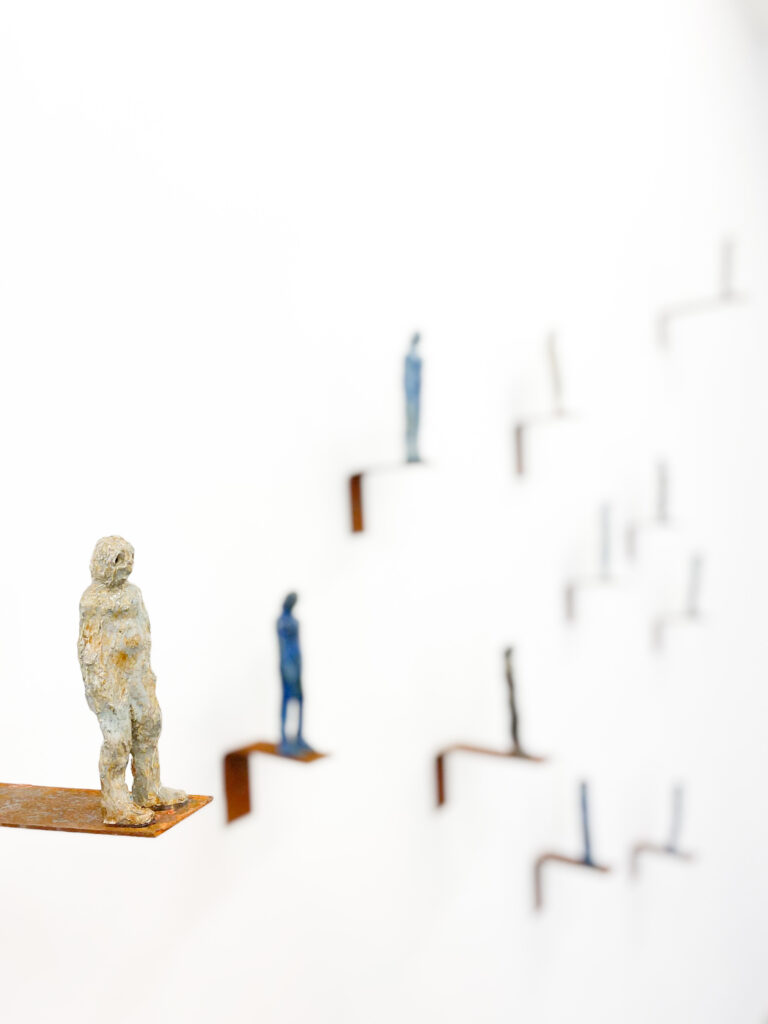
Inga’s works balance between the familiar and the unknown, nature and culture.
Reality is often turned on its head—inviting reflections on human existence, our states of being, and the conditions we live within.
Through these juxtapositions, my aim is to discover new meanings that emerge at the edges—within contrasts, tensions, and the outer limits.
The approach has been things that are developing and changing, similar to evolution and evolutionary psychology. The work balances between the familiar and the unknown, nature and culture.
Through sculpture, installation or painting, I try to create ambivalent images or scenarios. The formal language alternates between surrealism and figuration, where familiar objects are combined with more open forms and elements.
Reality is turned upside down, and hopefully the images open up for reflections and thoughts about human conditions and conditions.
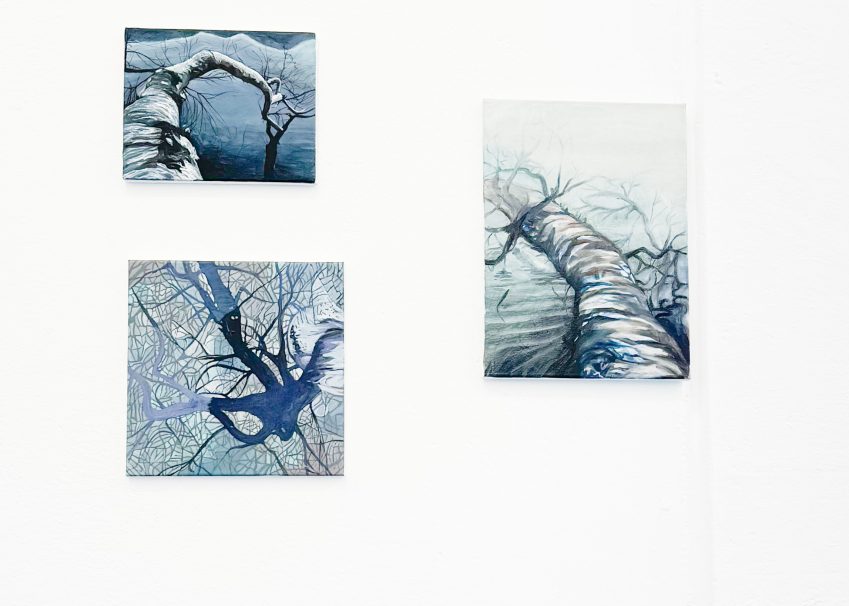
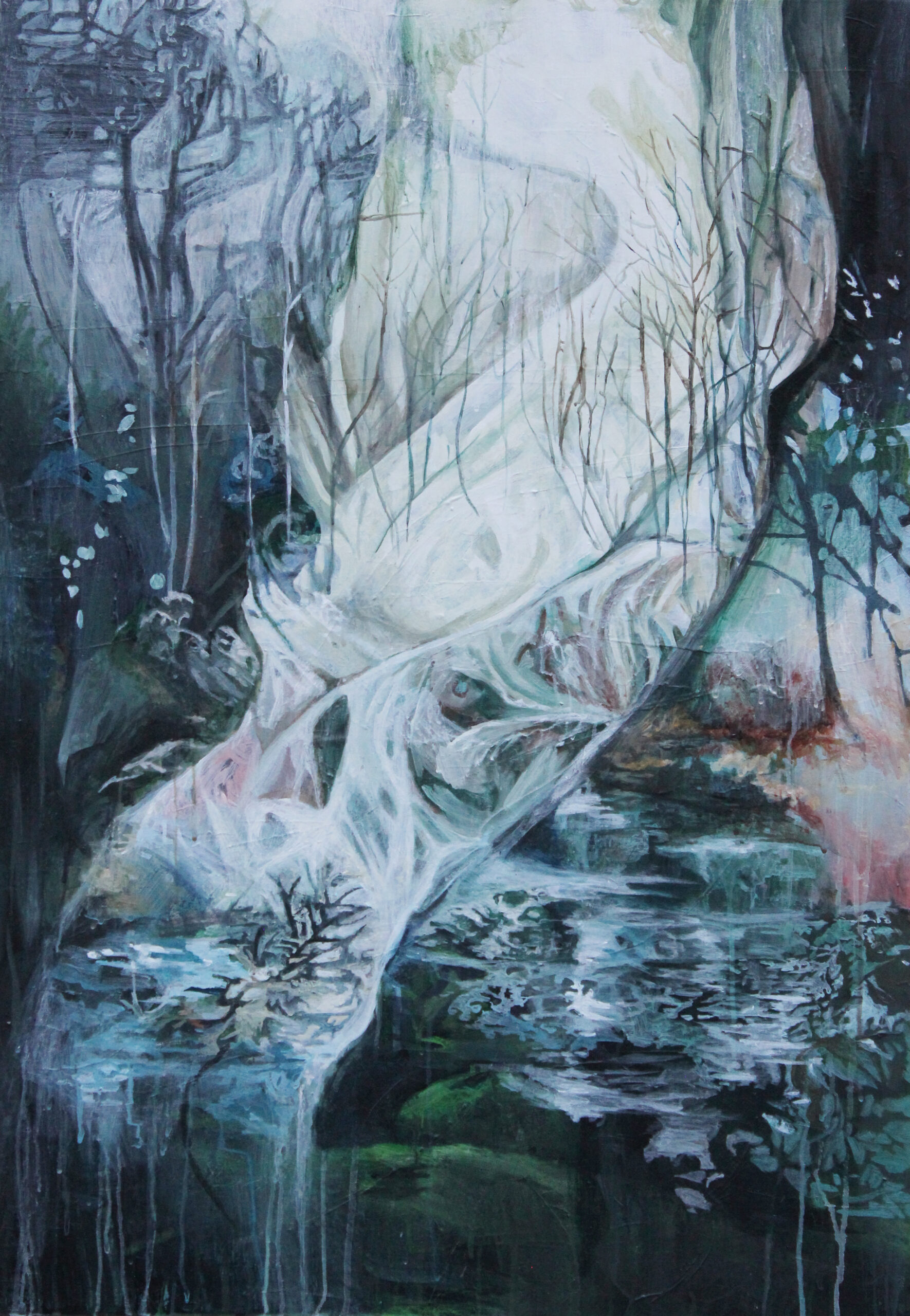
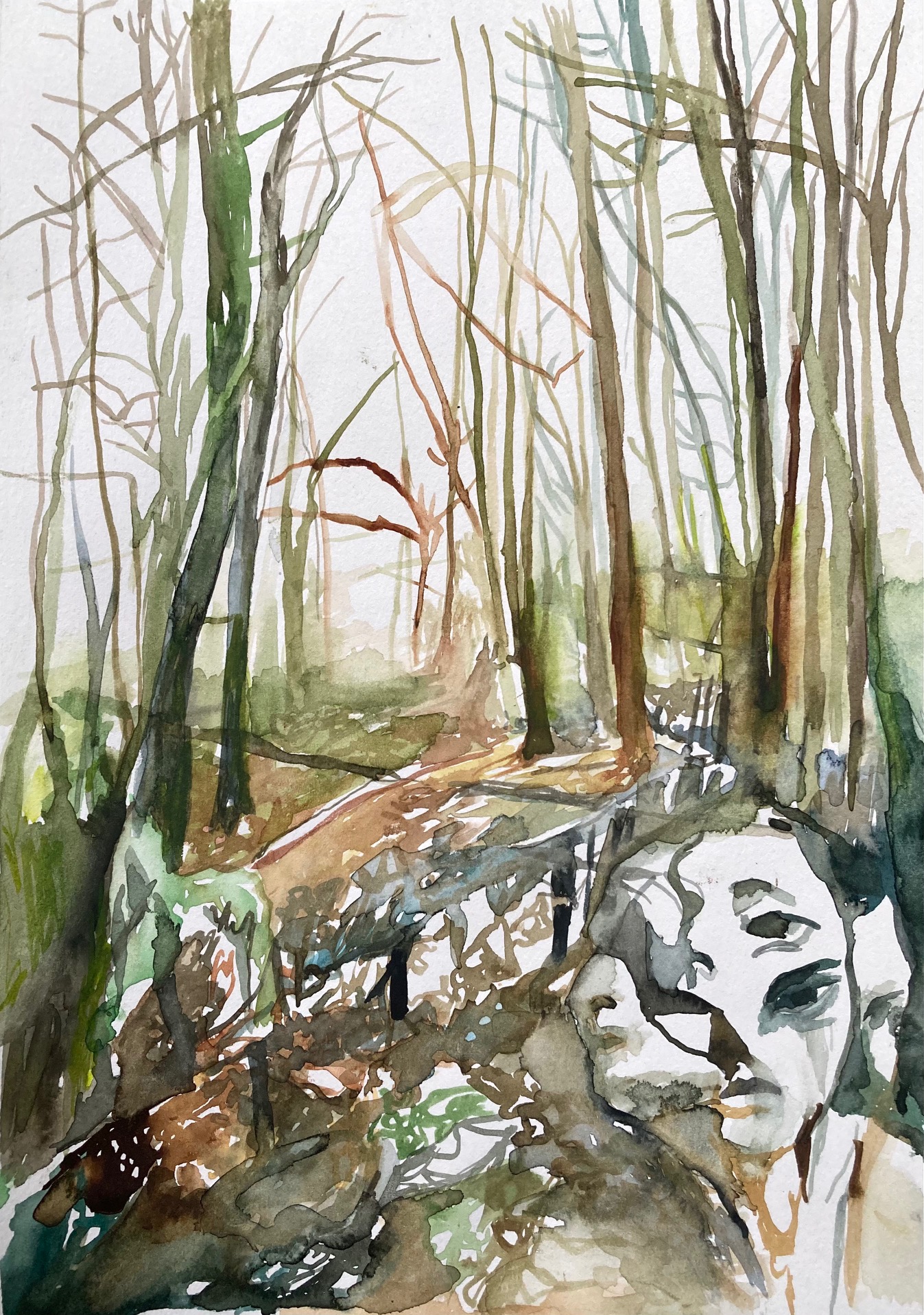
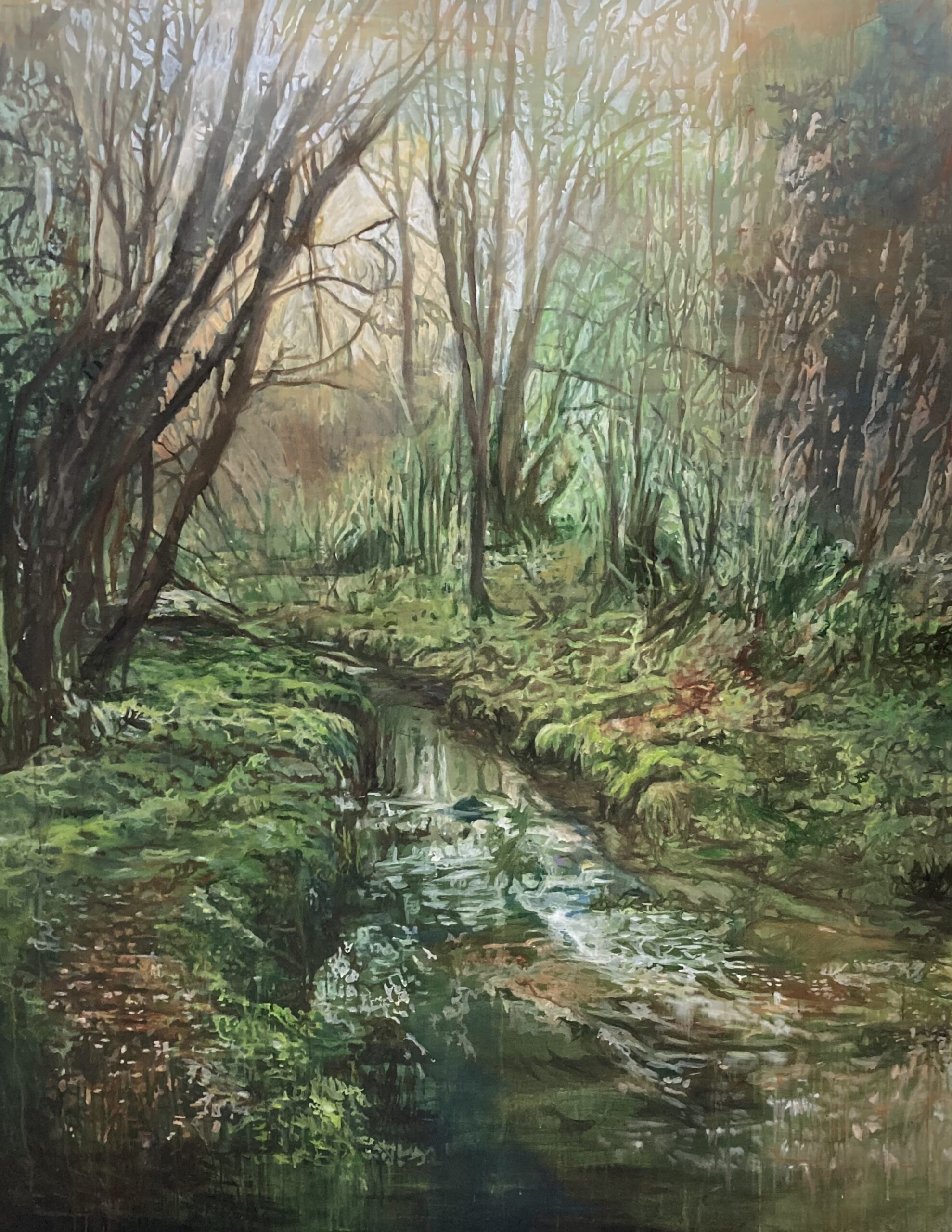
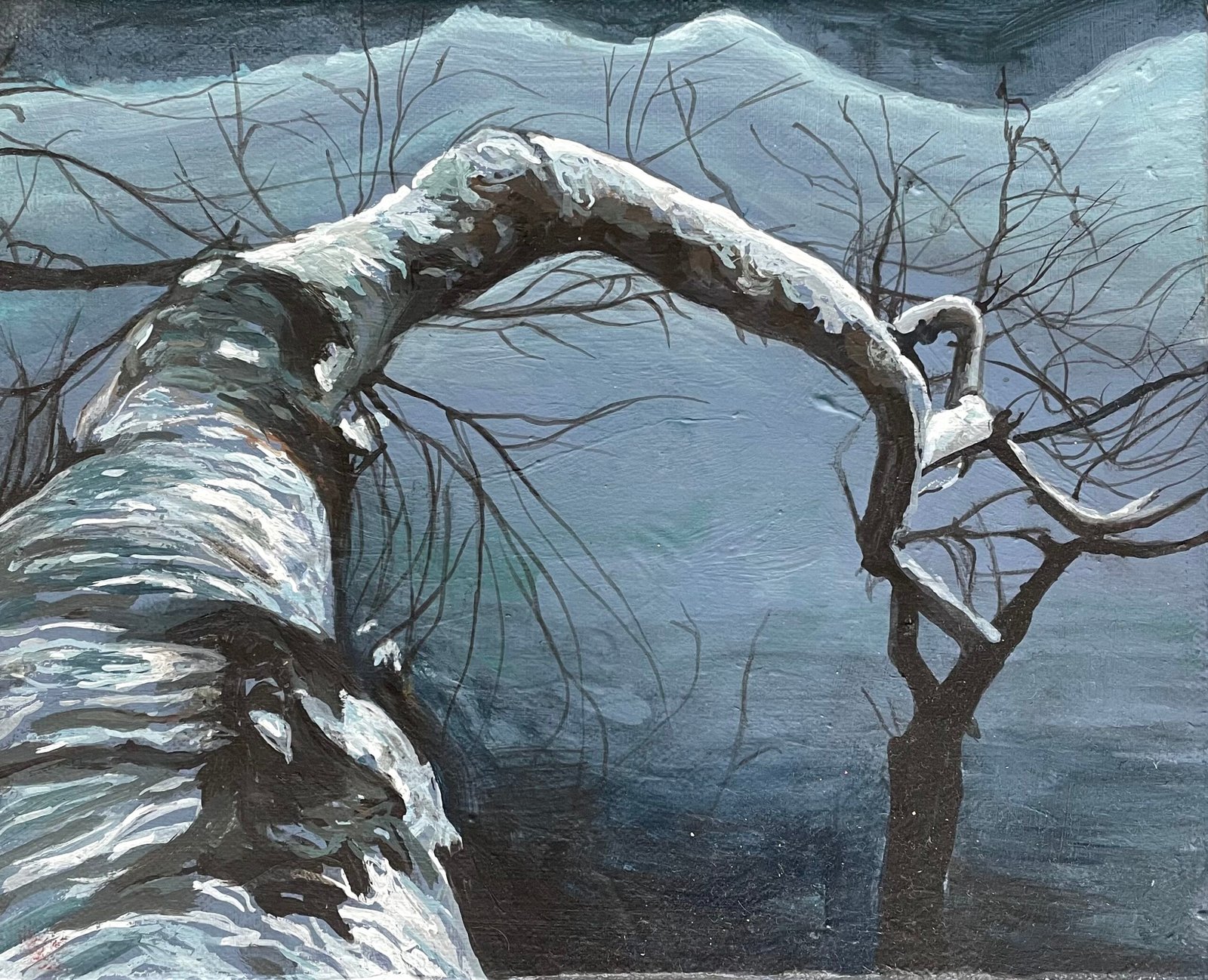
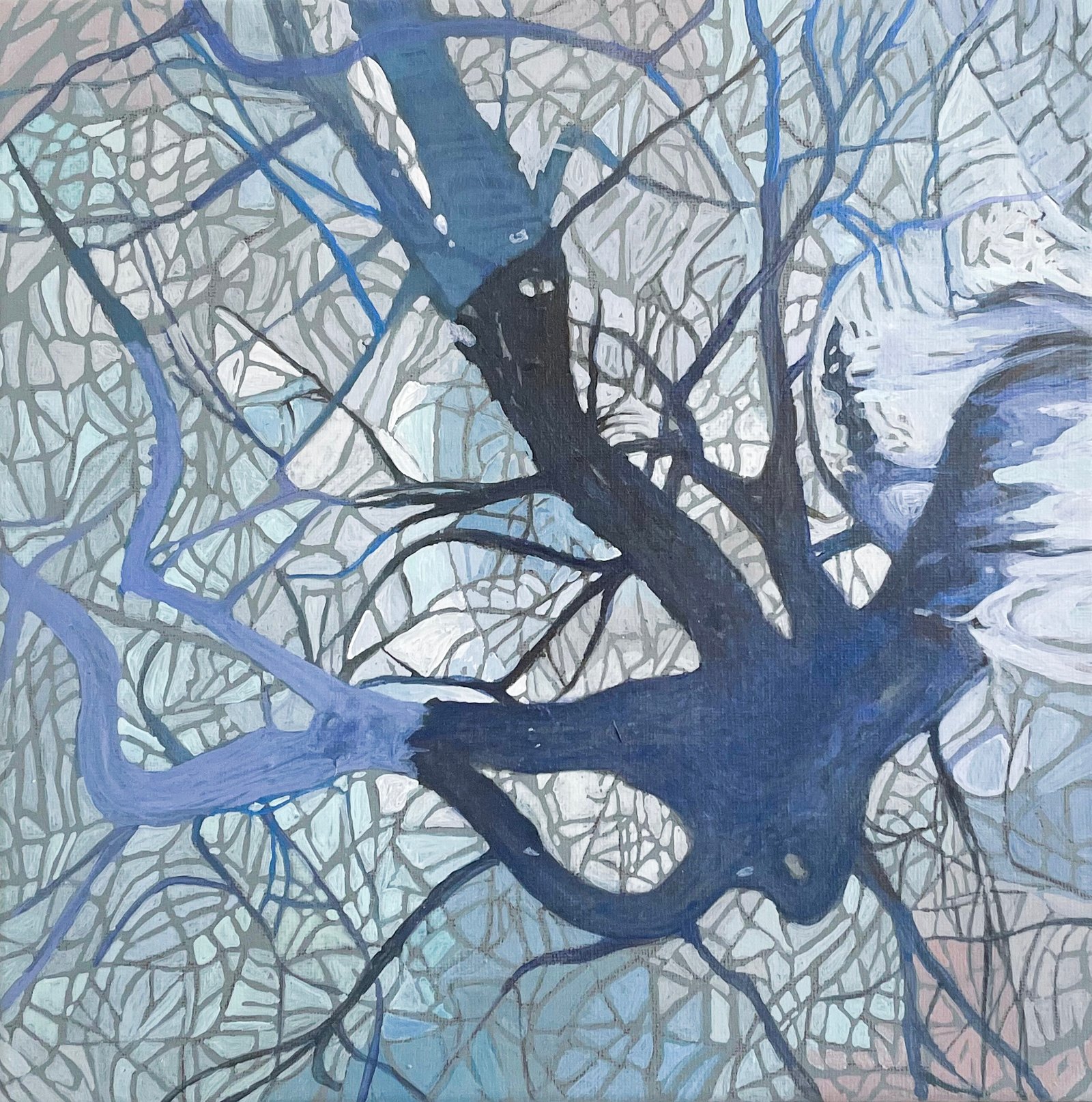
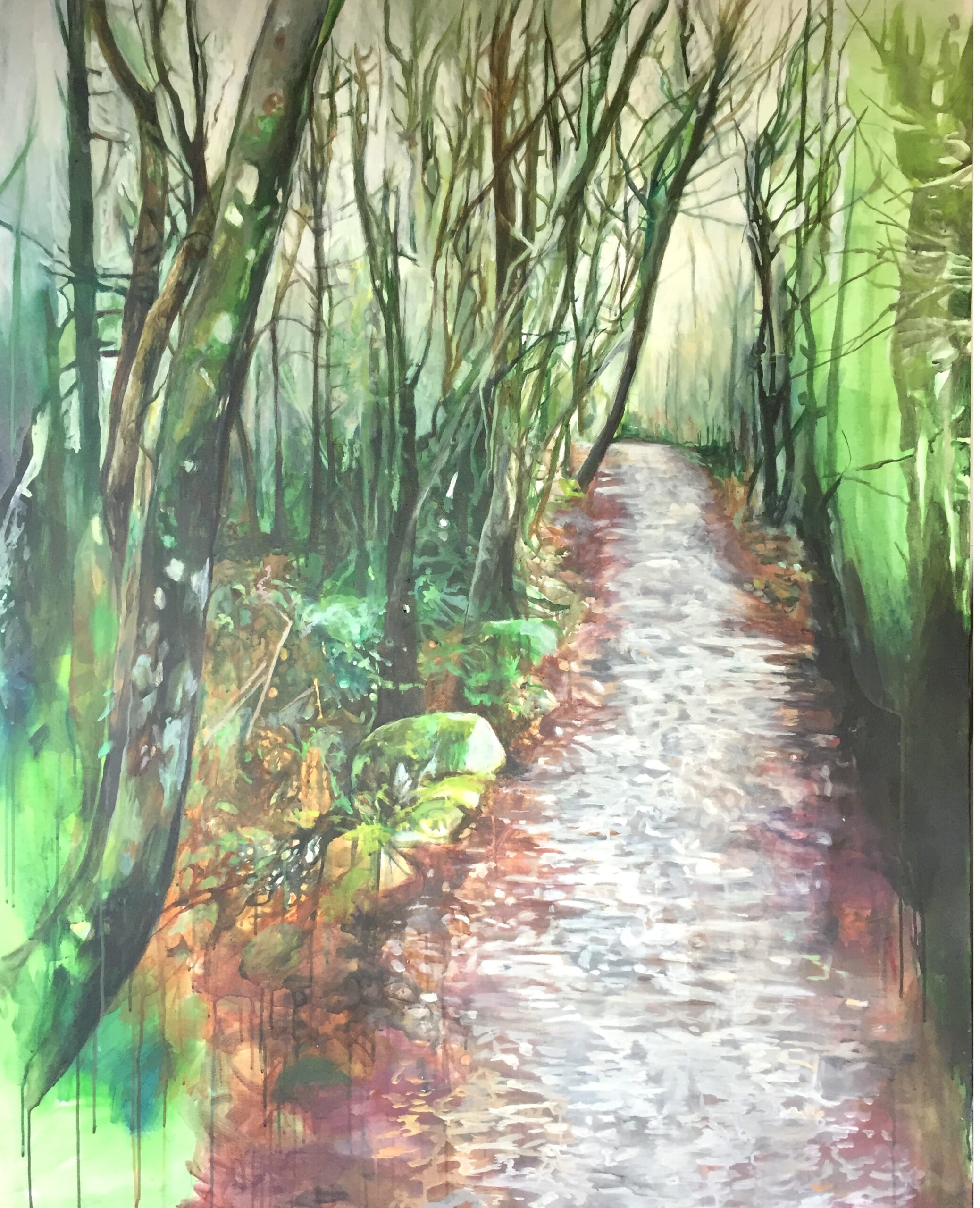
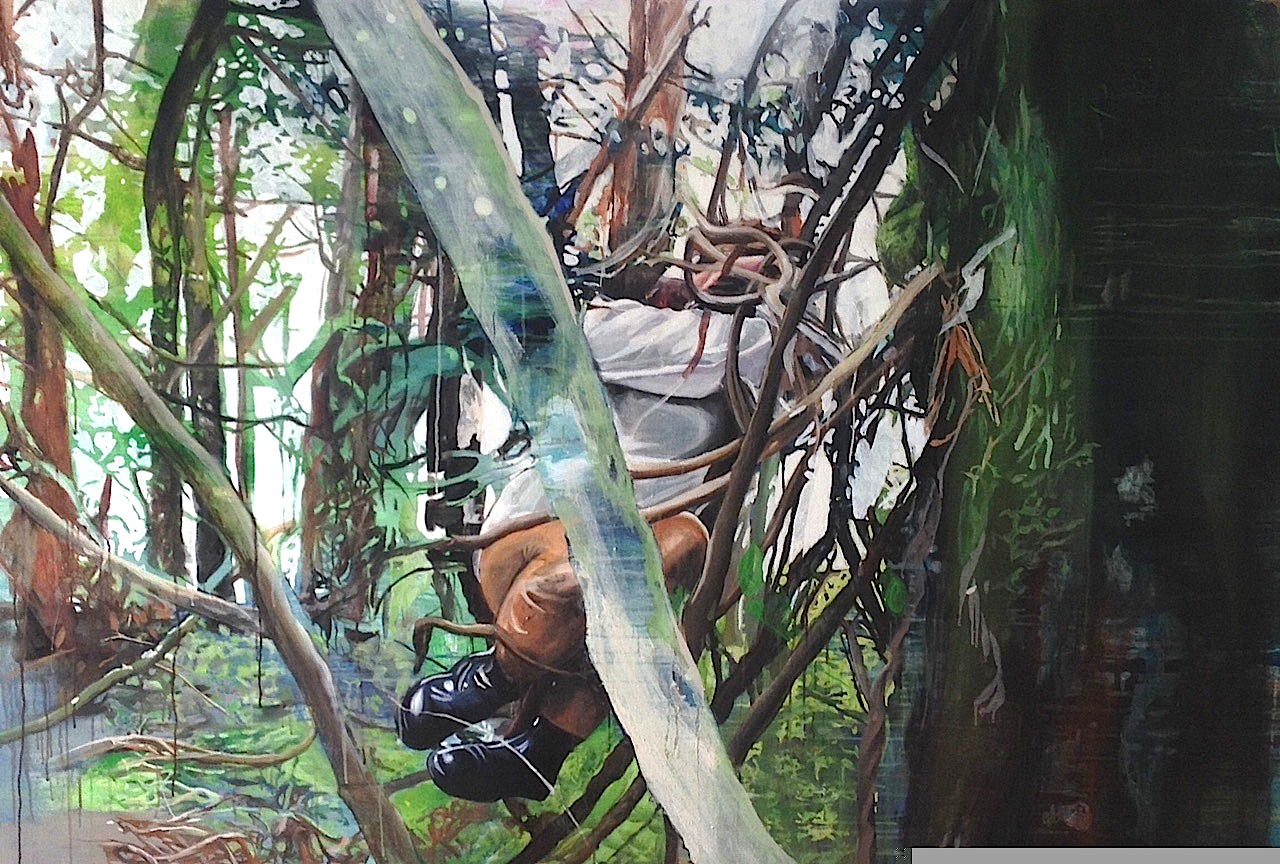
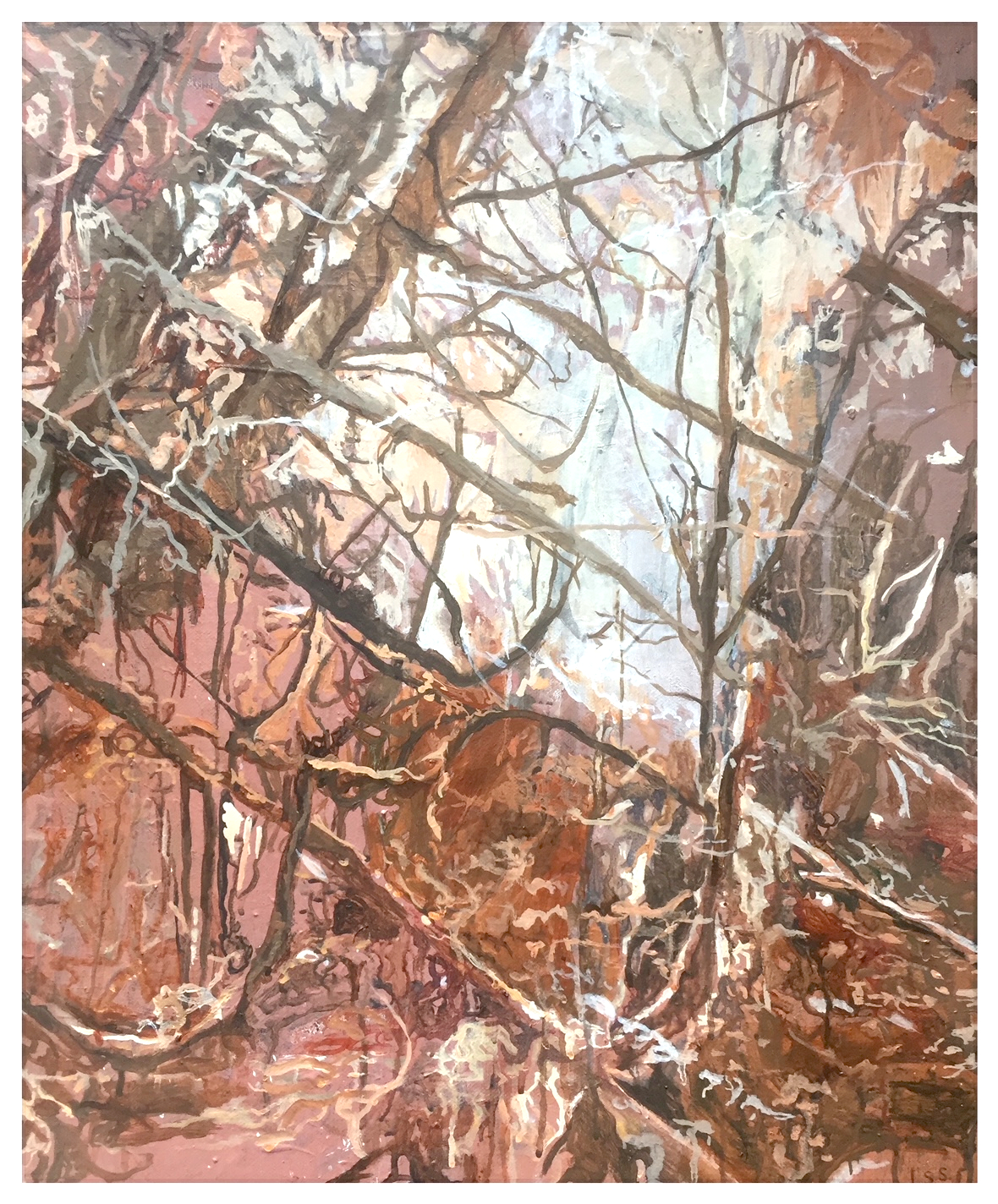
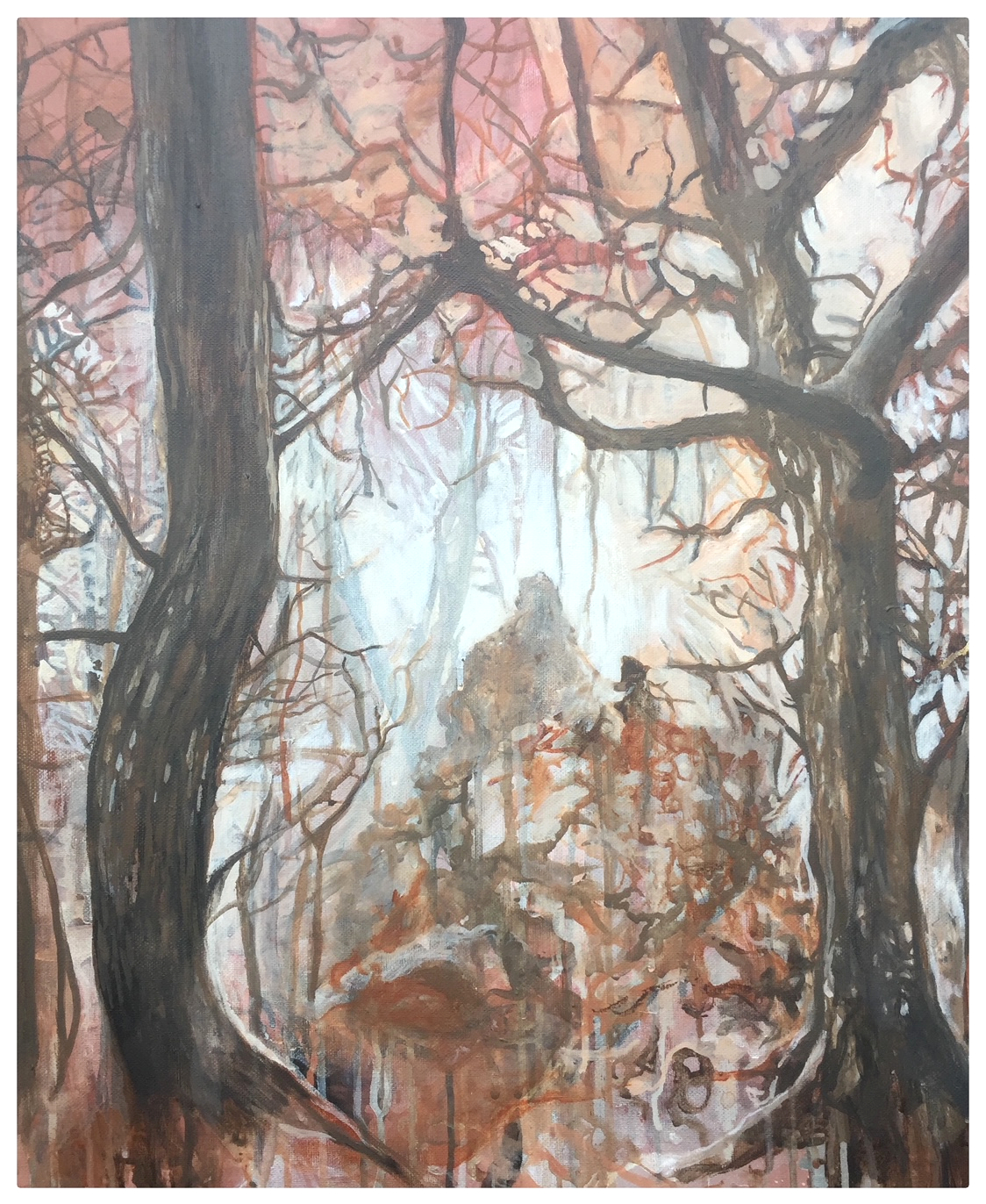
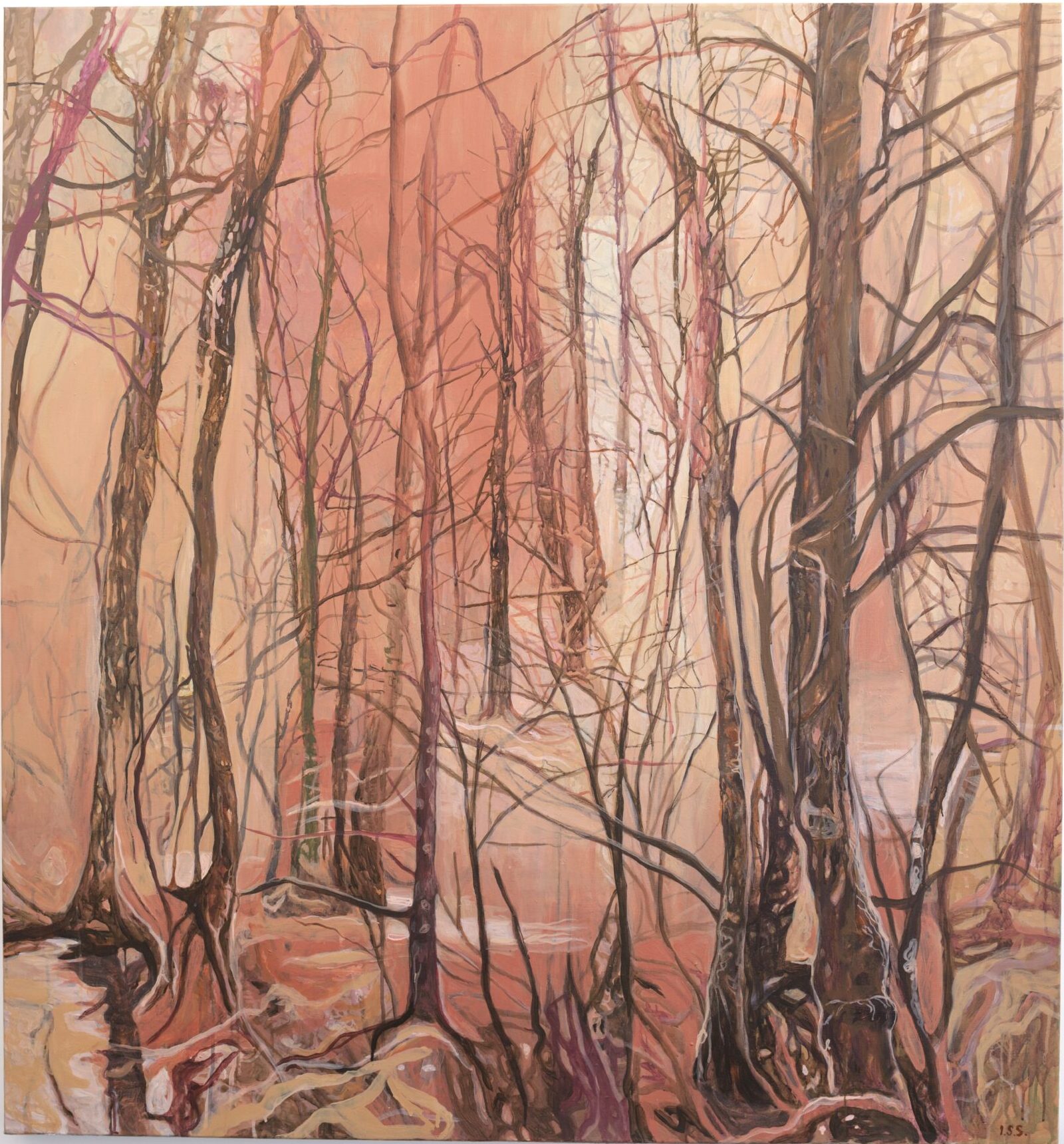
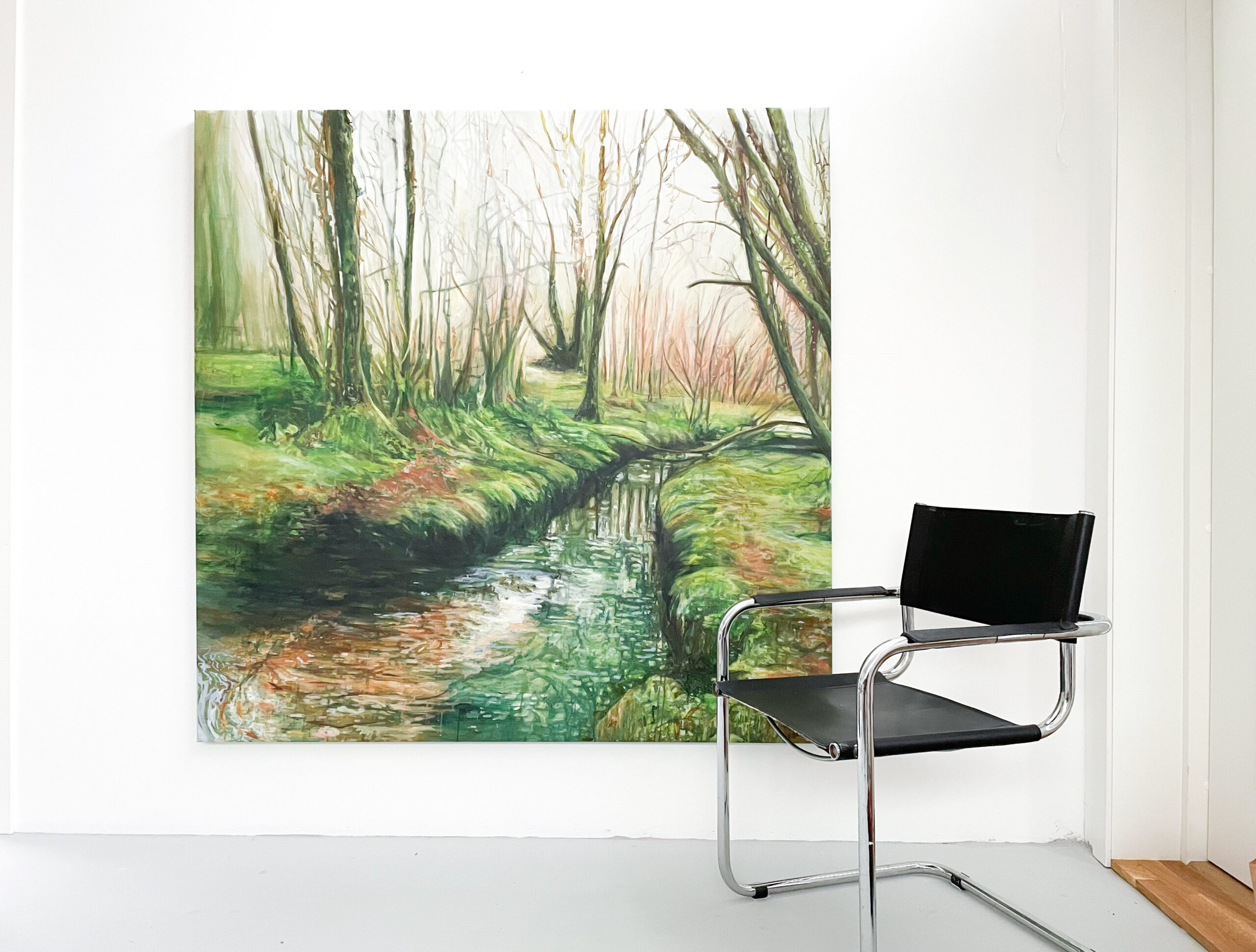
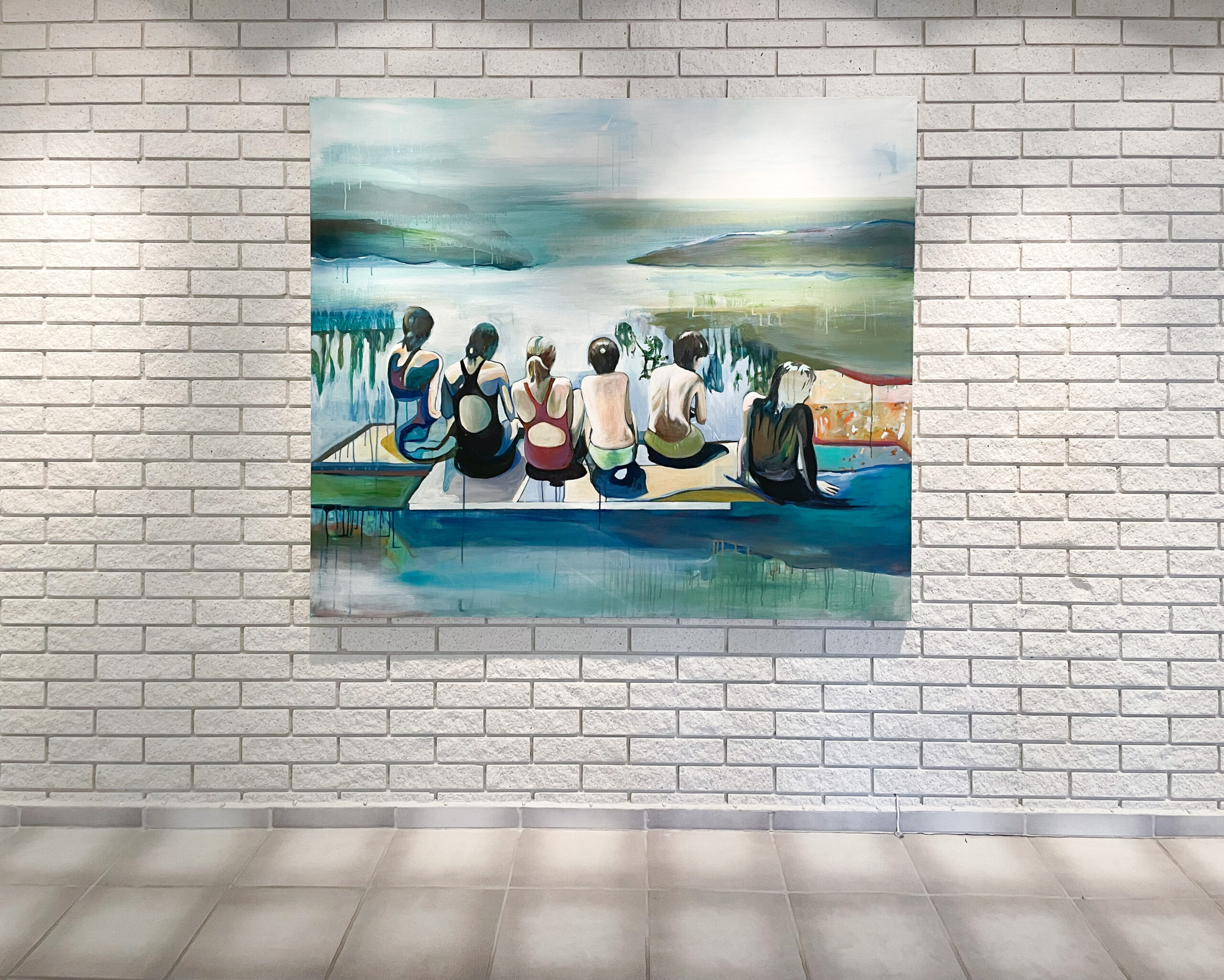
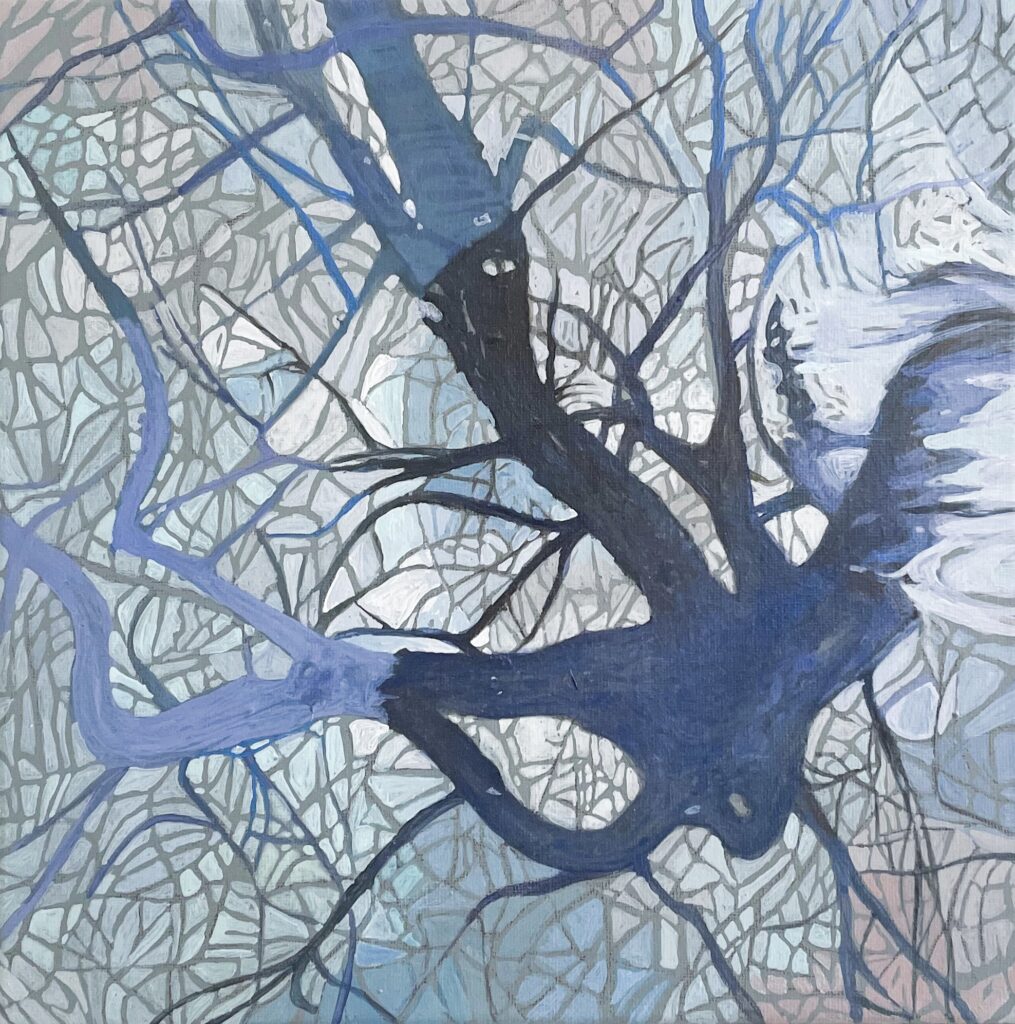
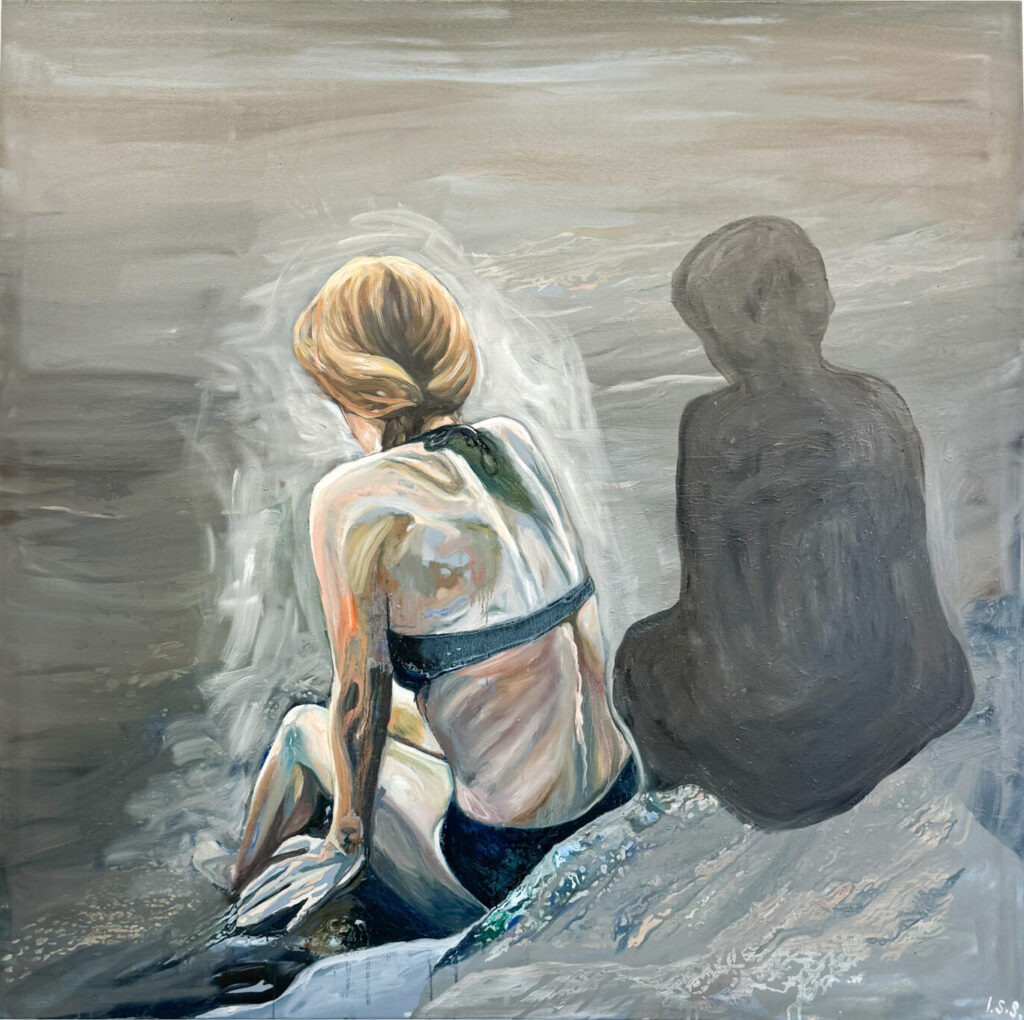
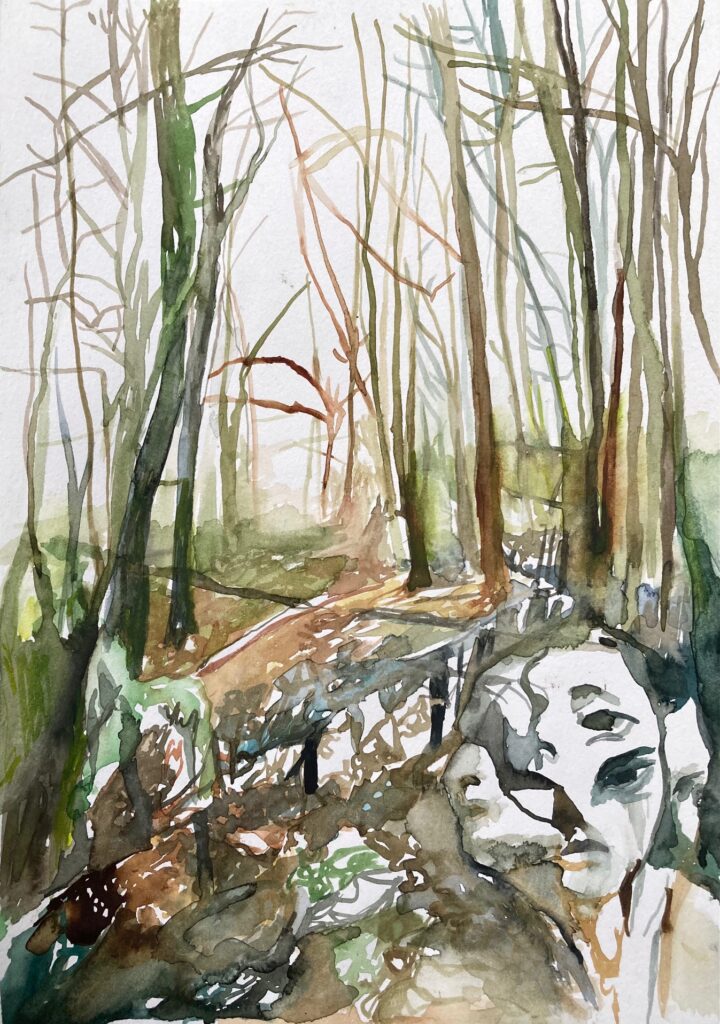
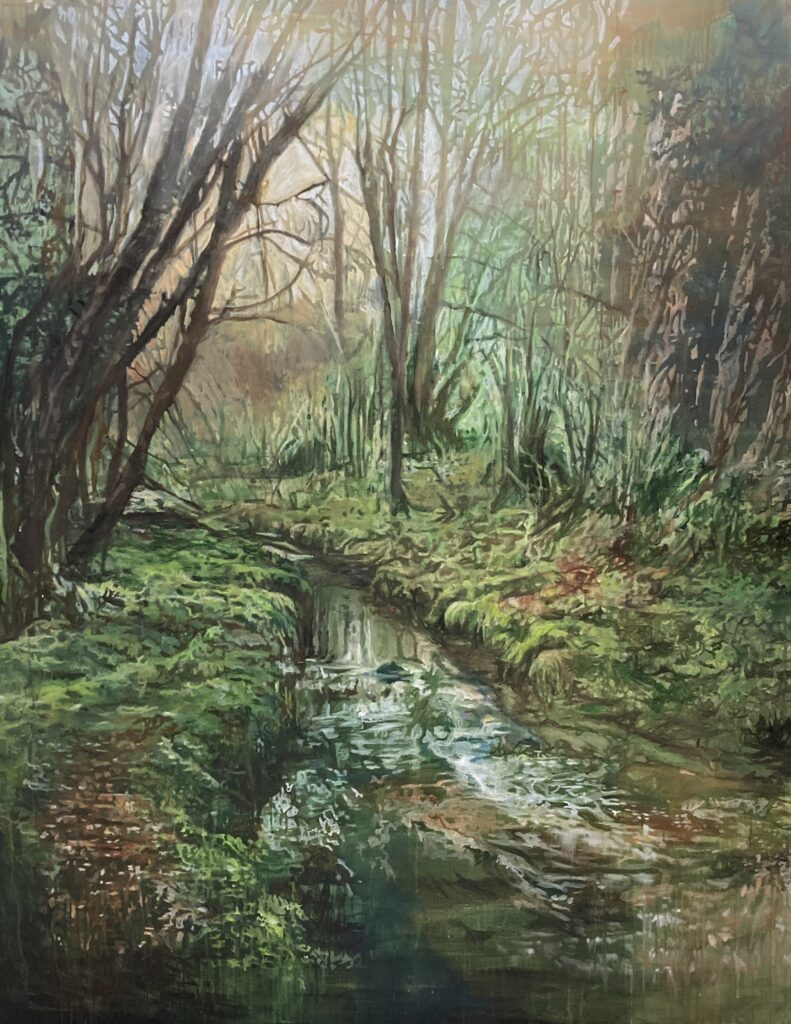
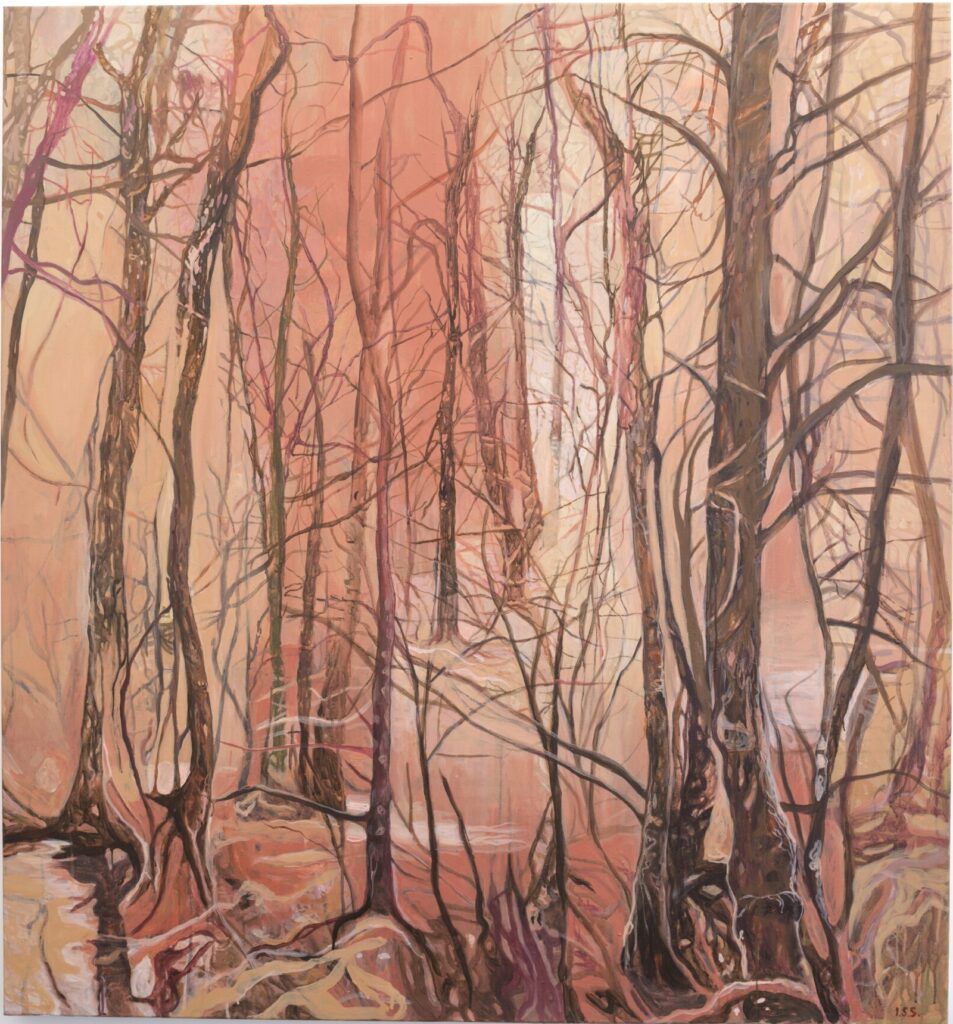
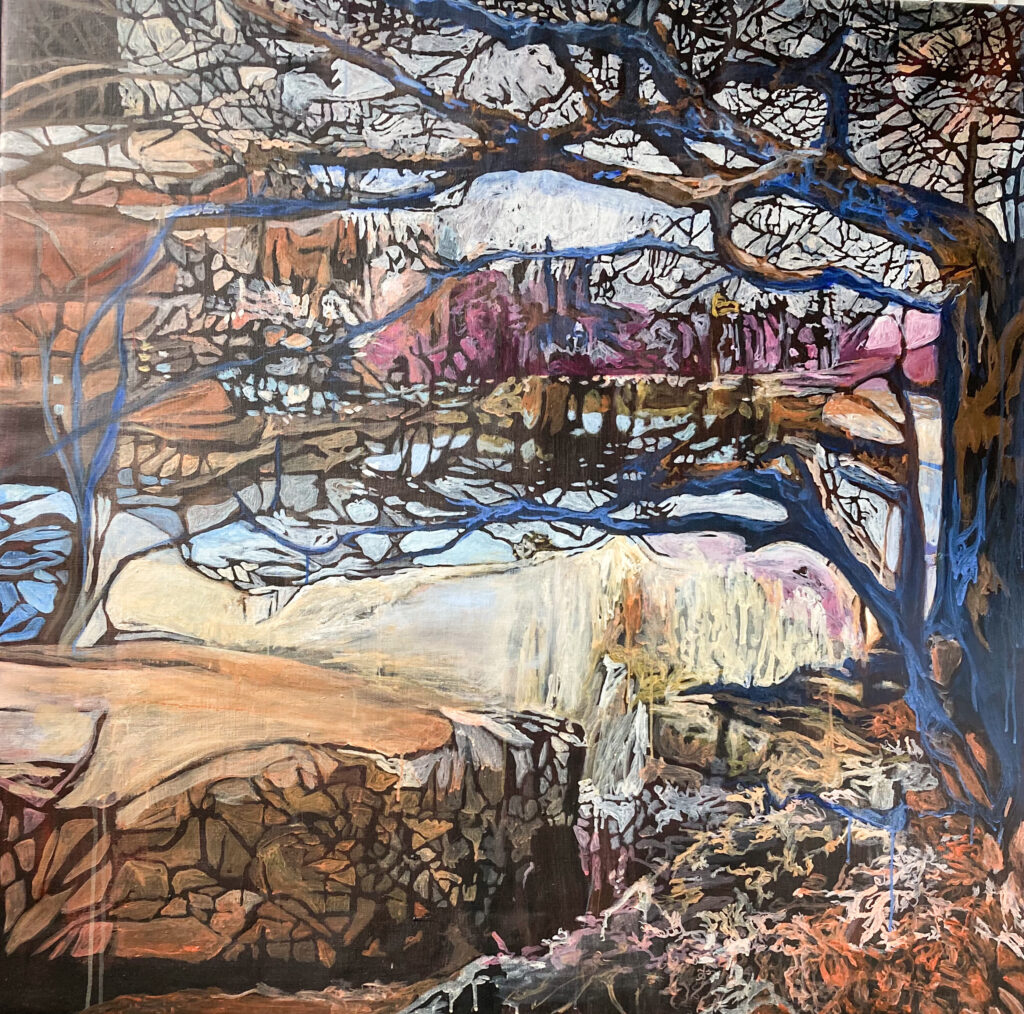
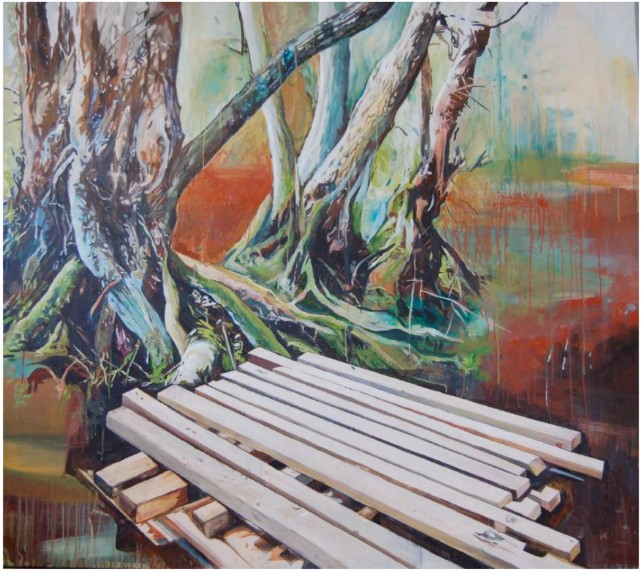
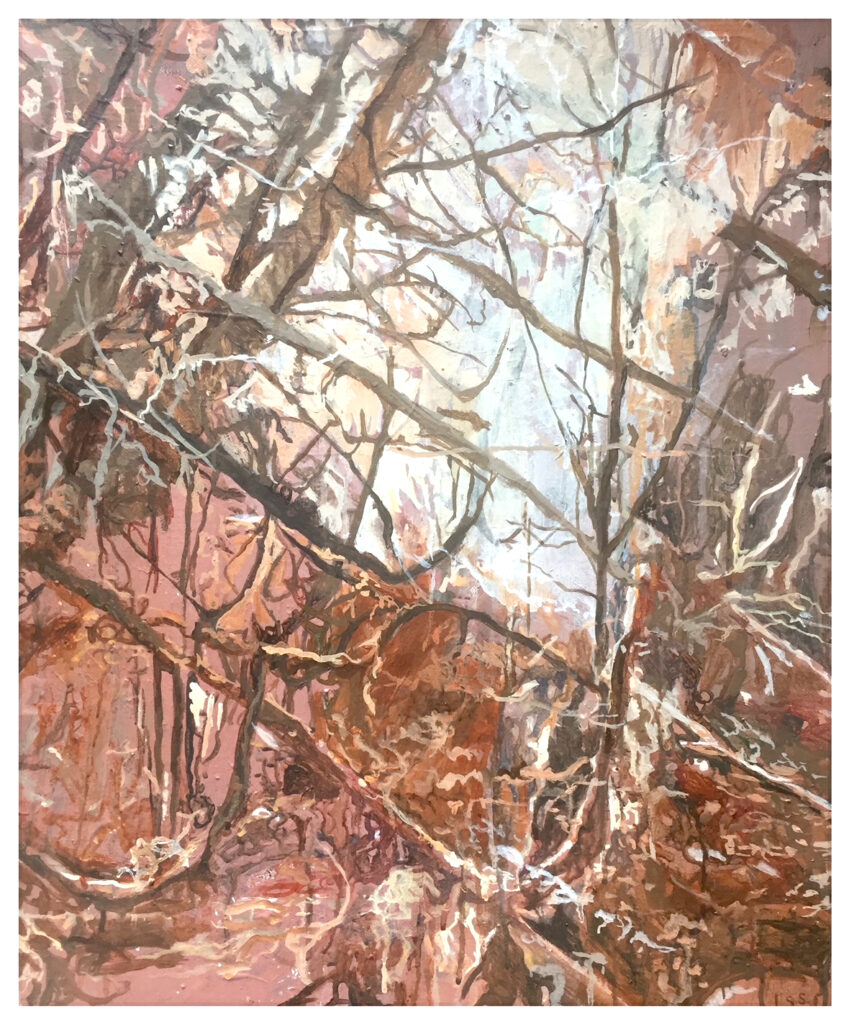
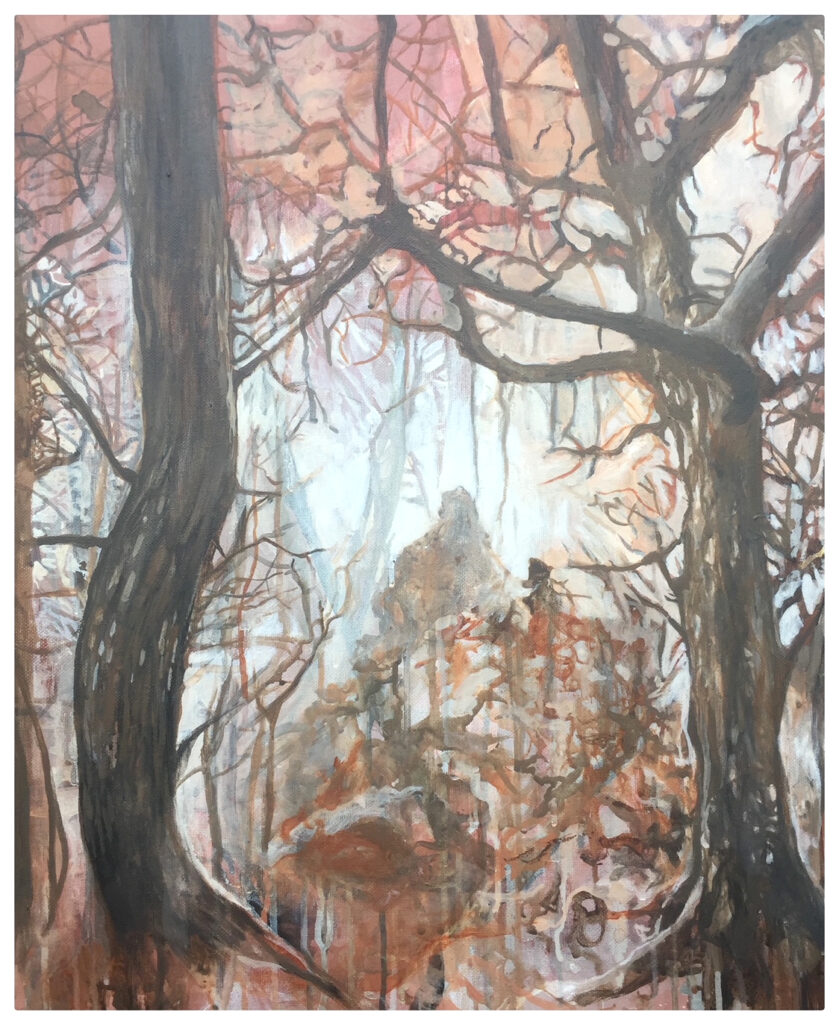
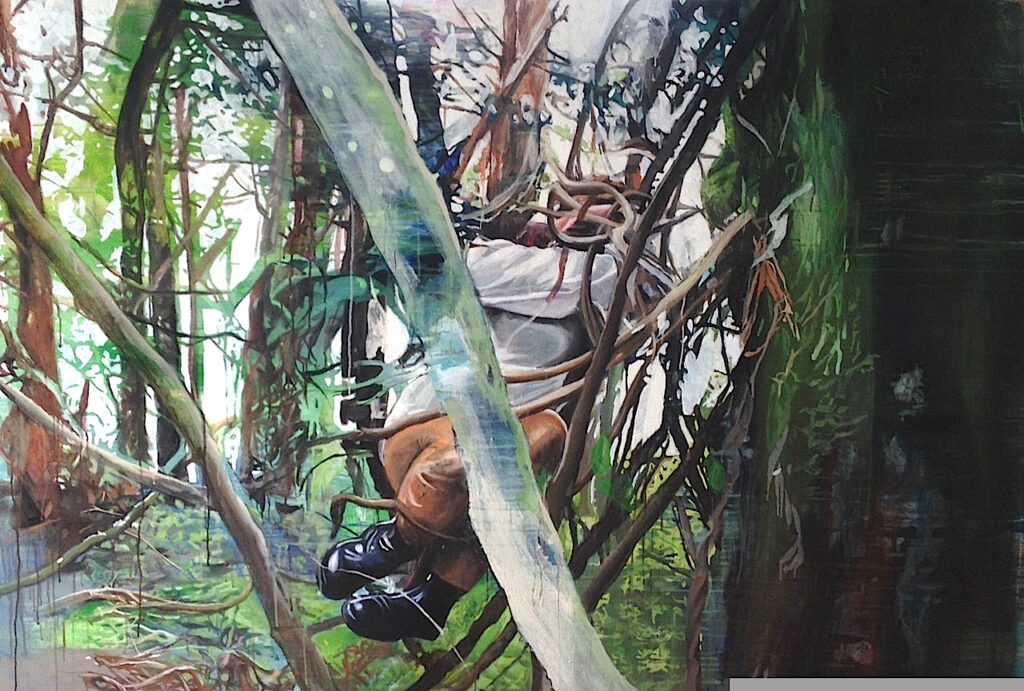
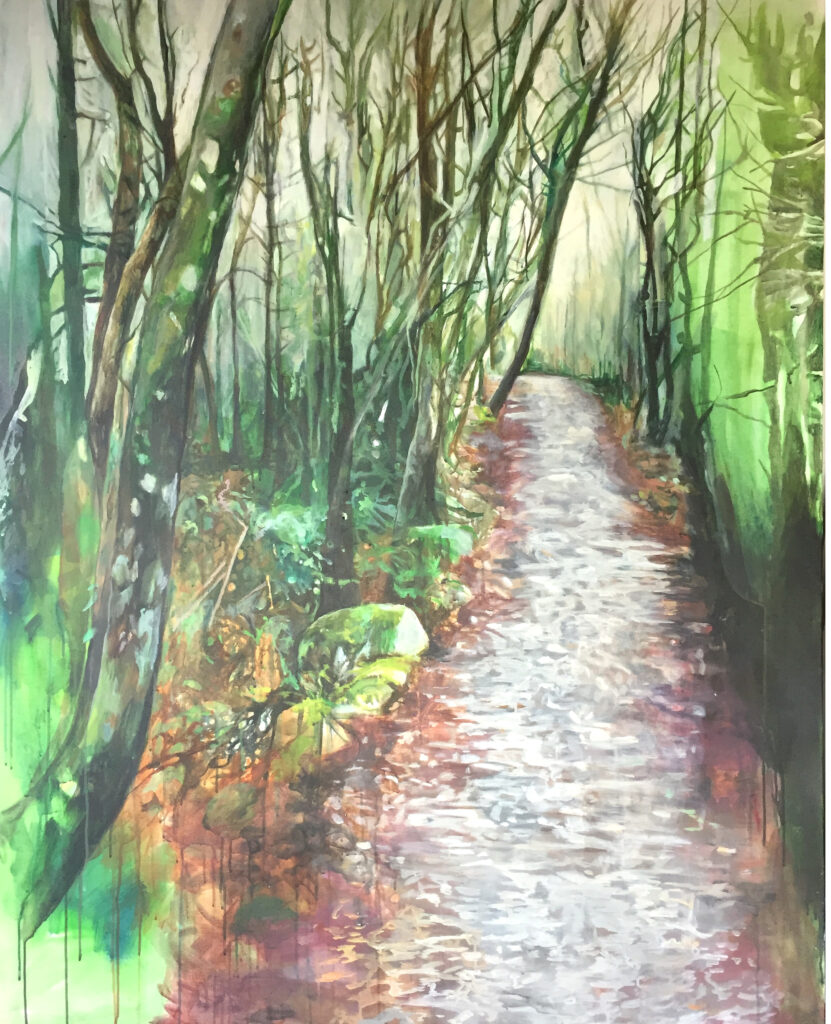
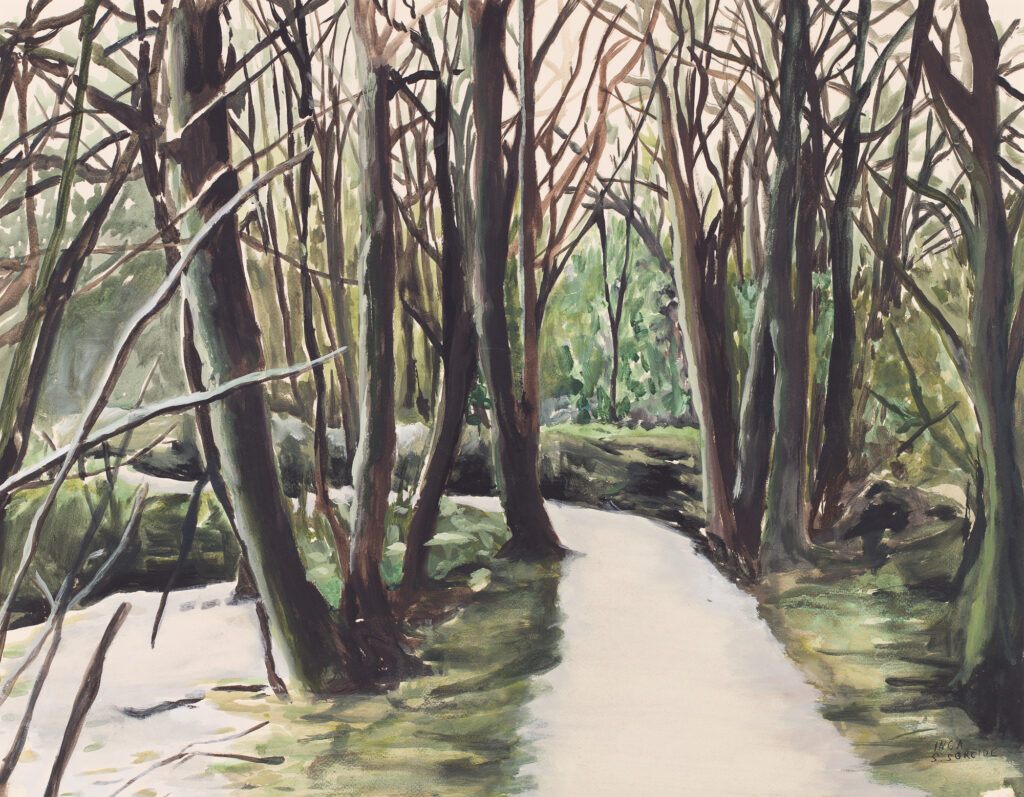
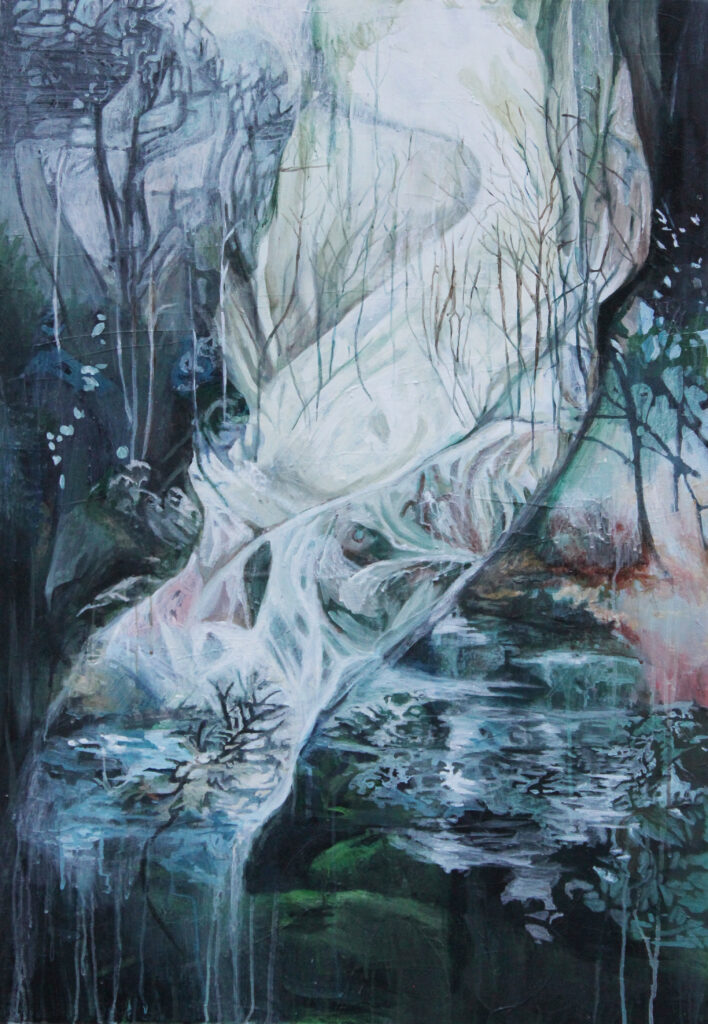
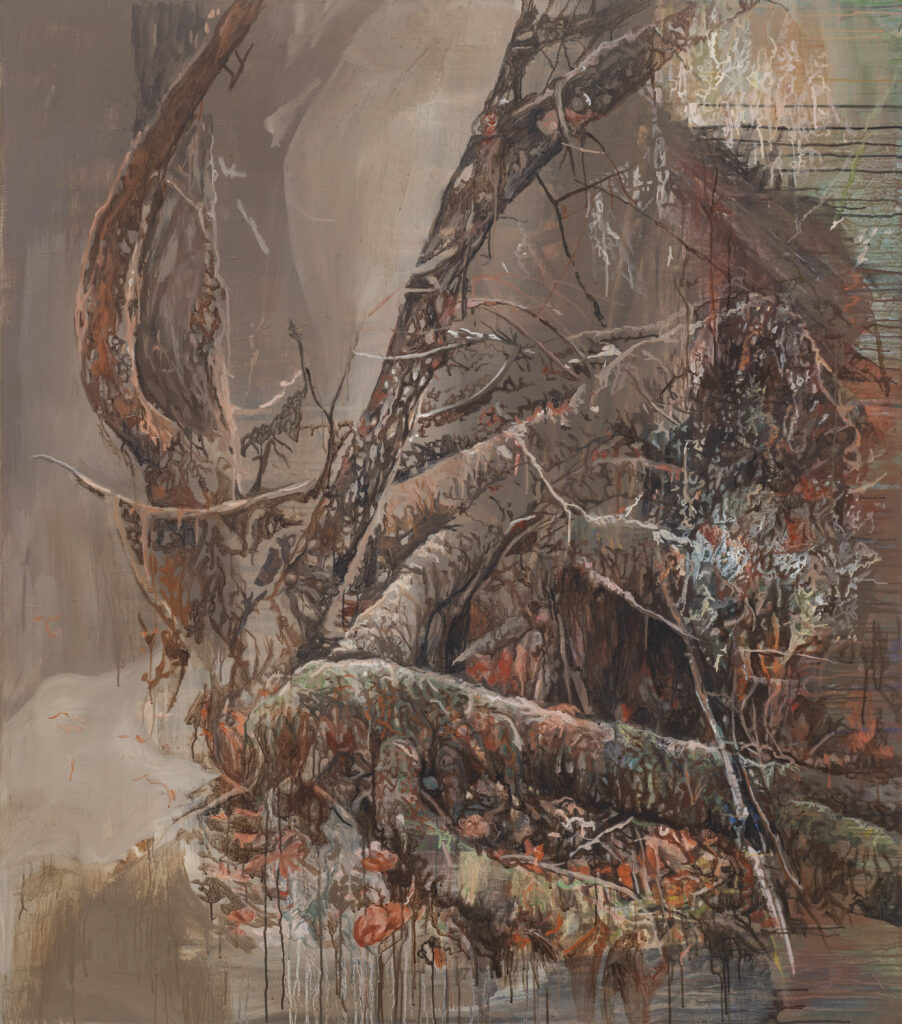
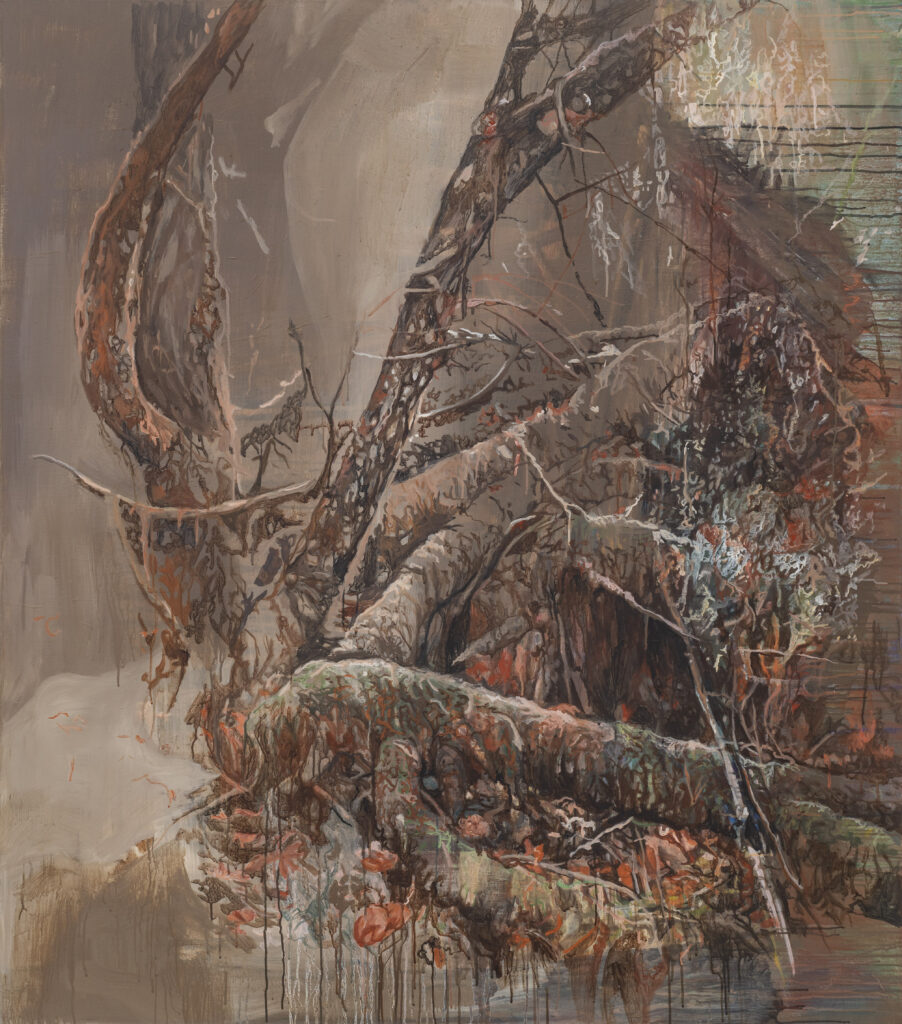
The motifs in the paintings have a motif circle with elements from landscapes and sculptures. The landscapes are taken from memories, where past and present meet. Different layers and parts are combined into new compositions and motifs.
With this, I want to find new meanings or interpretations in opposites and extremes through juxtapositions of different forms.
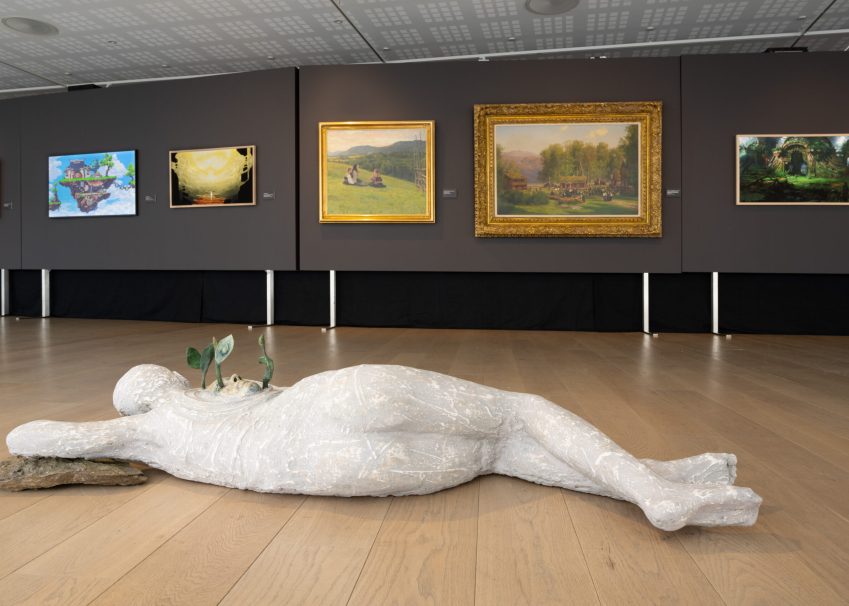
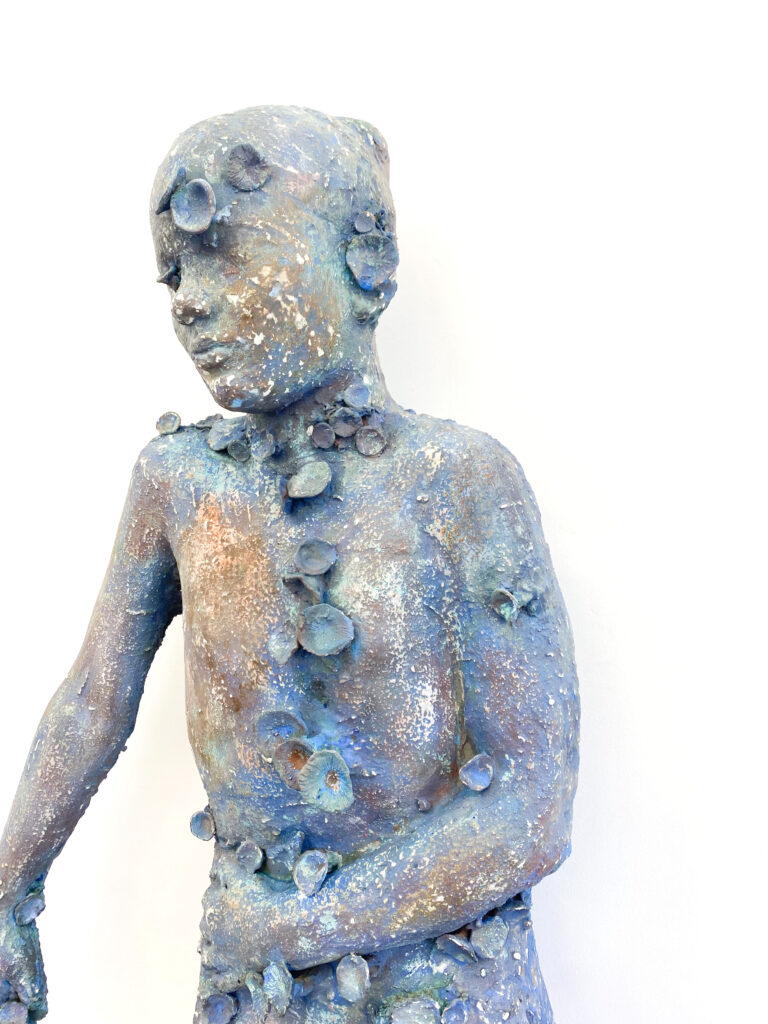
The exhibition title “Growing Bones” refers to something that is changing and growing, something that is developing. This can be read as either a physical or mental state, where the words can act as a backdrop for the motifs in the exhibition.
“Forms are not fixed. The form, function and appearance of an organism are not fixed, the interaction between organisms is not fixed. But the content, the secret of the cell, the order on the globe, is not fixed. The form of the interaction is not fixed. But that it is a continuous interaction, an eternal movement, is fixed.”
Frøydis Sollid Simonsen. Every morning I crawl up from the sea (Gyldendal 2013).
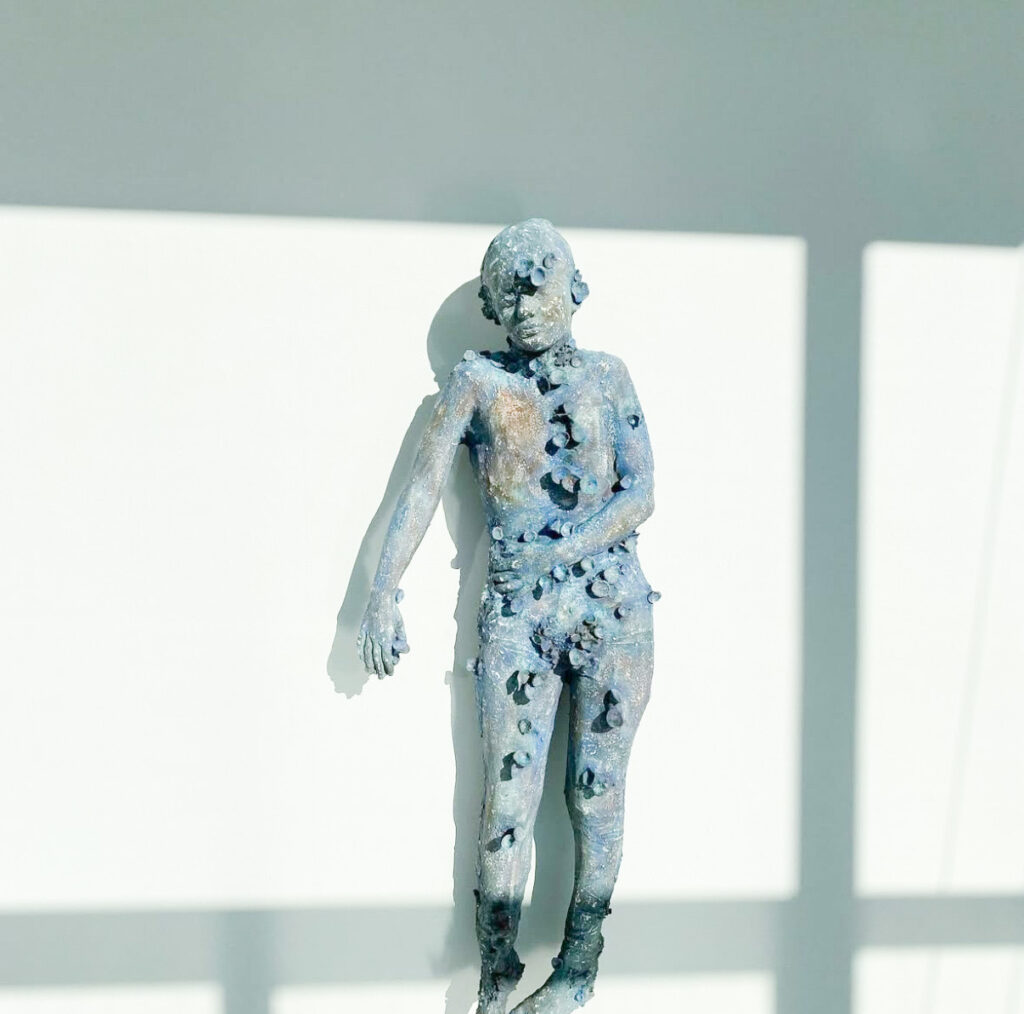
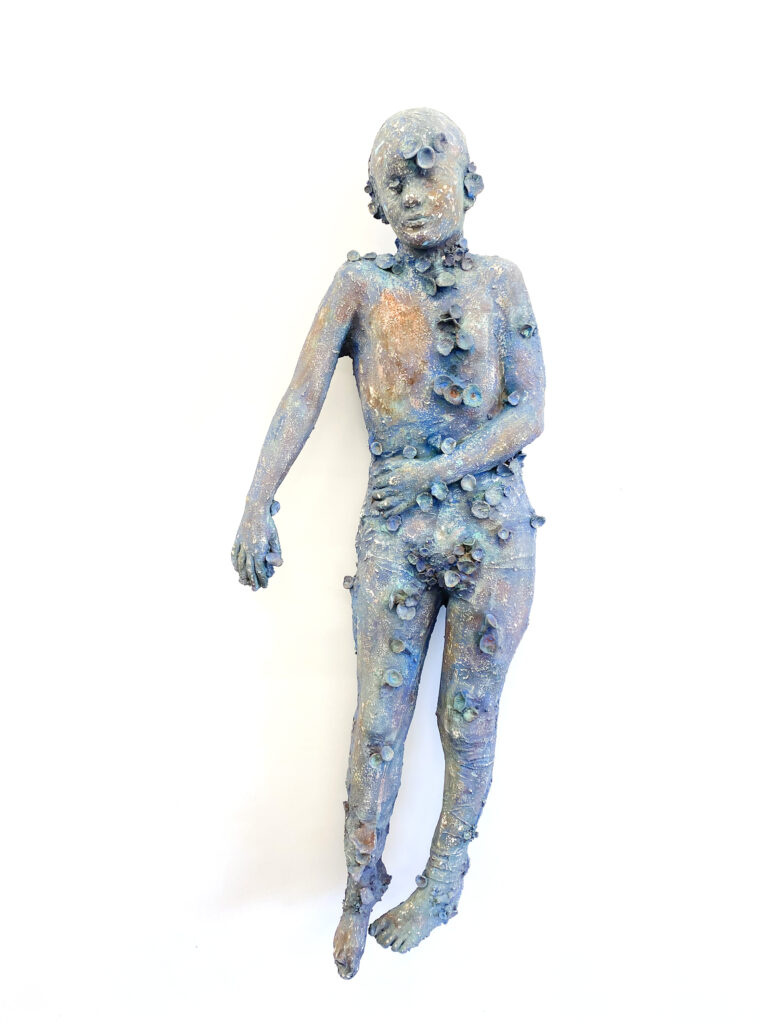
The exhibition title “Det brer seg” refers to something that is growing, in a movement. The words can function as a backdrop for the motifs, with a reflexive circle, where things extend from a start and outwards.
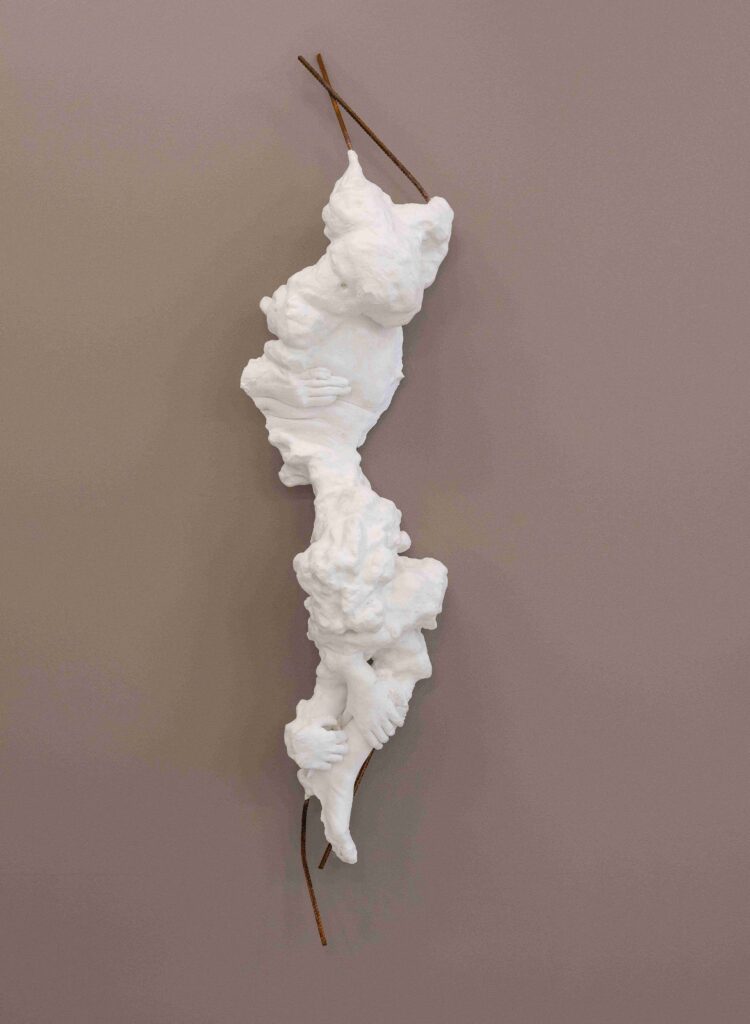
The exhibition contains new works, which are presented in a larger installation, with different narratives and take shape in different media and formats.
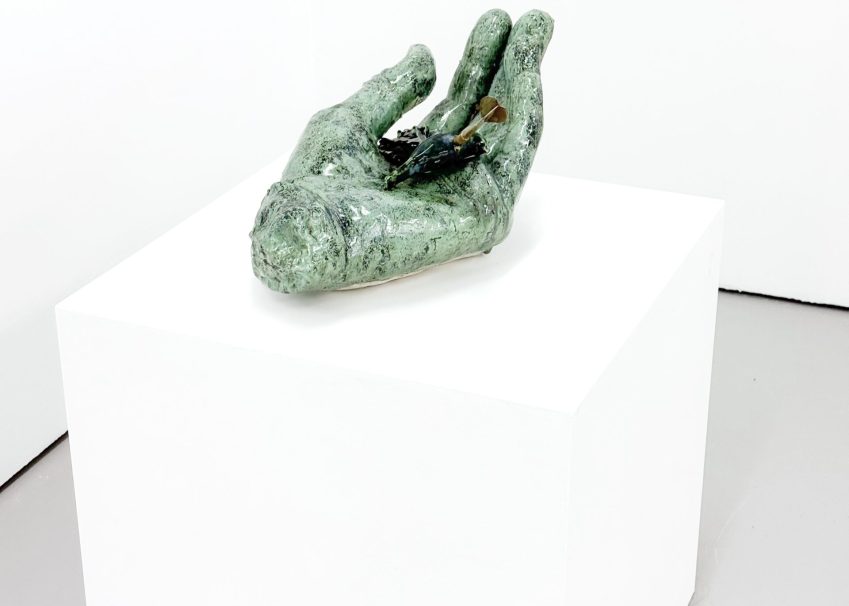
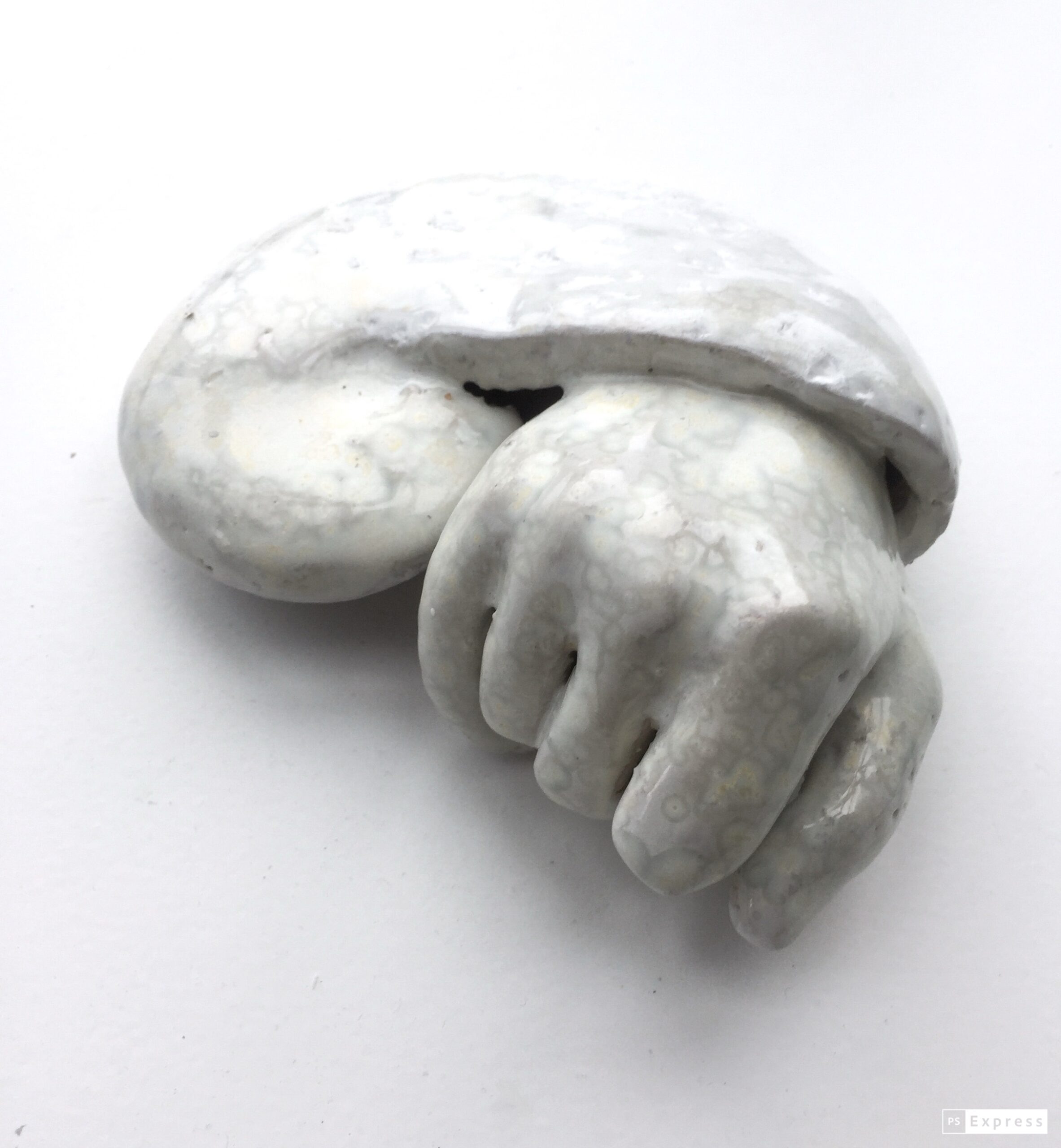
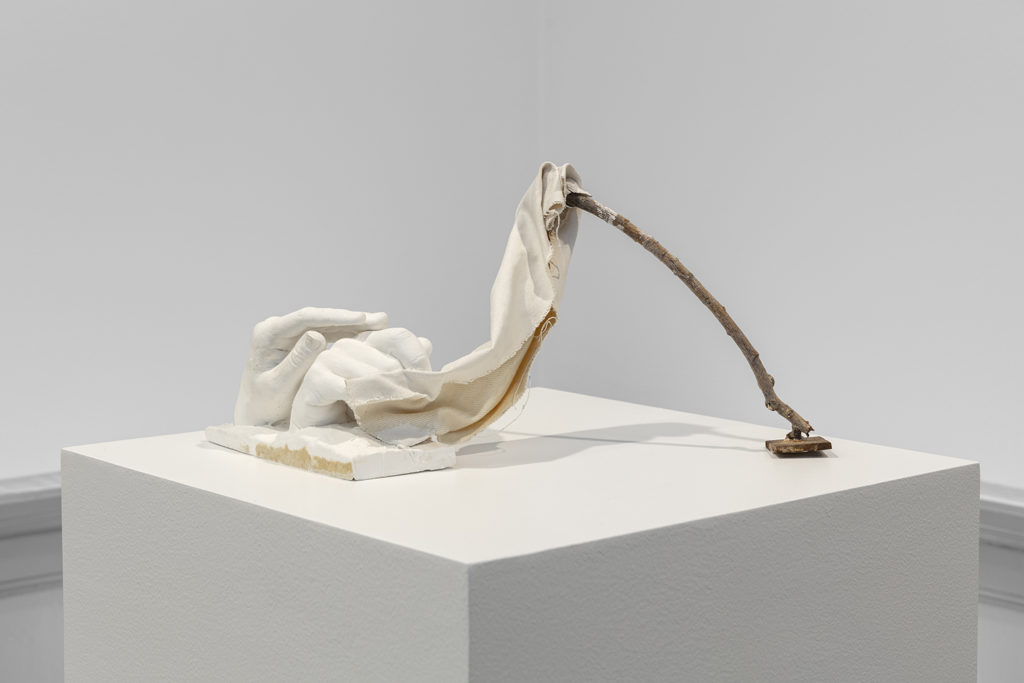
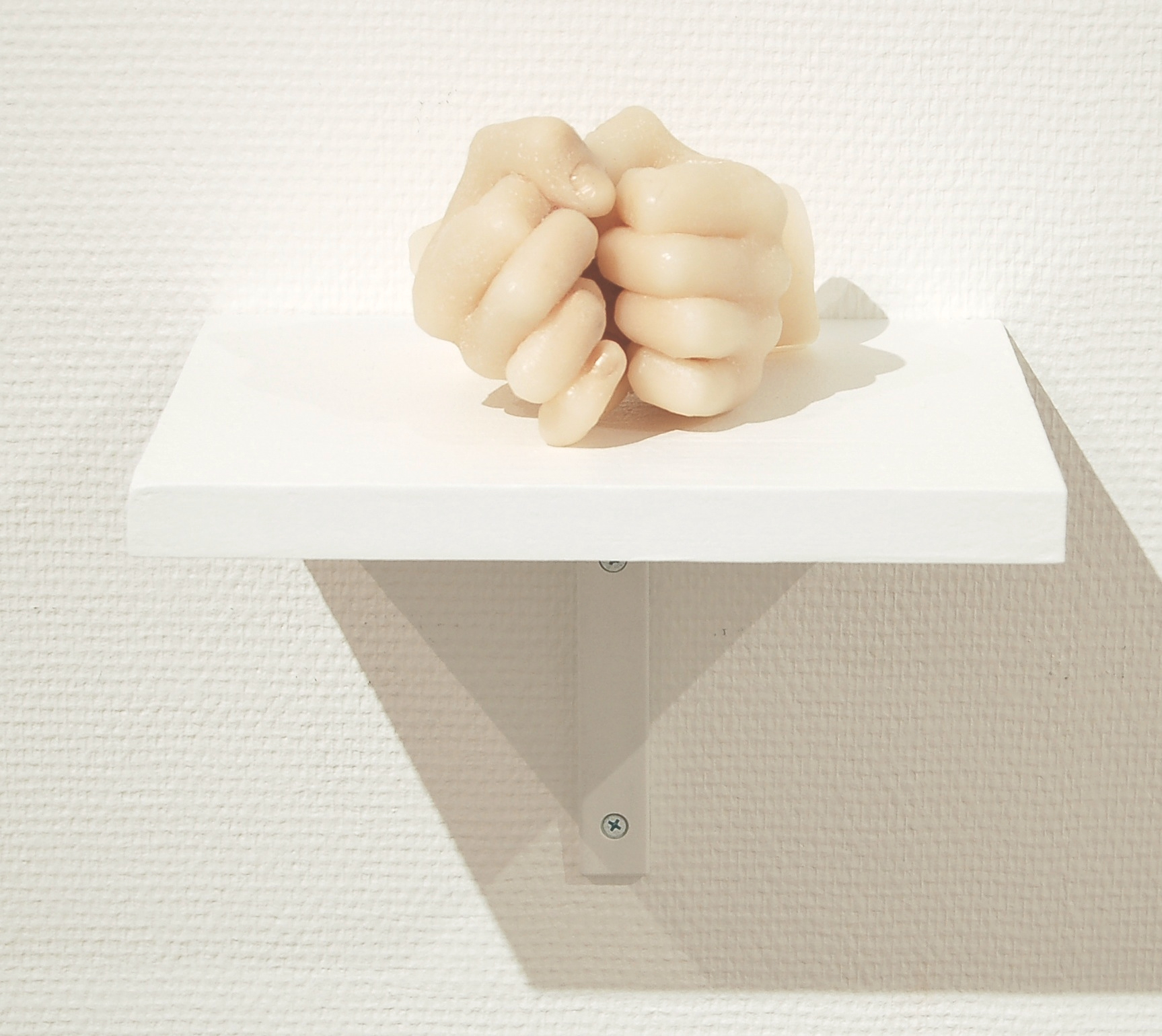
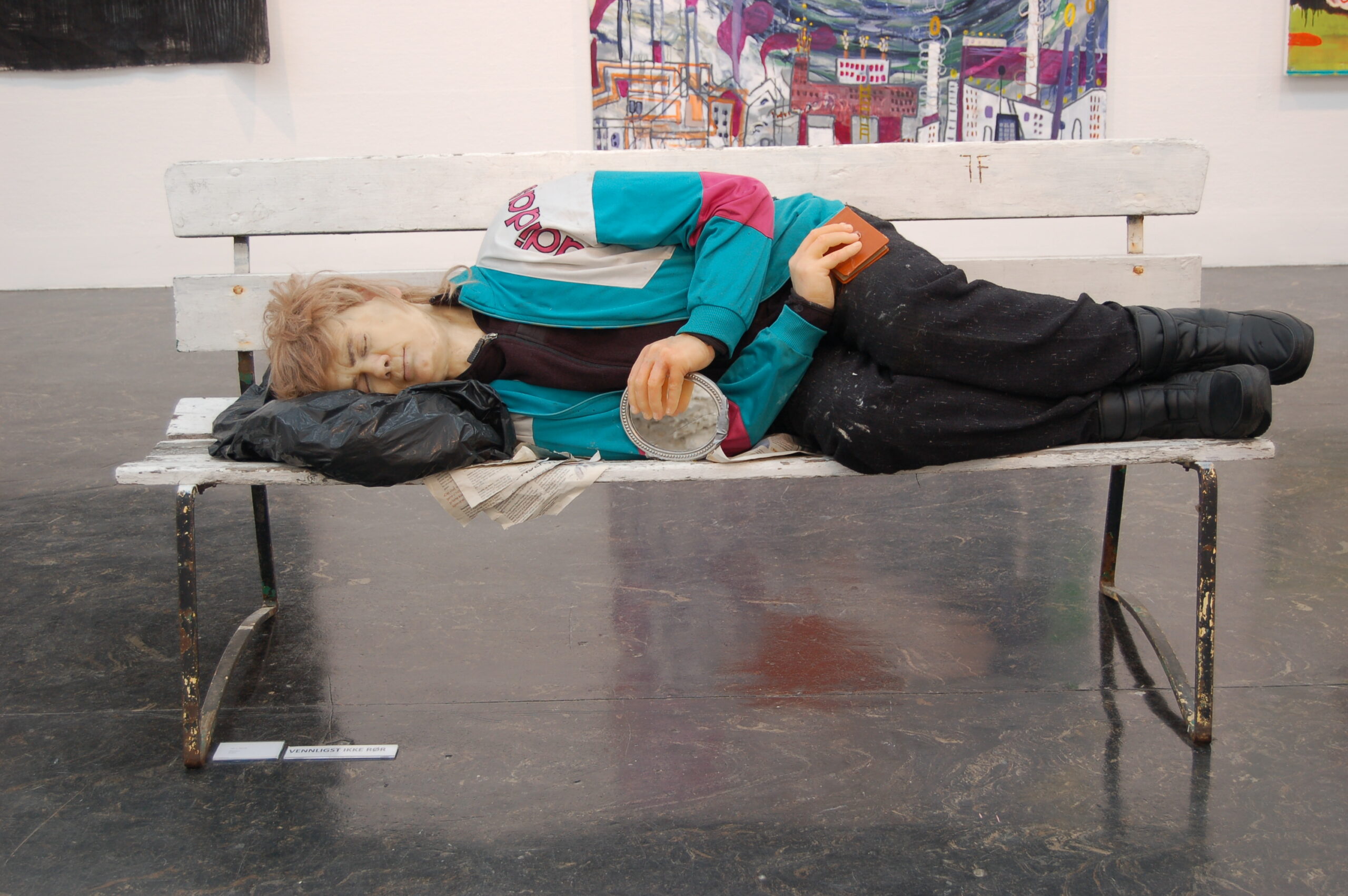
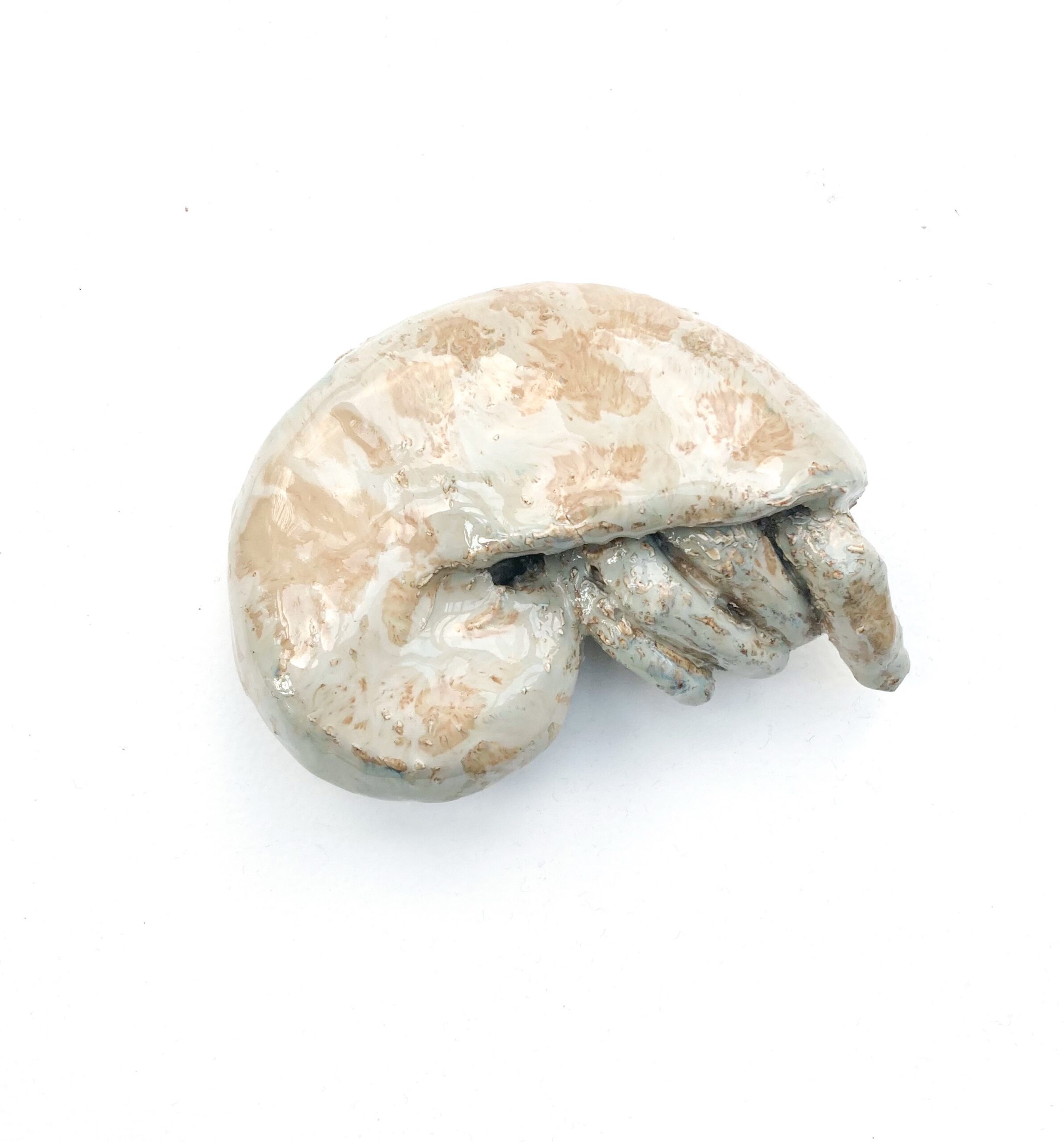
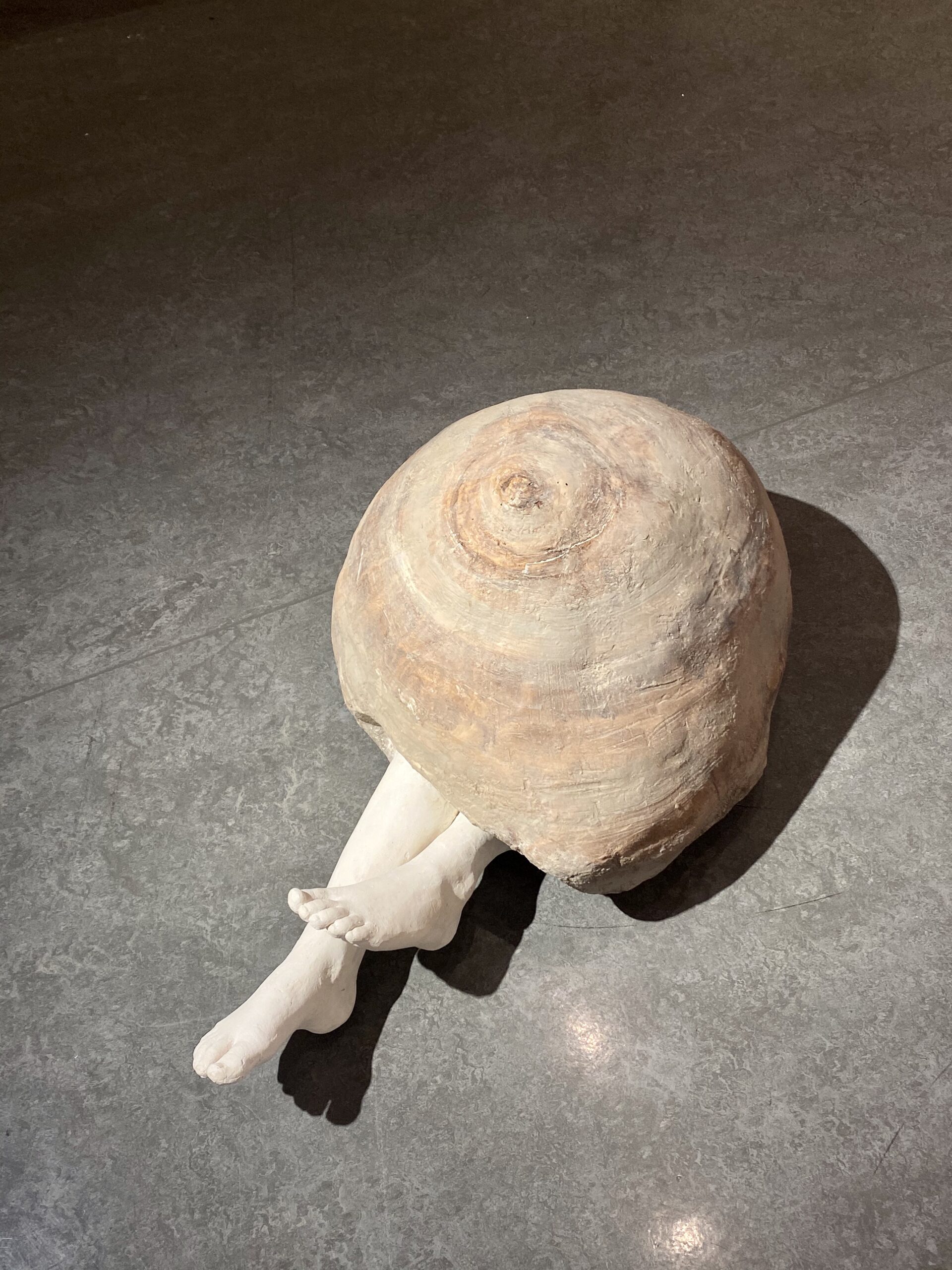
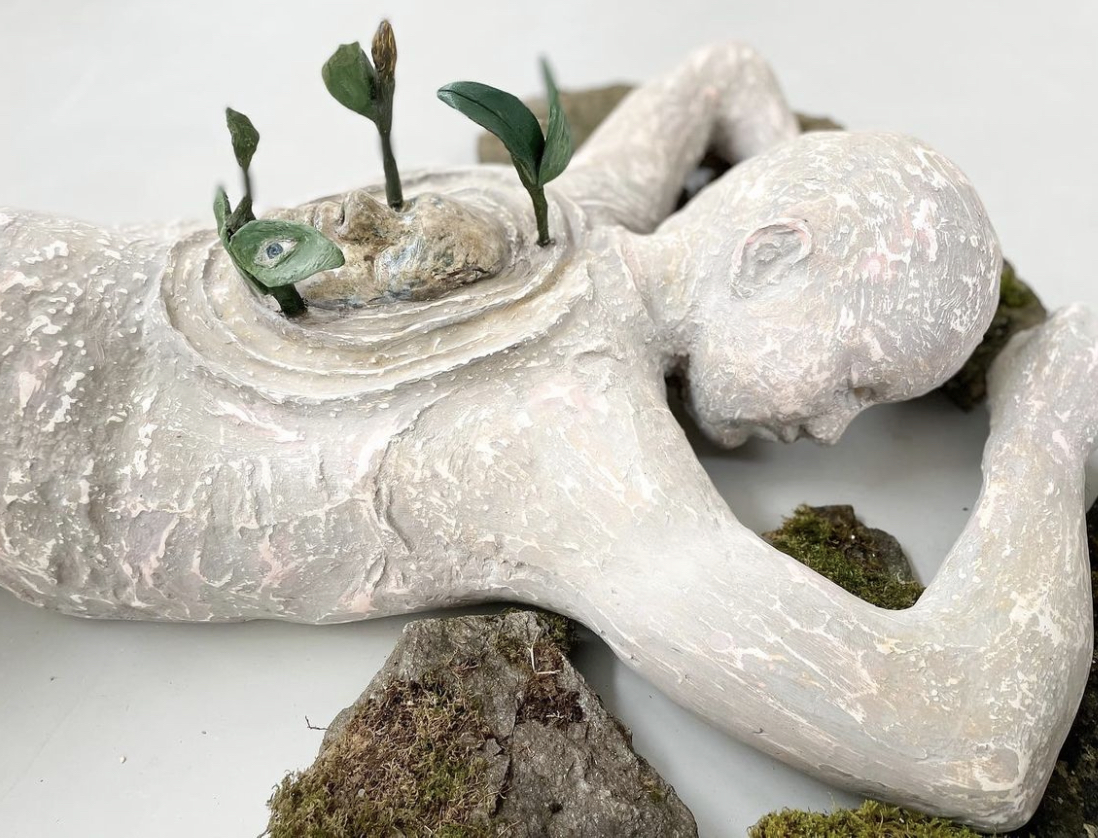
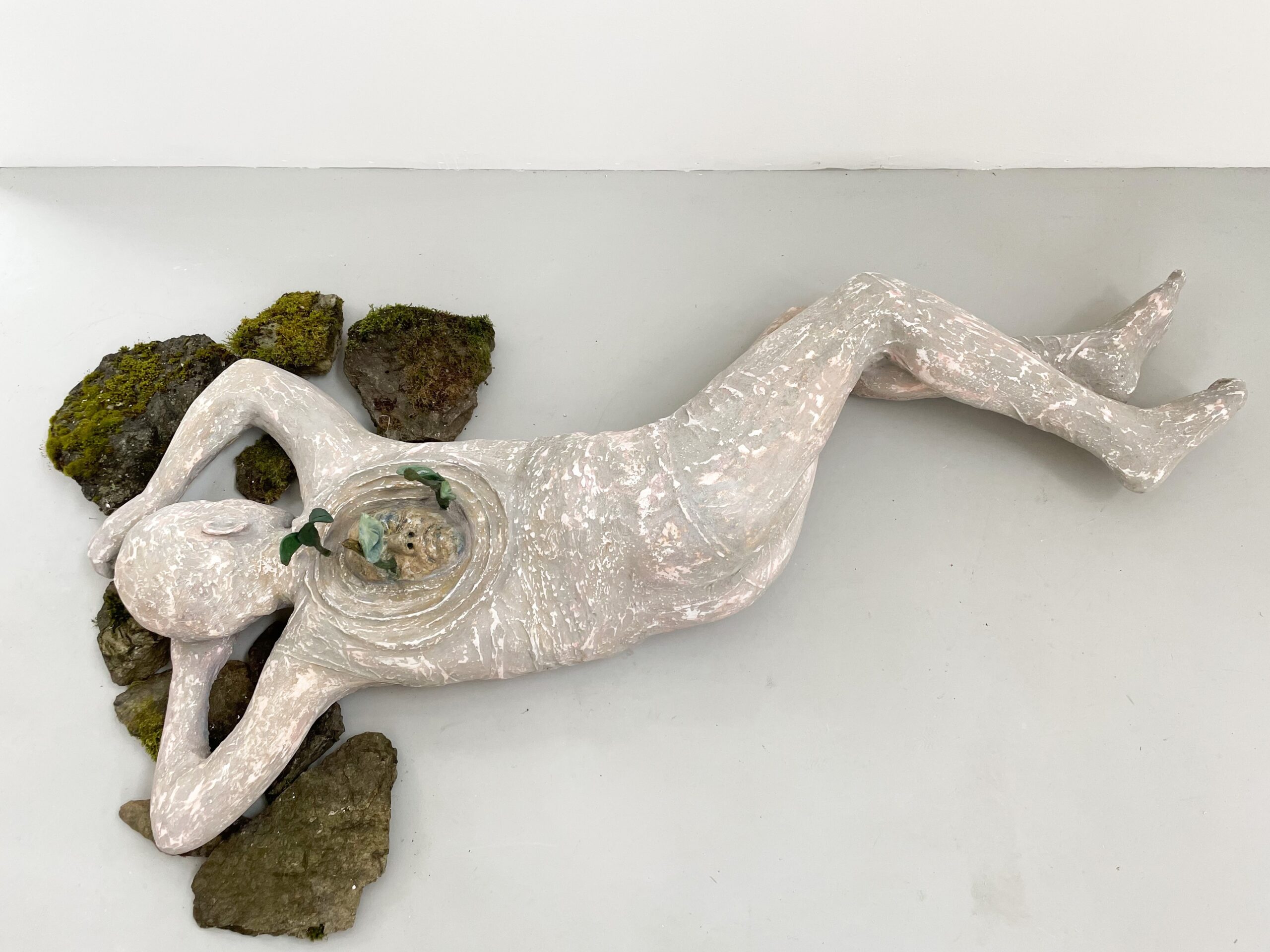
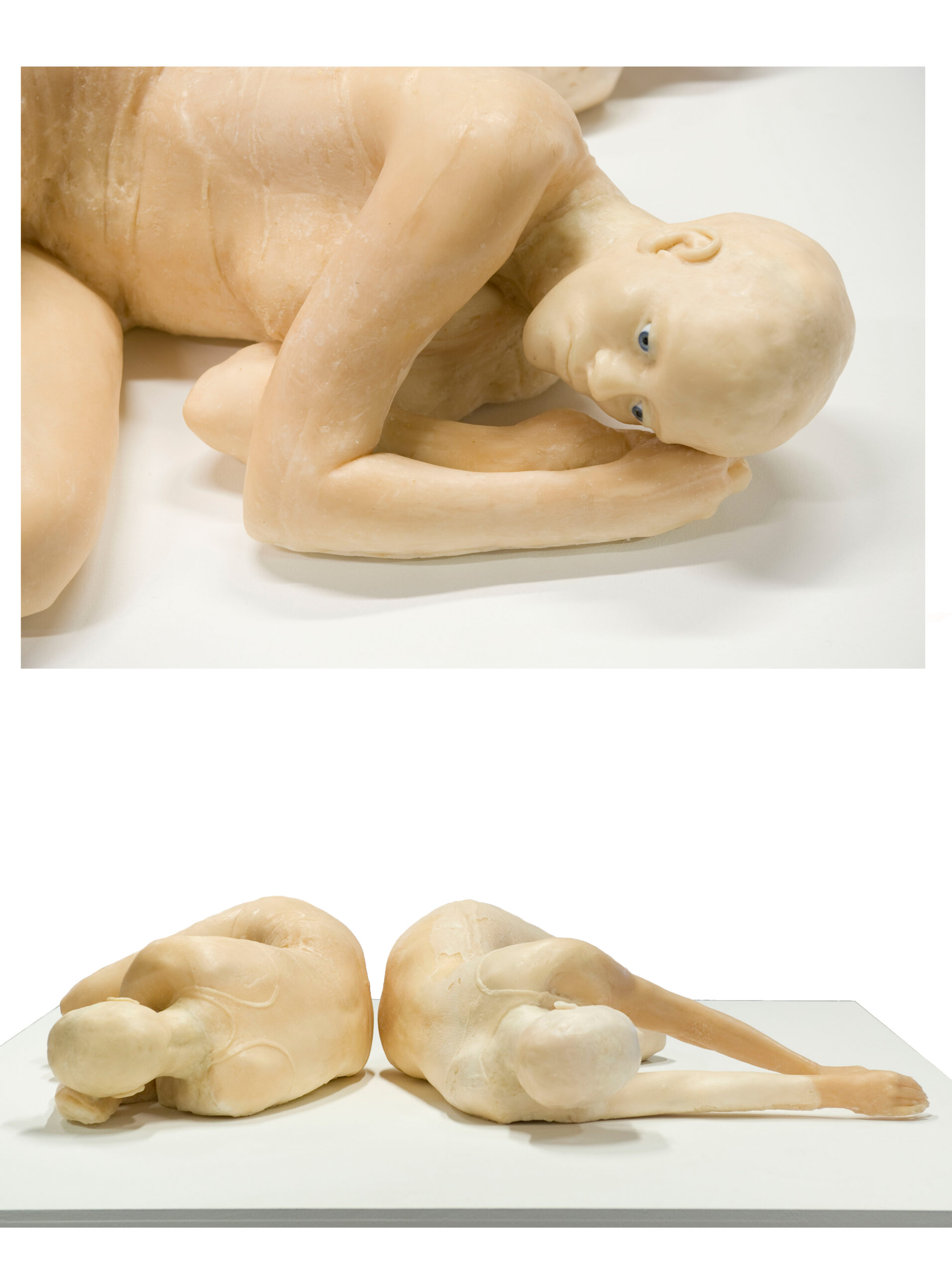
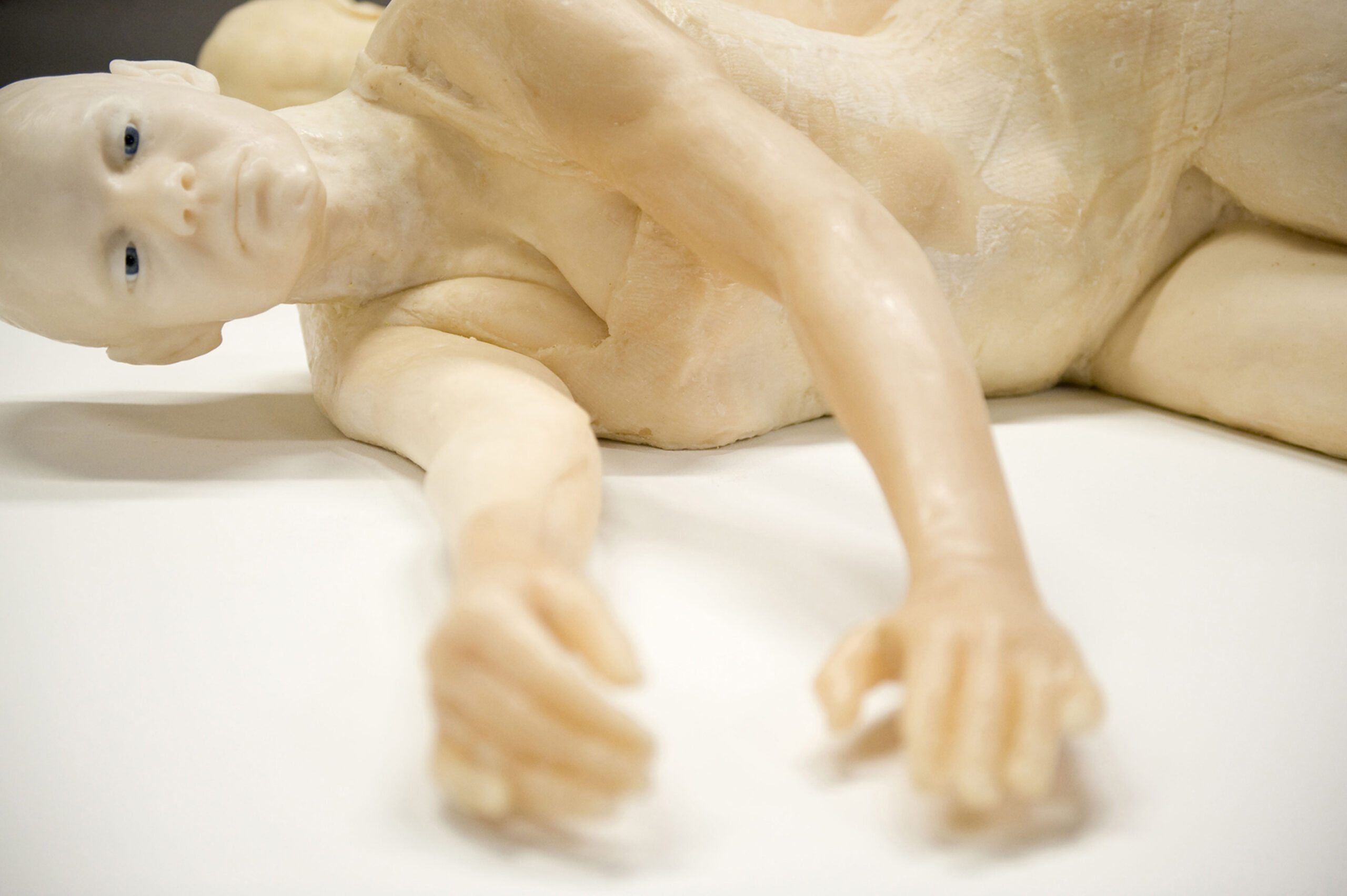
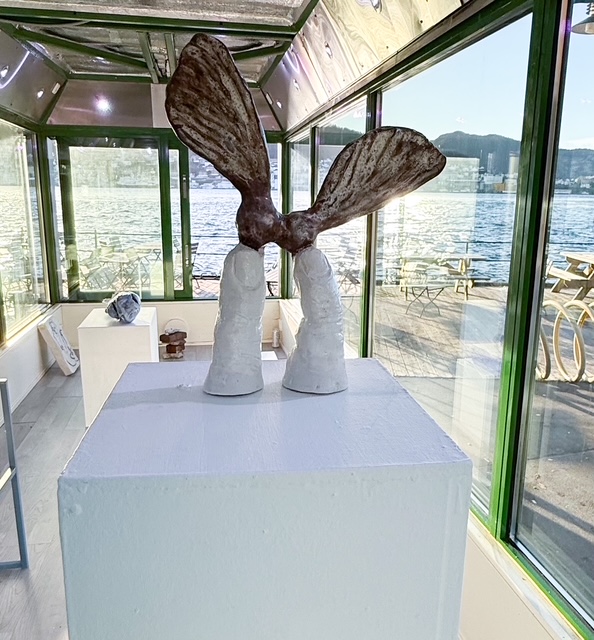
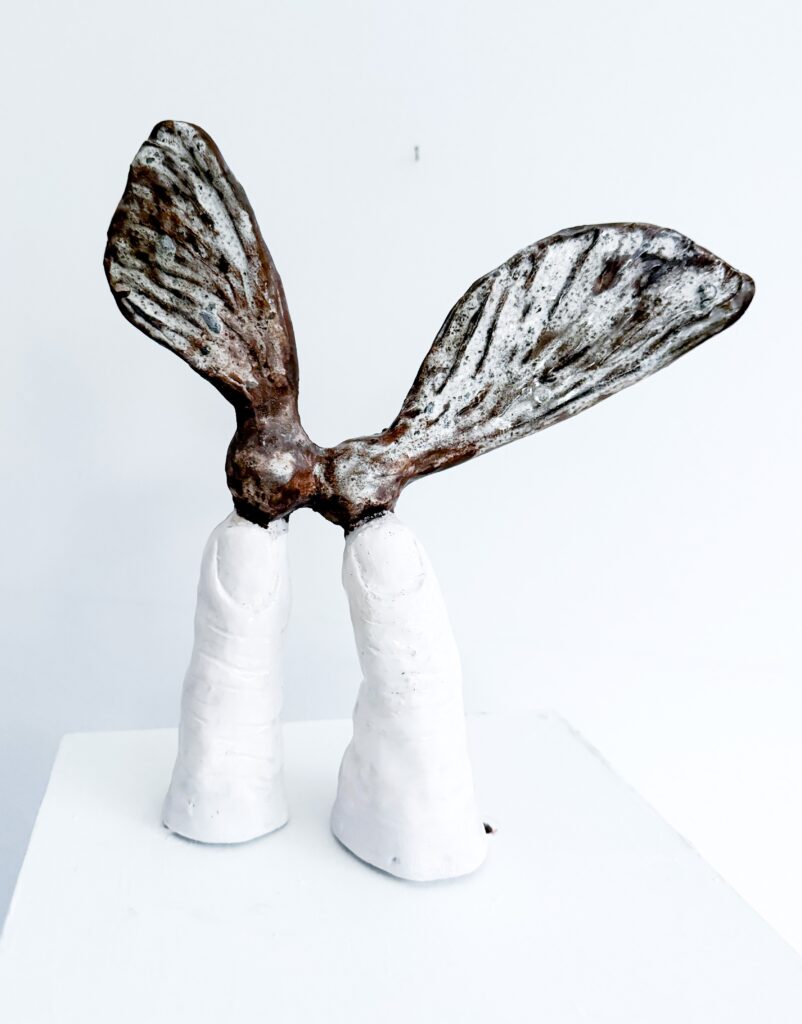
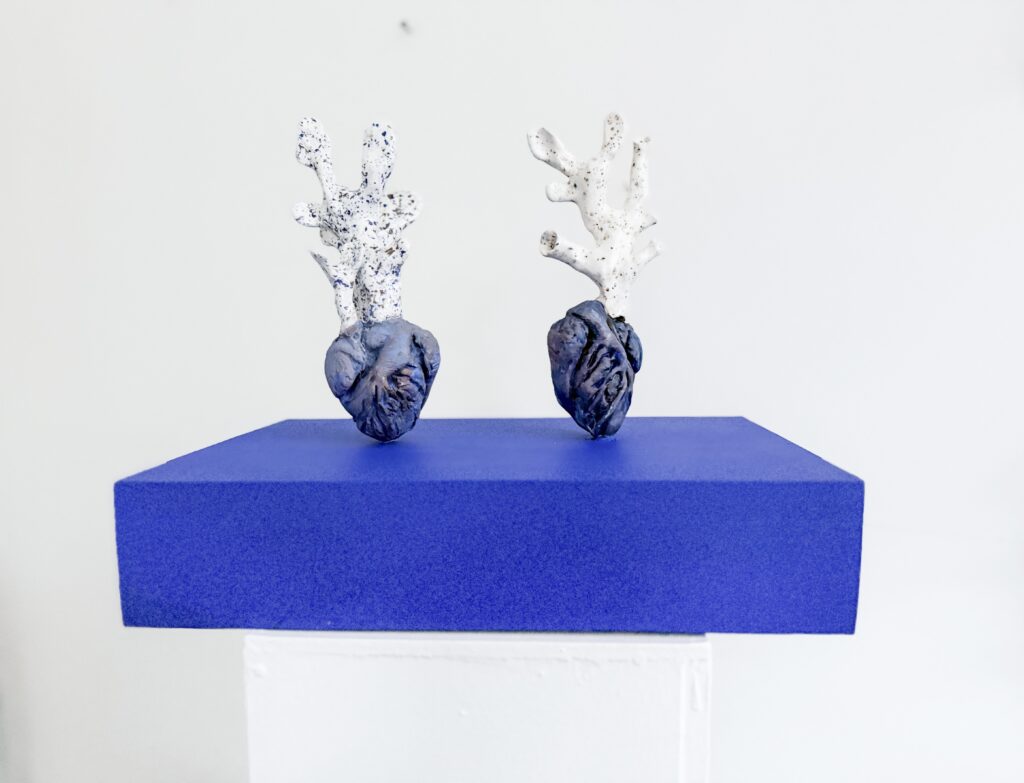
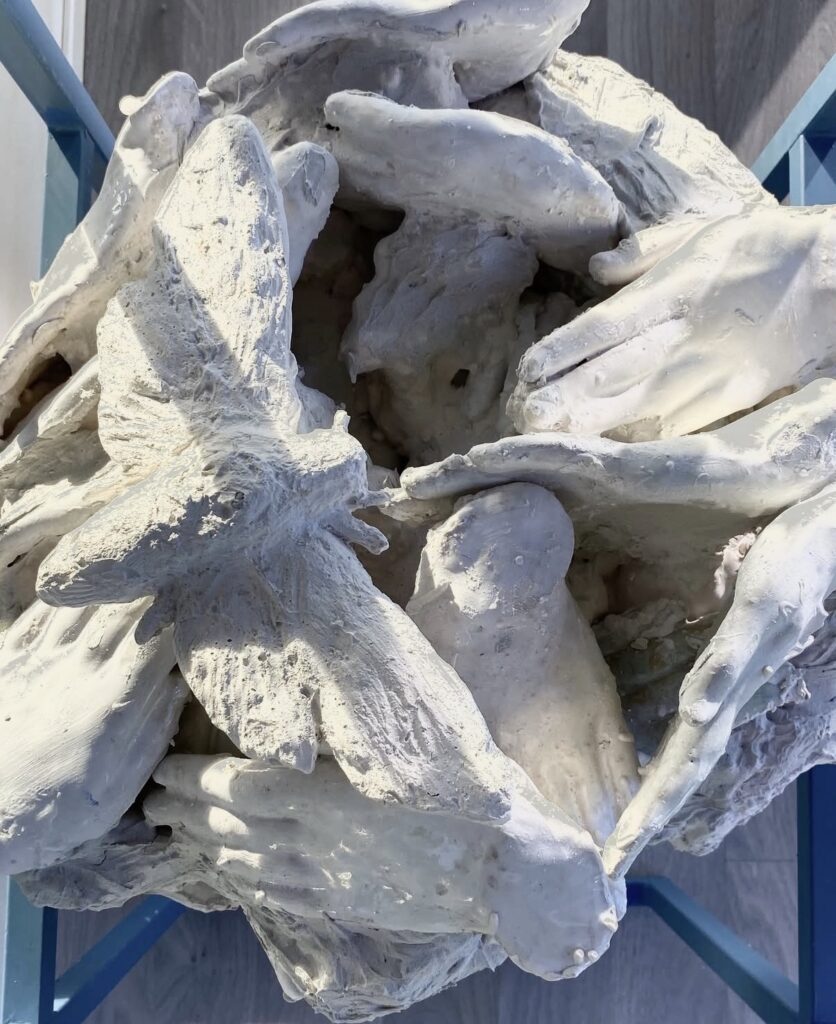
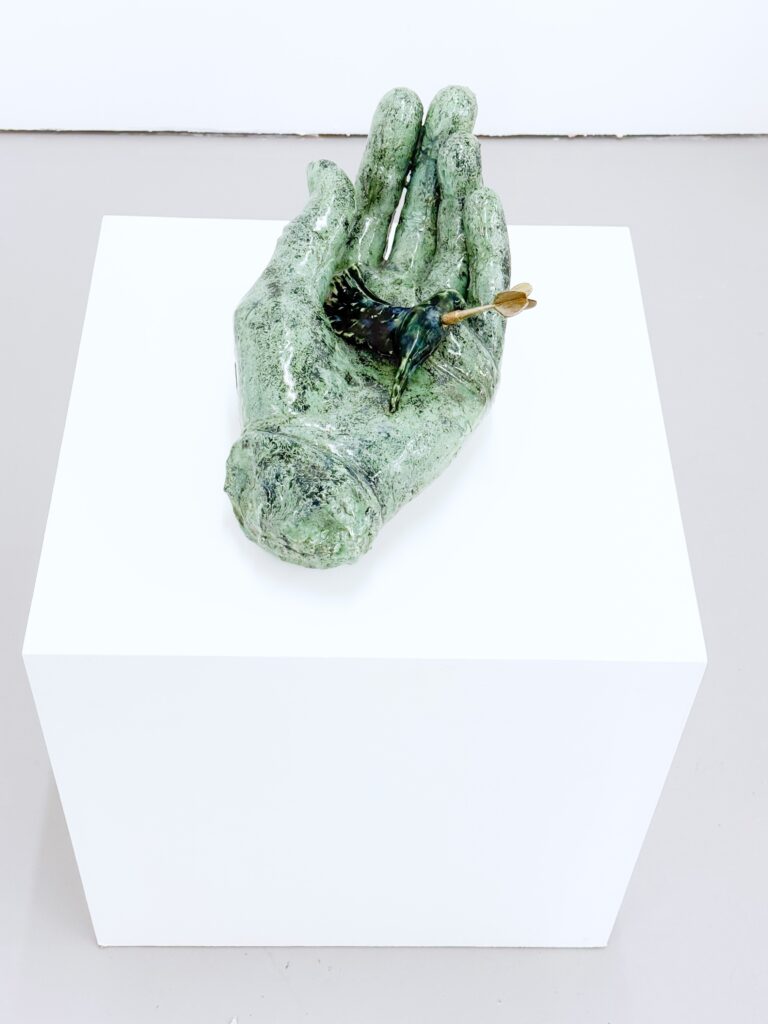
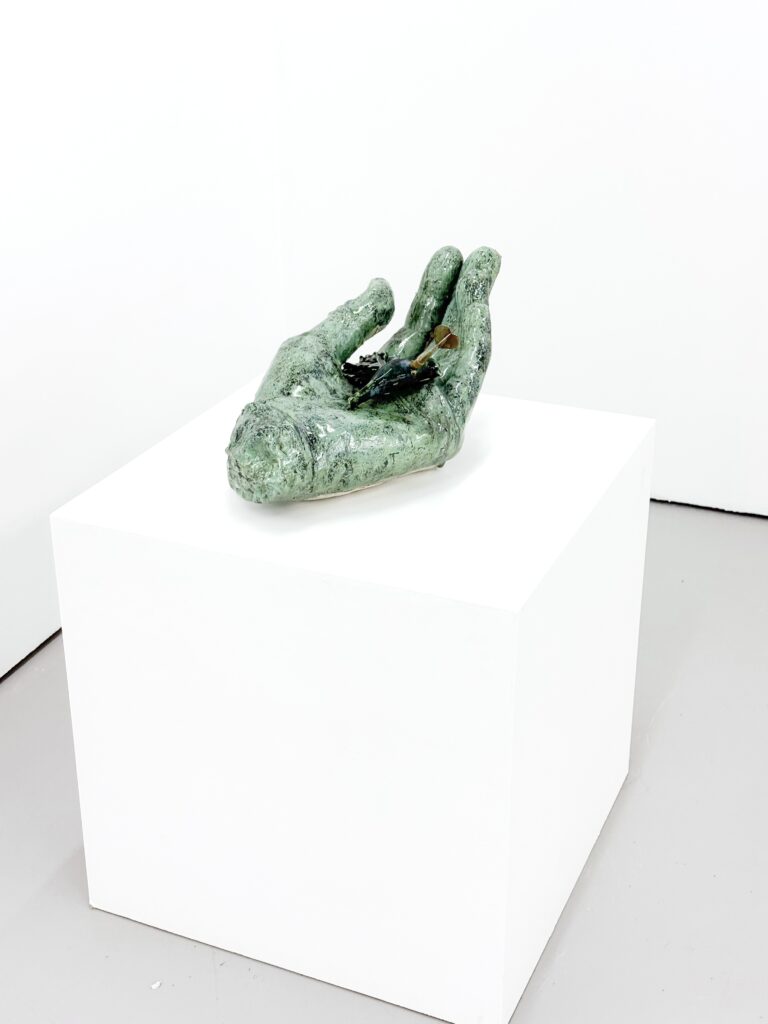
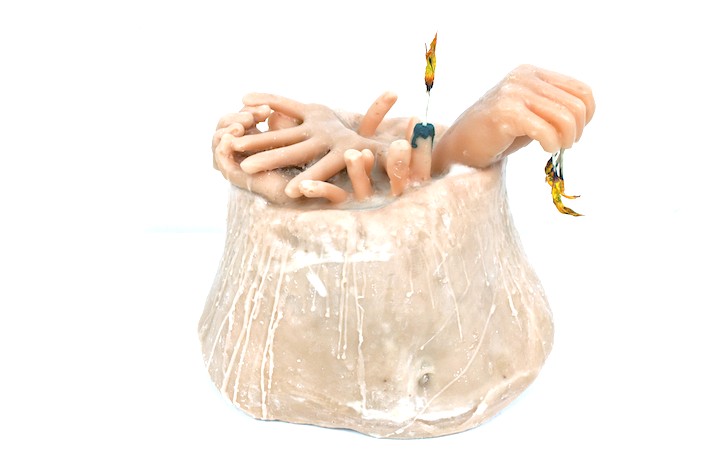
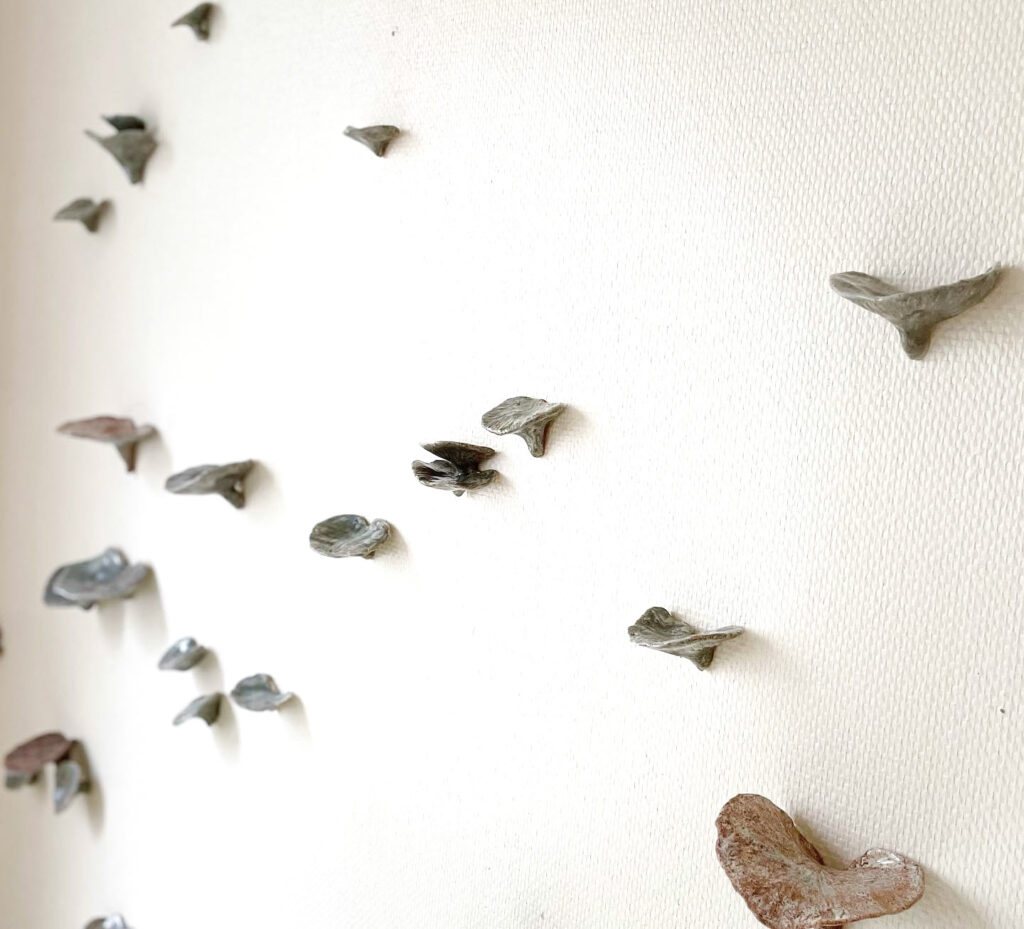
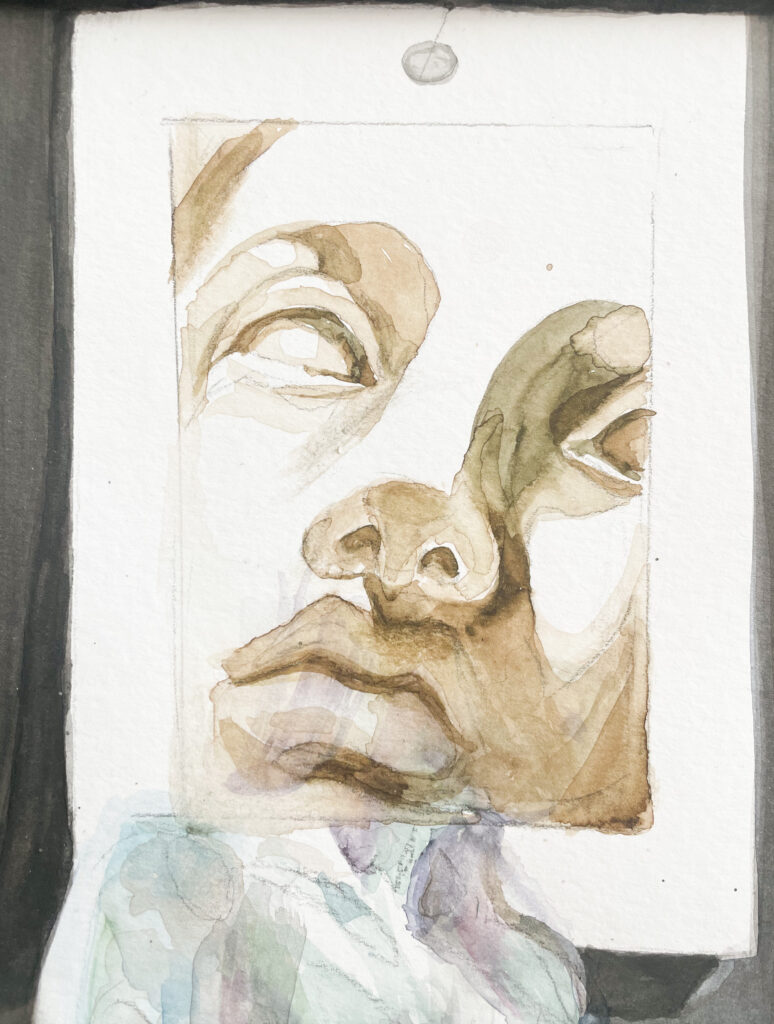
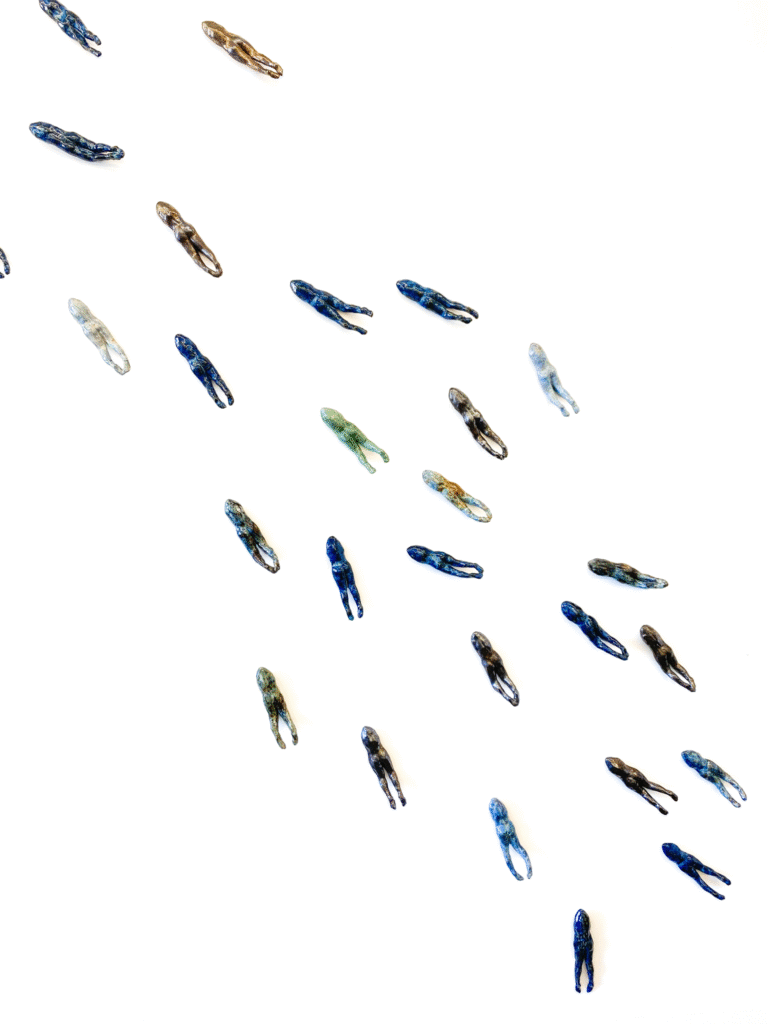
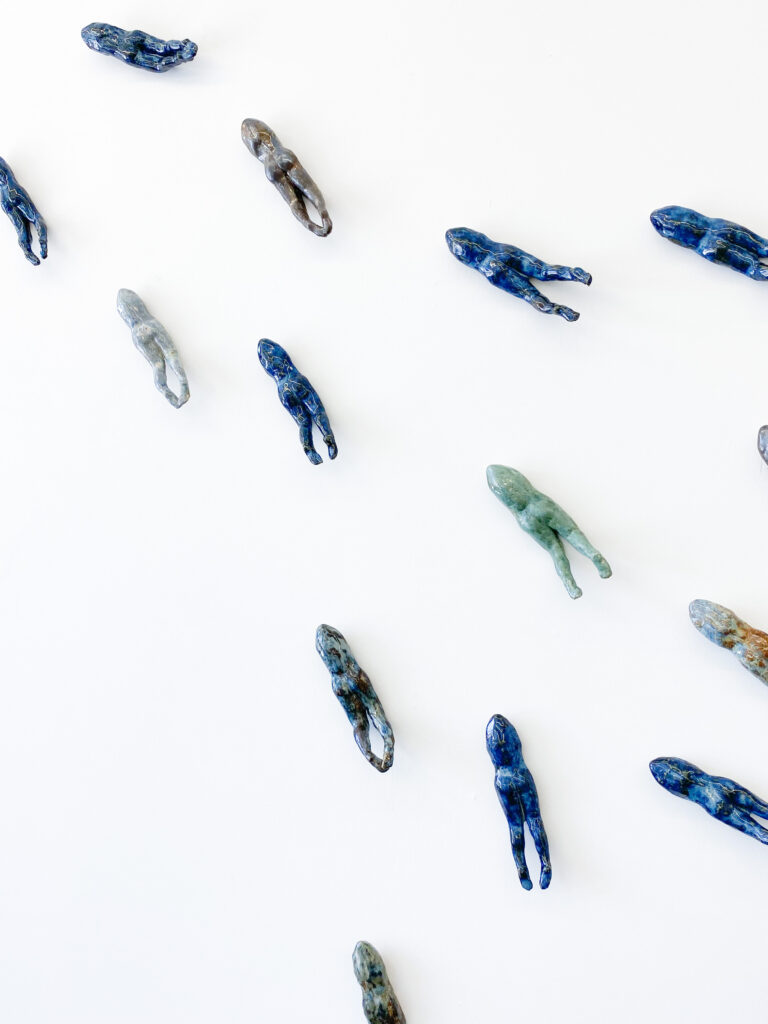
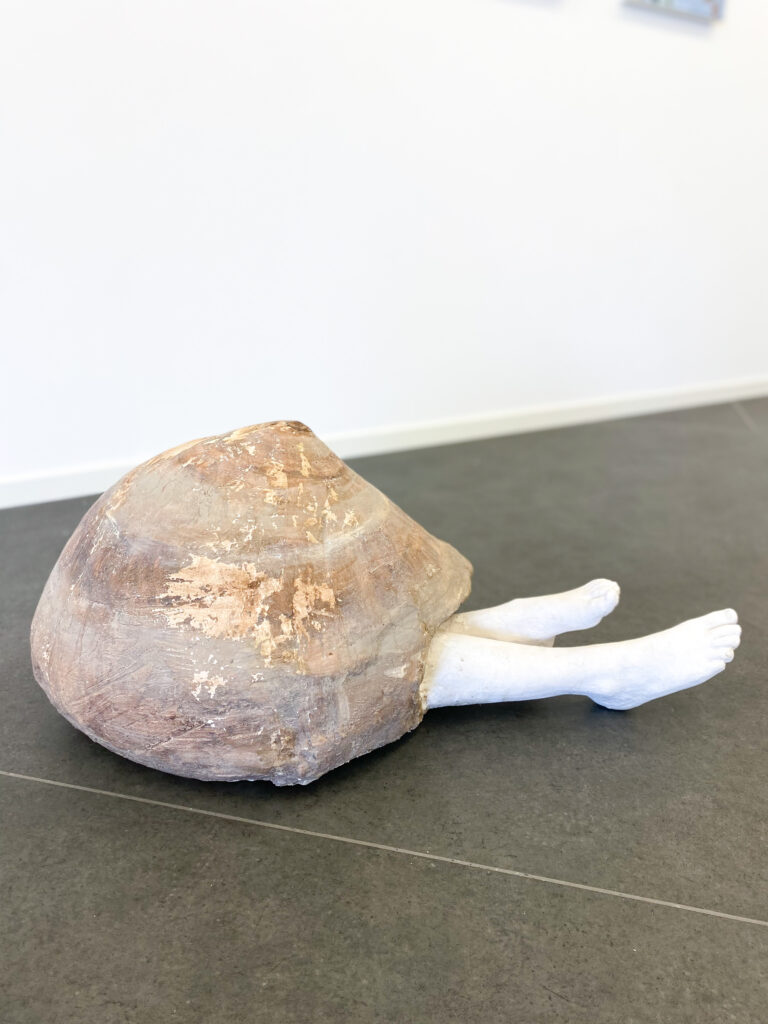
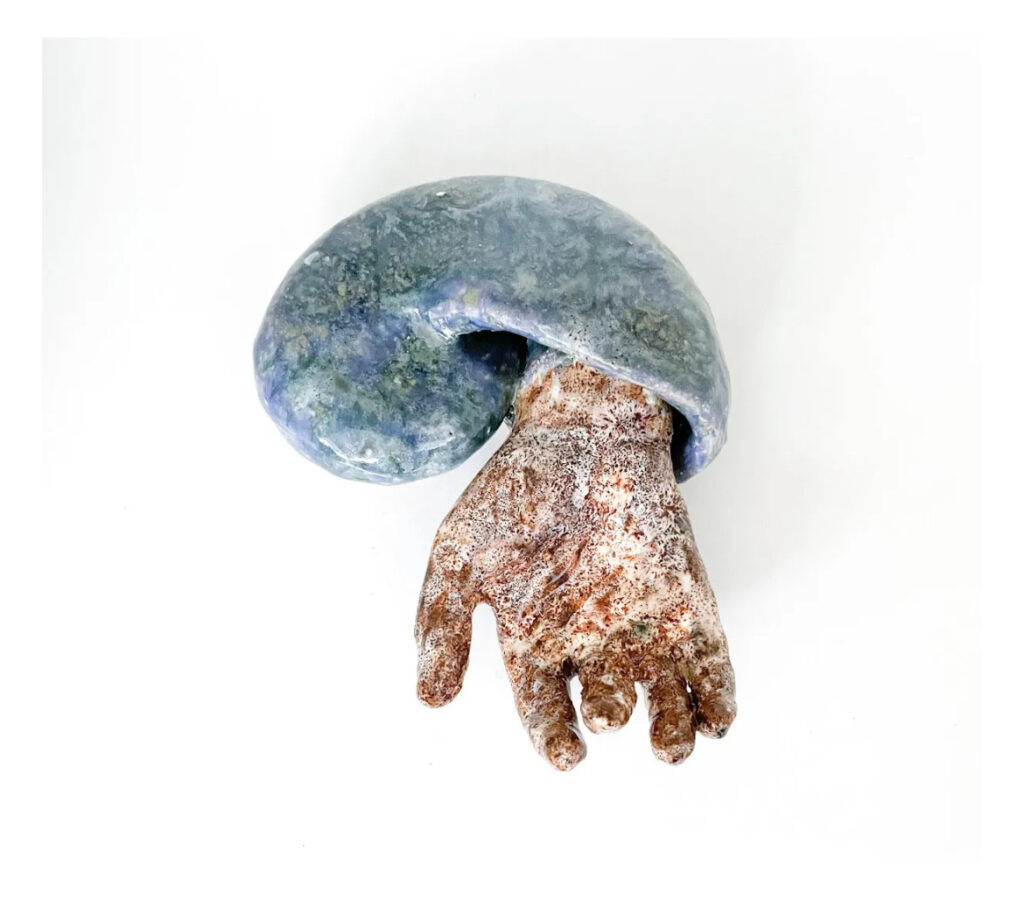
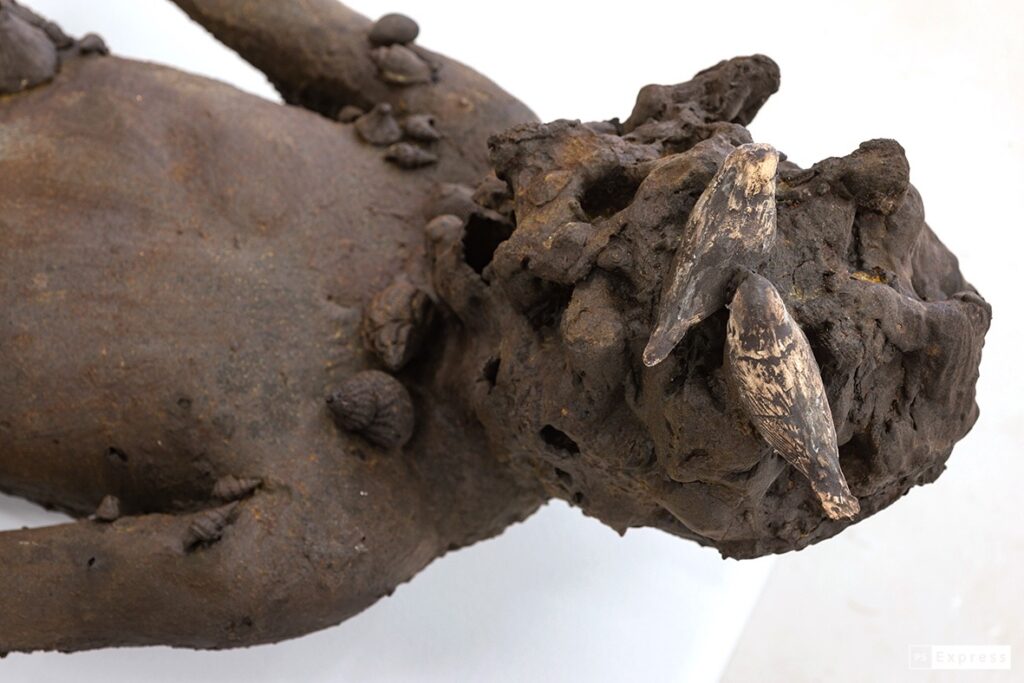
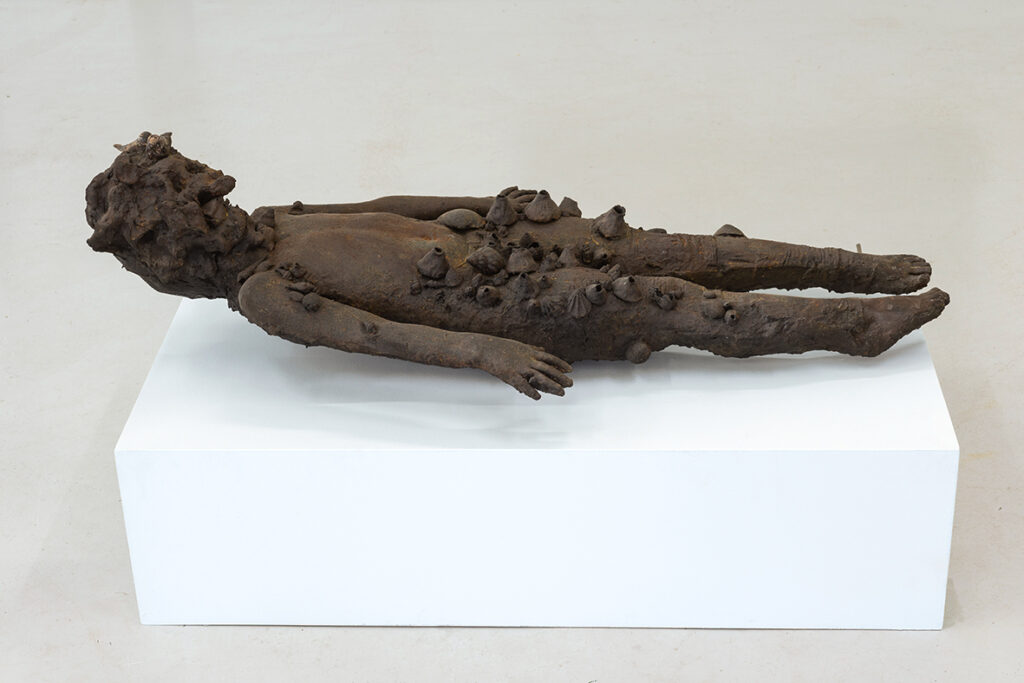
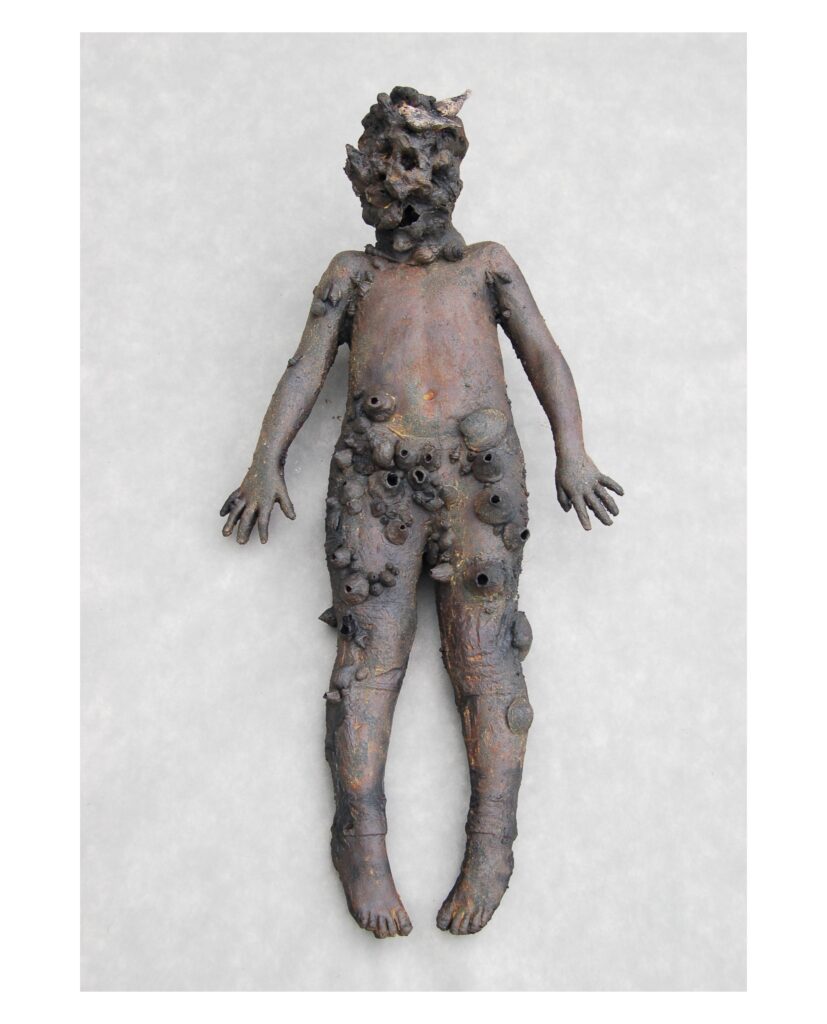
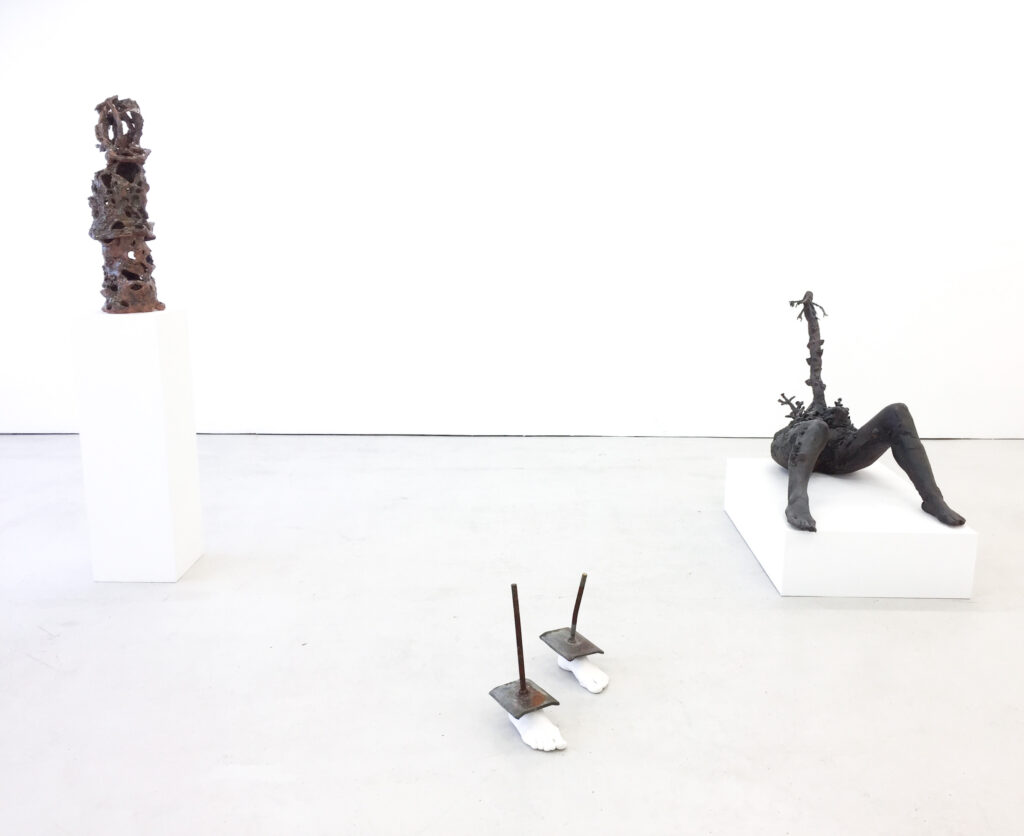
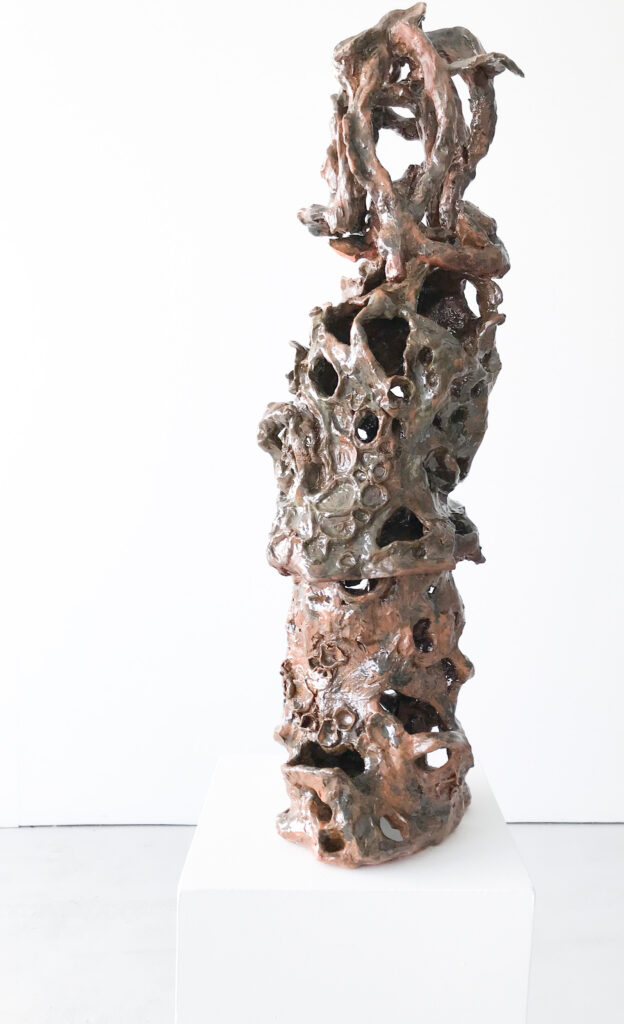
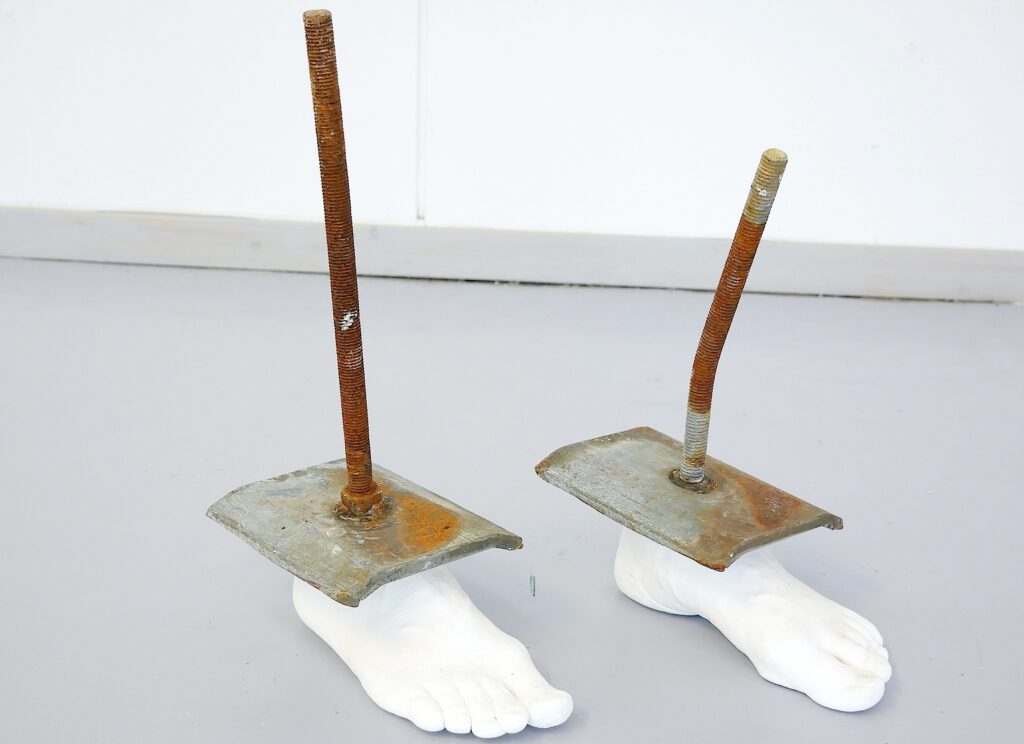
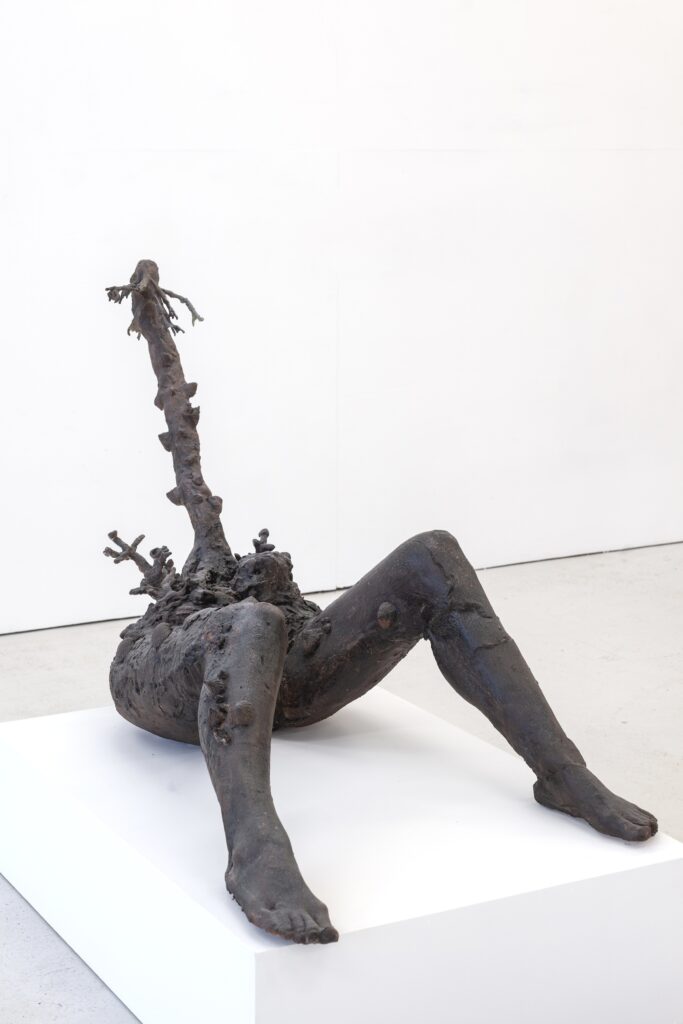
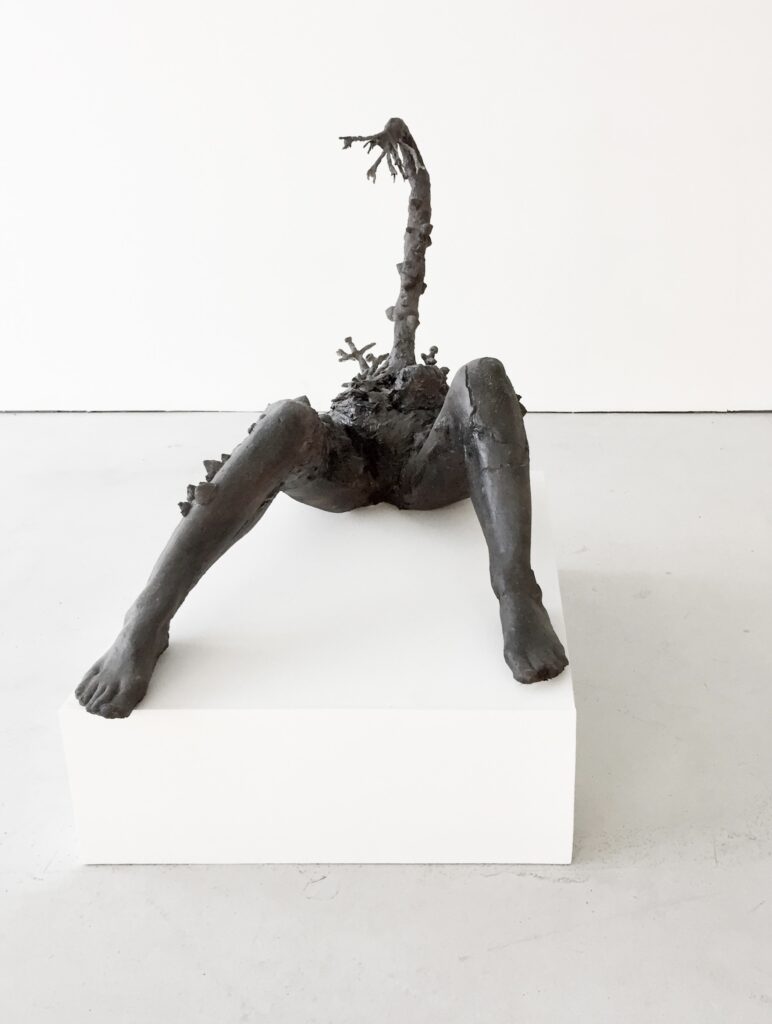
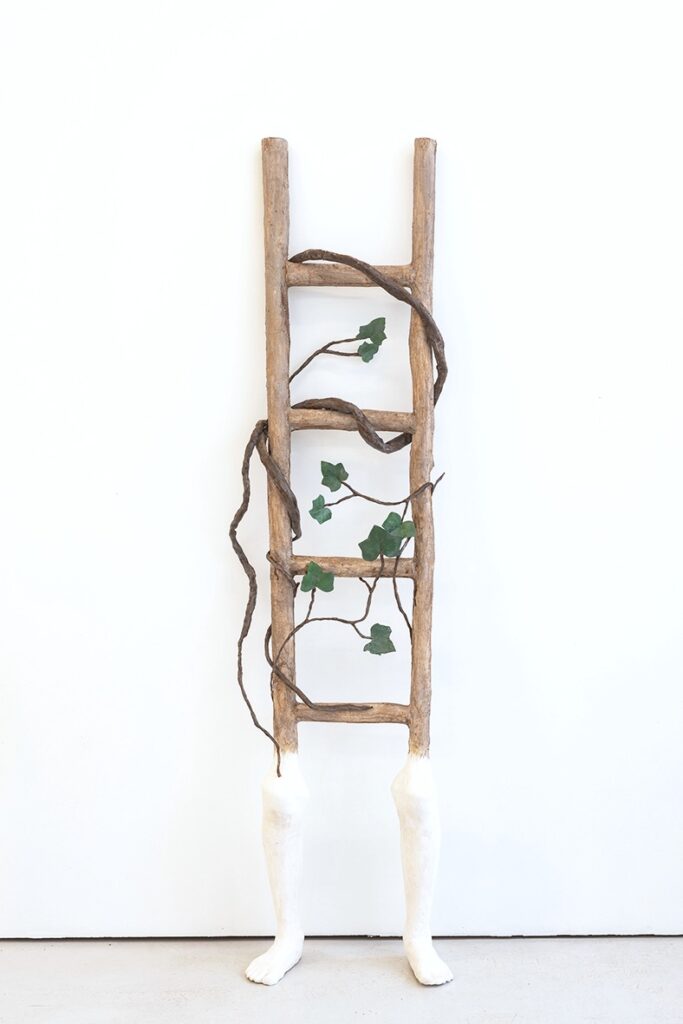
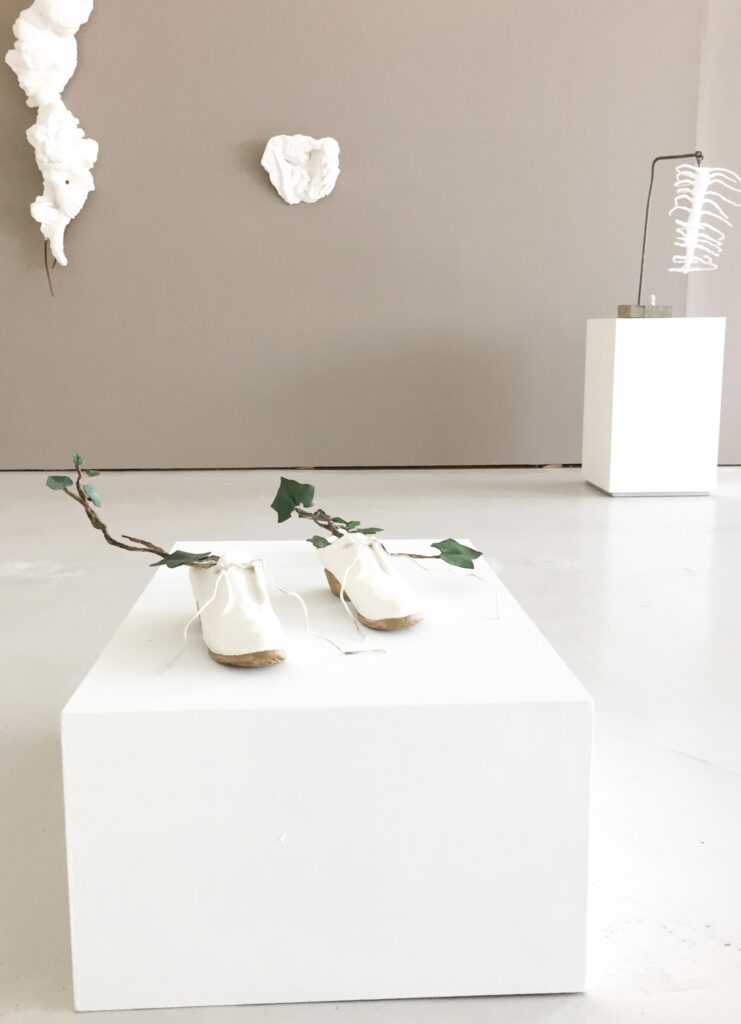
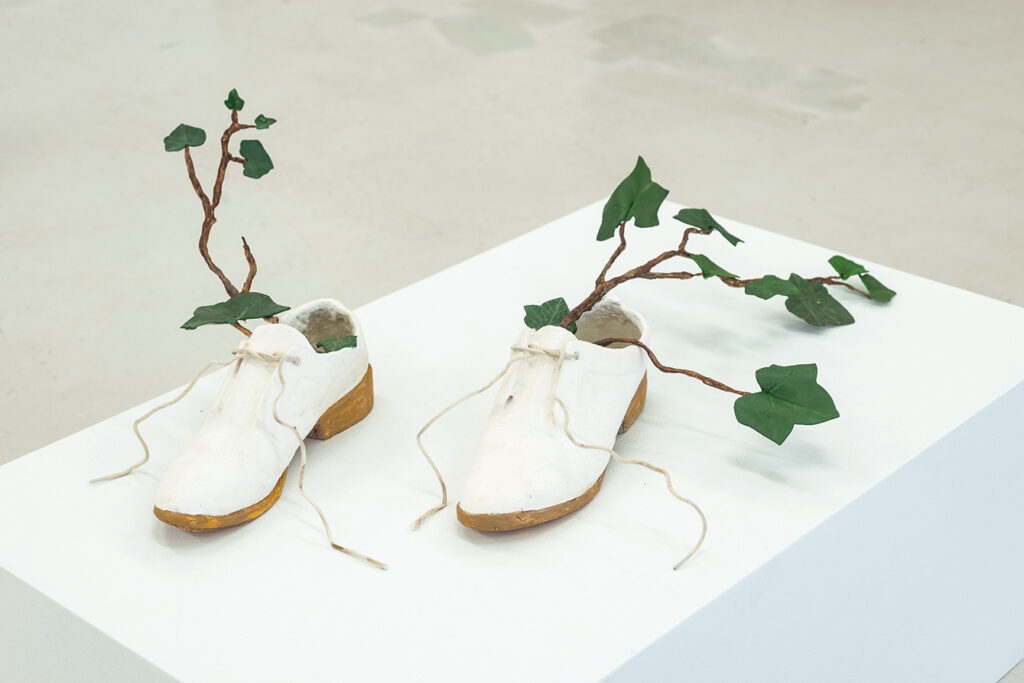
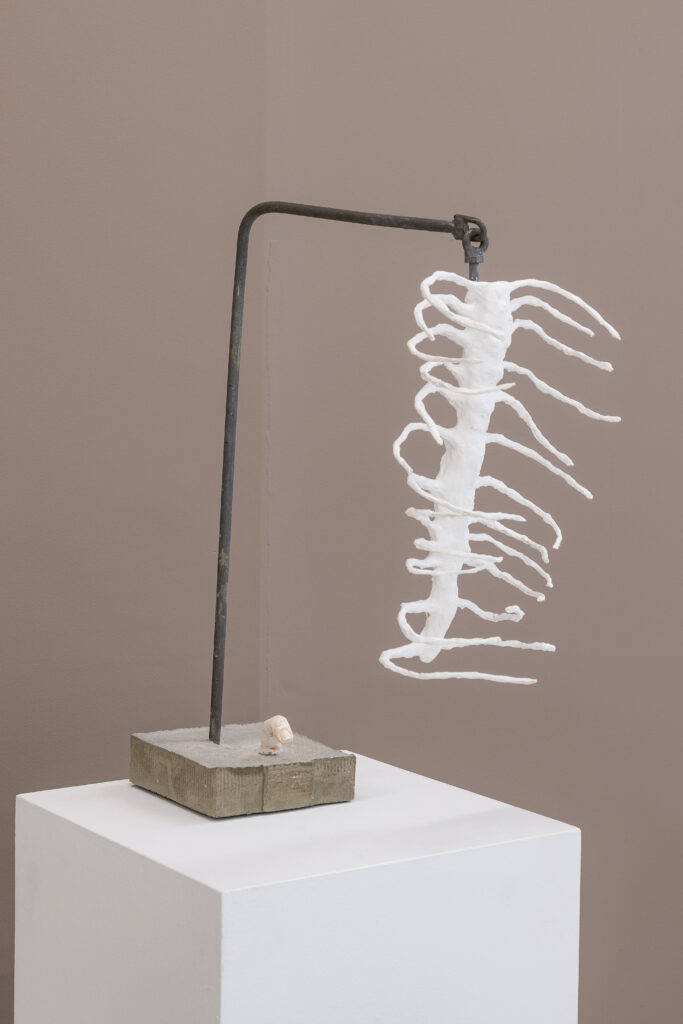
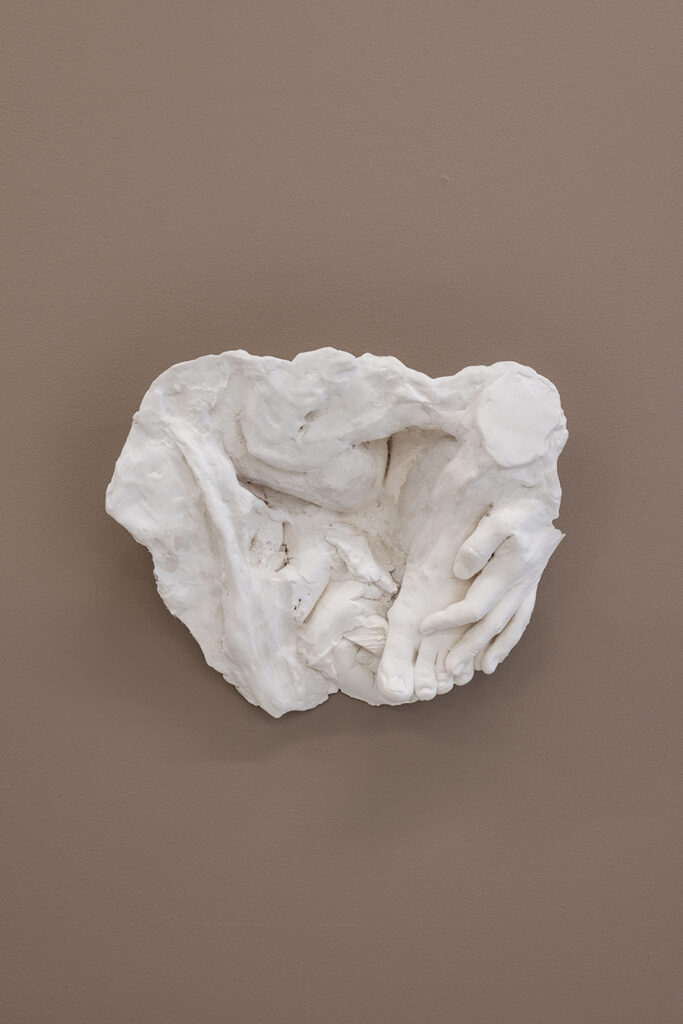
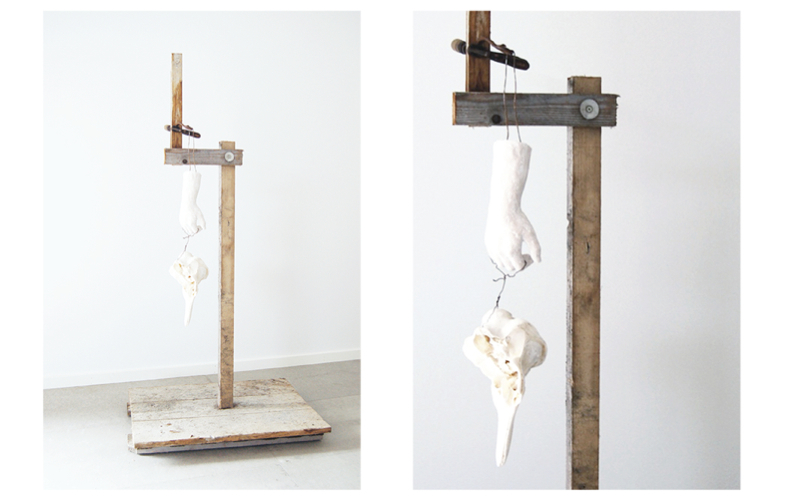
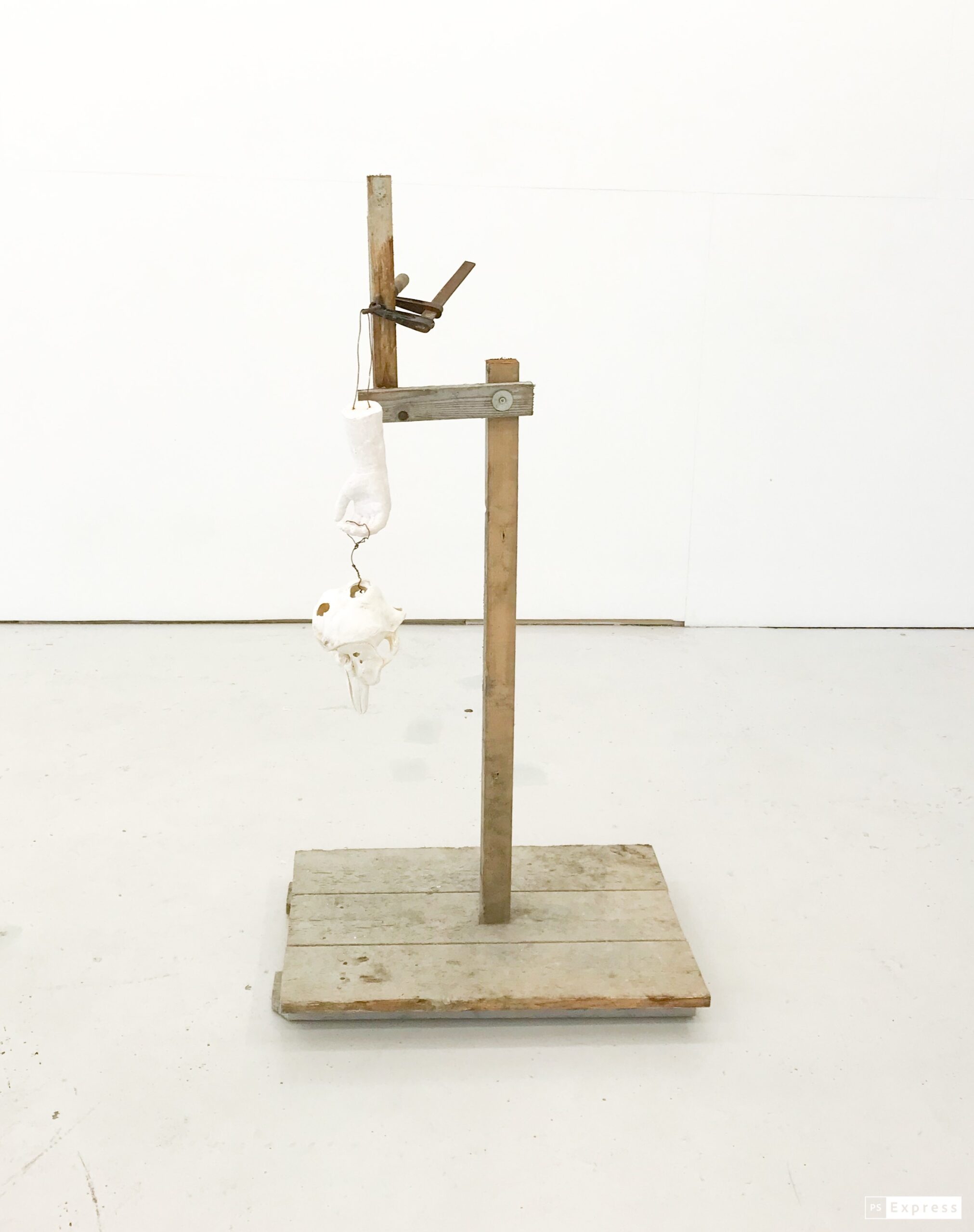
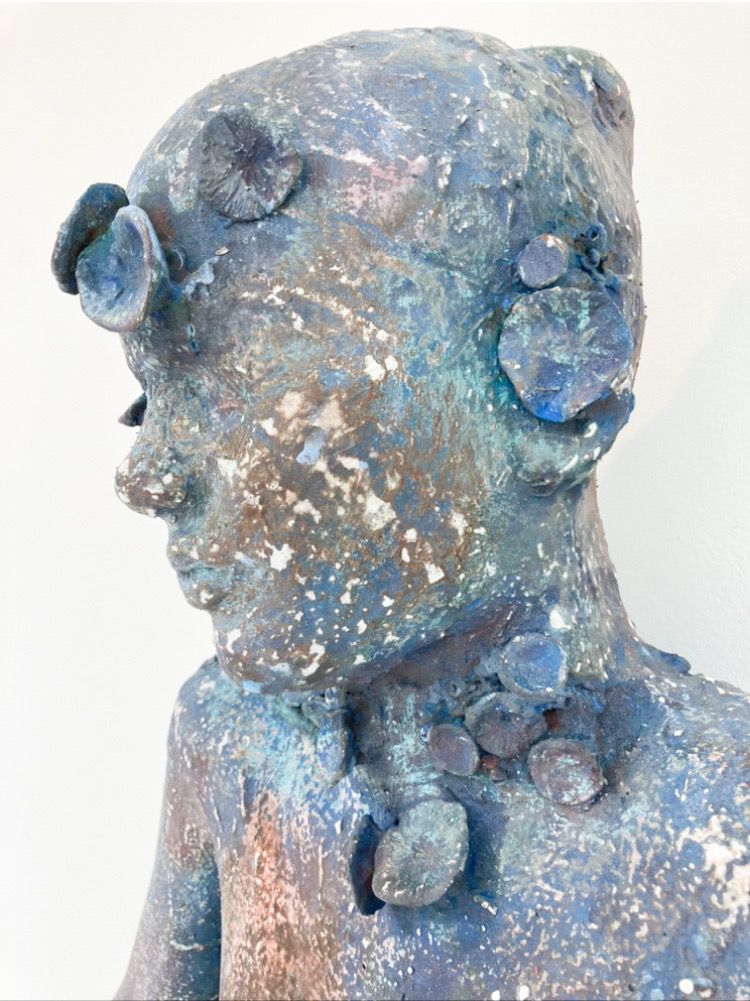
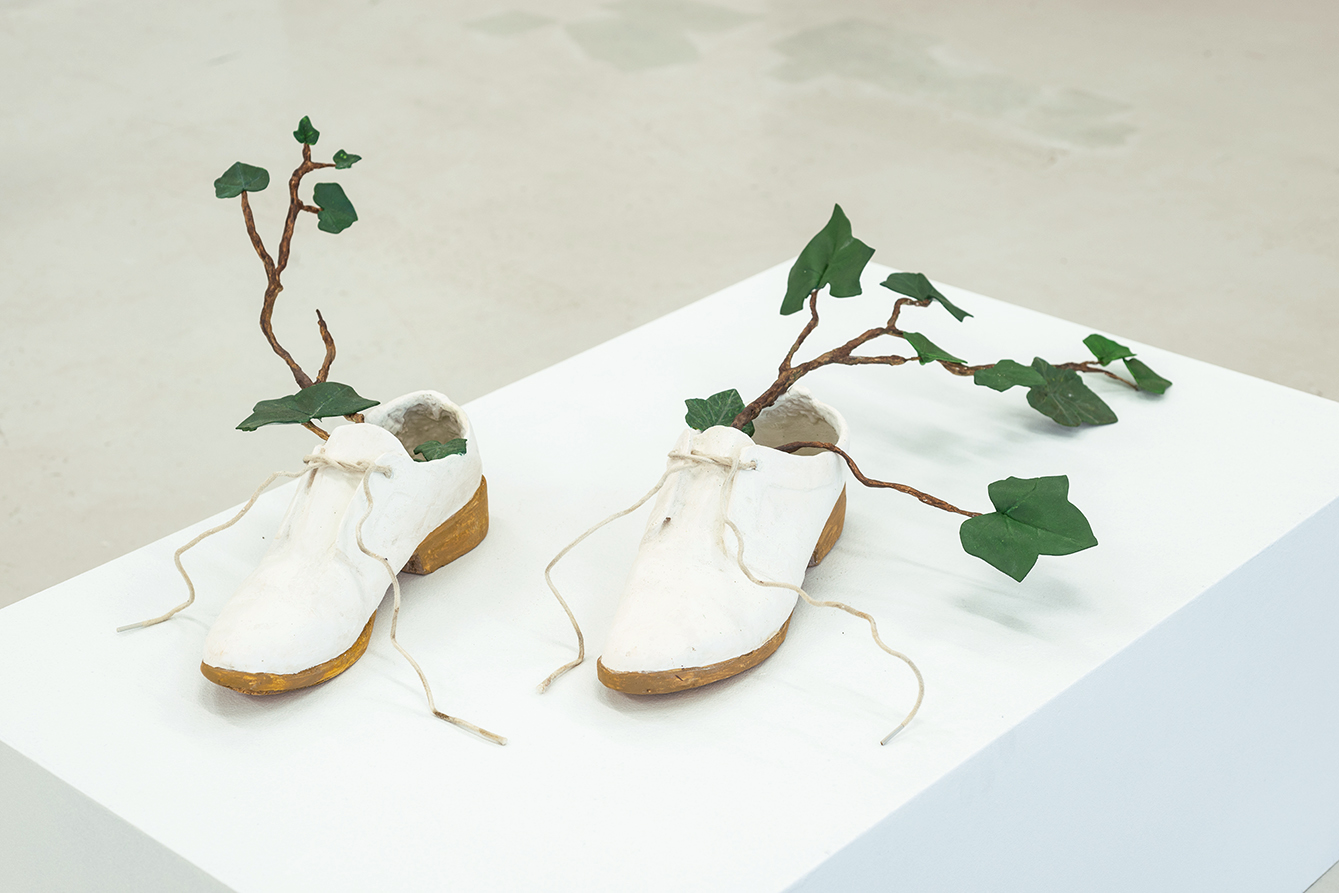
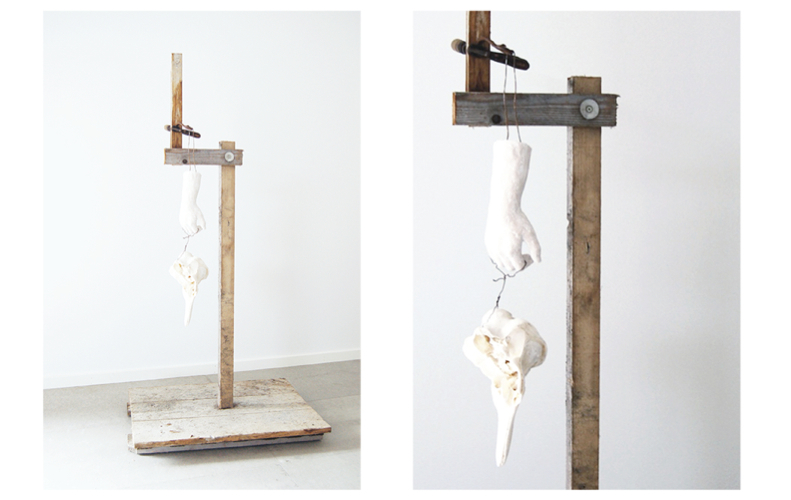
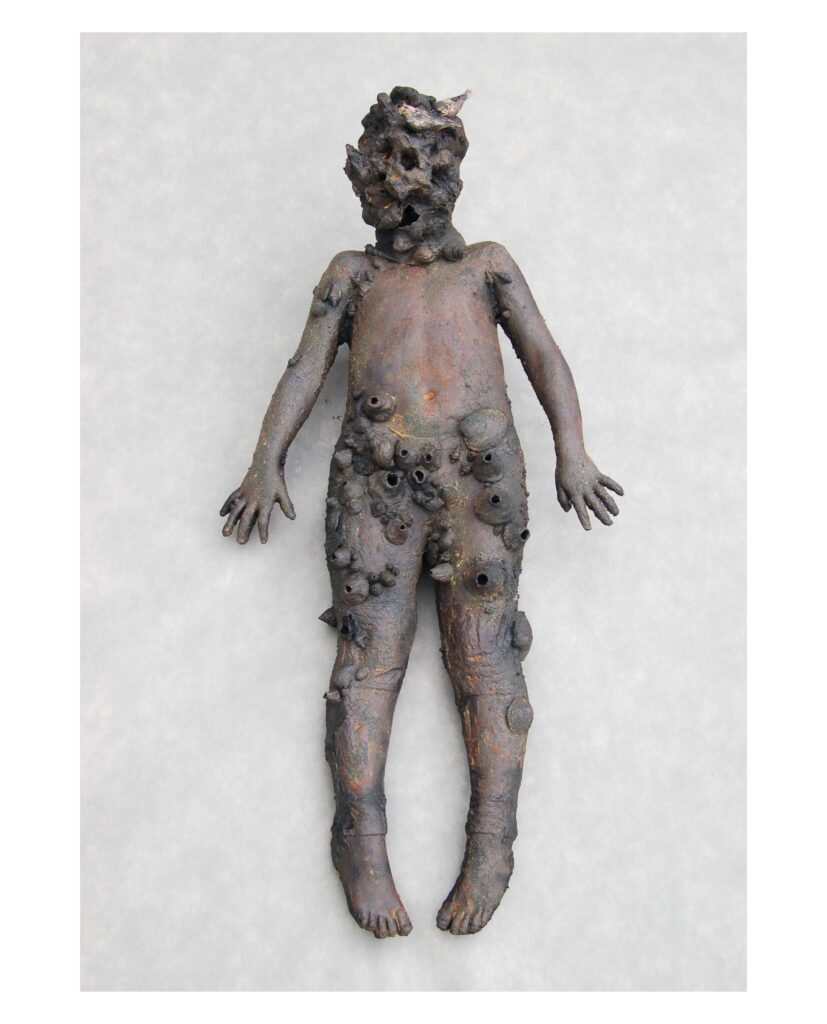
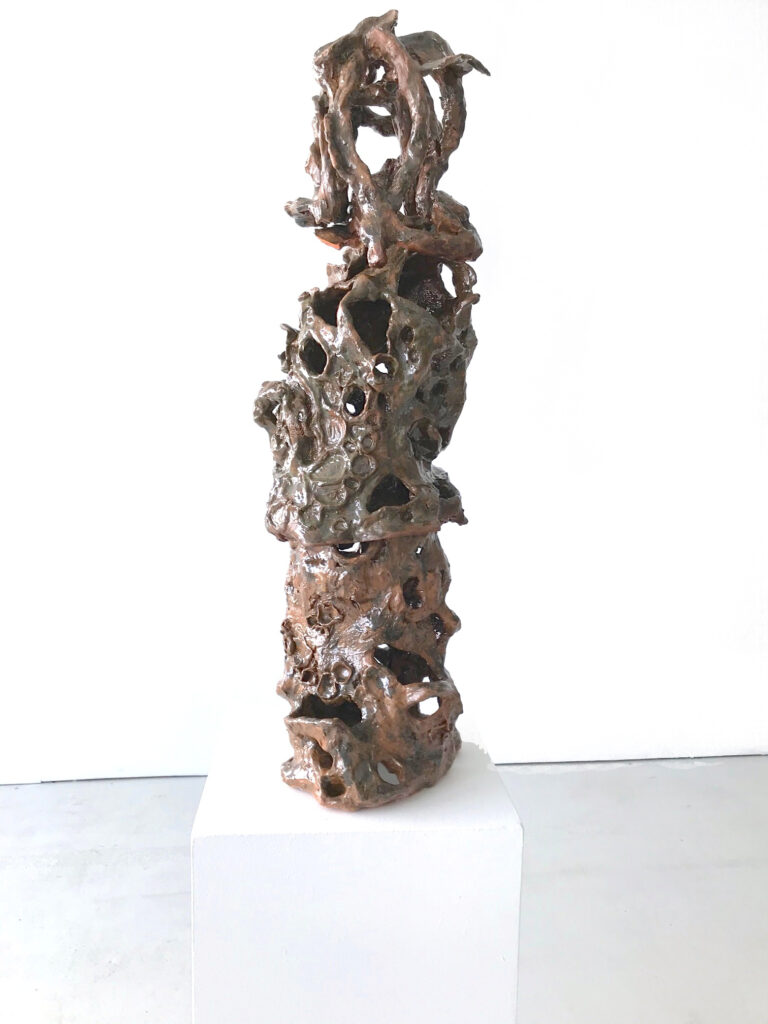
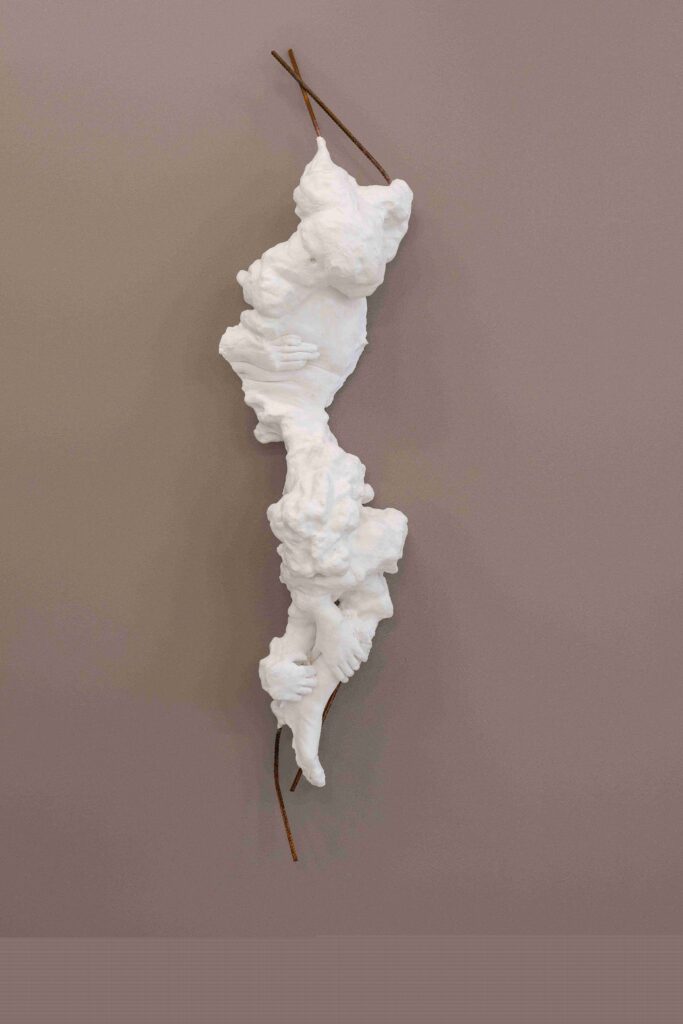
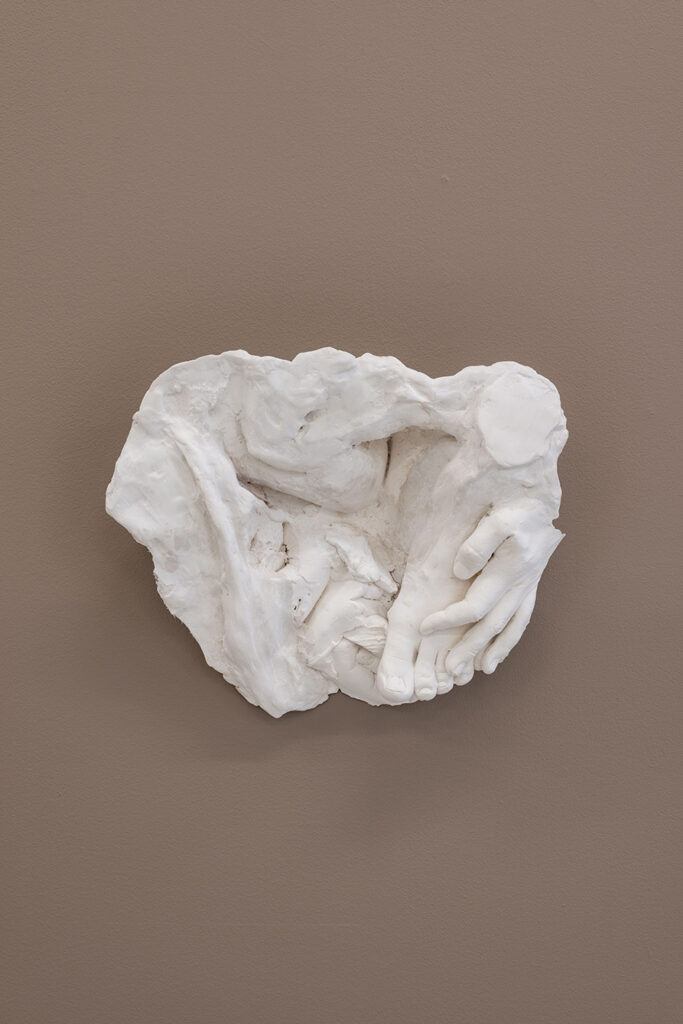
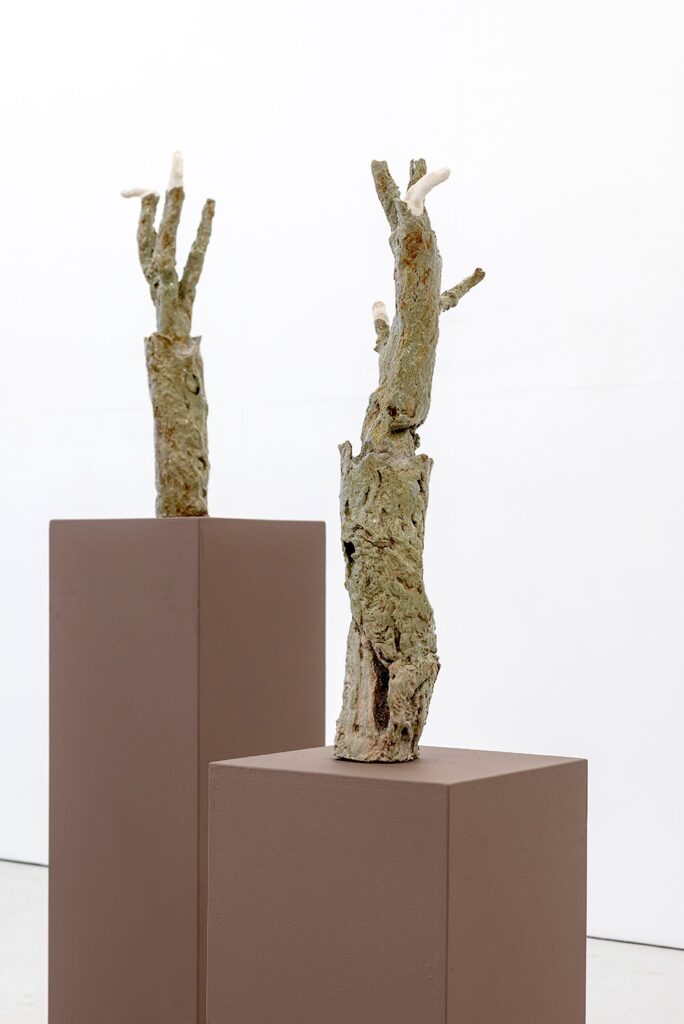
The starting point is parts of the human body, where artisanal processes such as modeling and casting are used. Furthermore, these parts are connected with other forms and objects, often found materials or leftovers. The intuitive and subconscious play a major role in the practice.
The exhibition has a text written by philosopher Rune Salomonsen.
Inga has previously had exhibitions at, among others, Galleri GAD (Oslo), in Örebro Kunsthall, at Galleri 21 (Malmö), Visningsrommet USF, participated in group exhibitions such as at Høstutstillingen, in Kunstnerforbundet, Haugar Vestfold Kunstmuseum, Forumbox (Helsinki) and others. This year she is participating in the Vestlandsutstillingen.
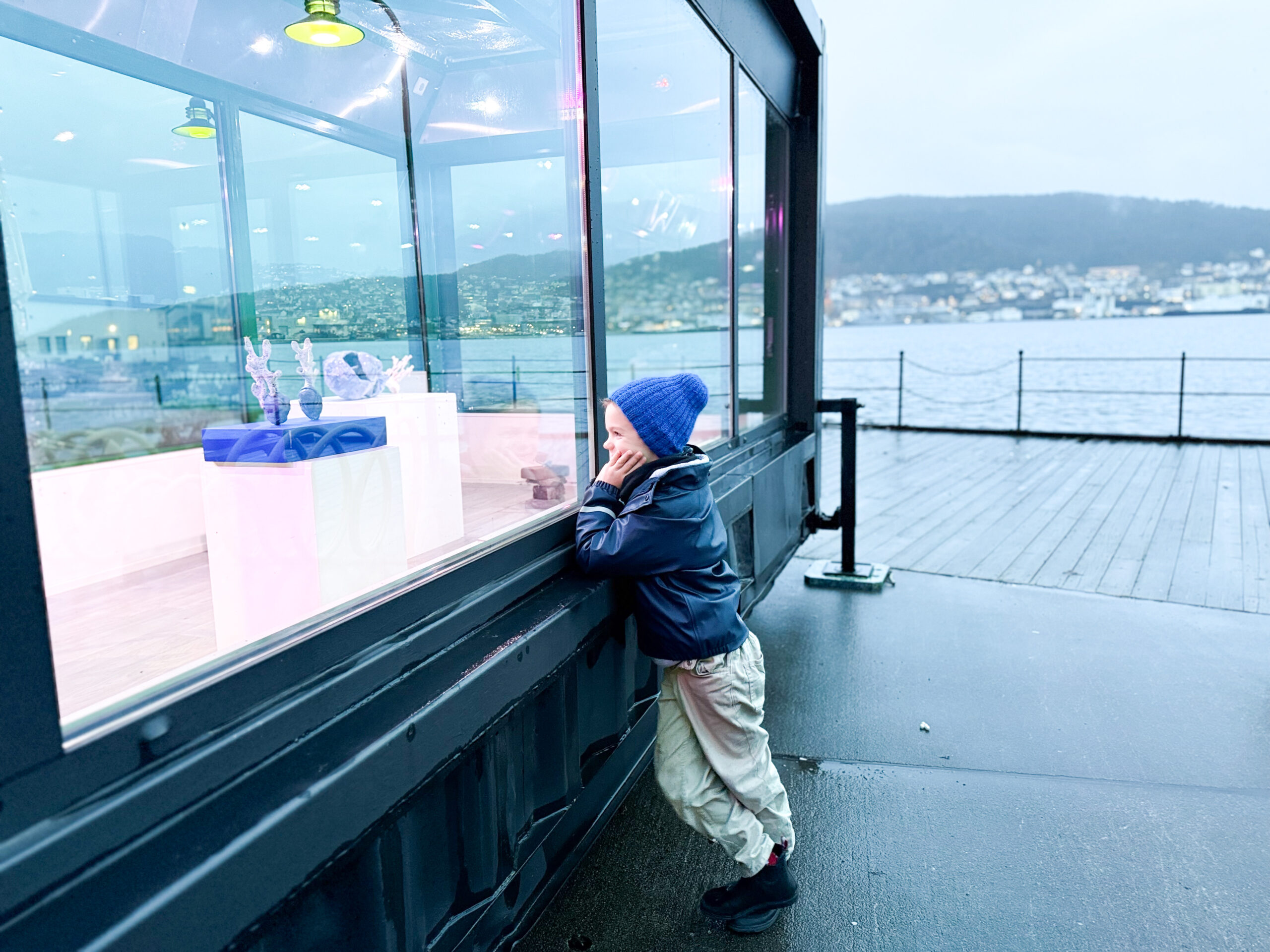
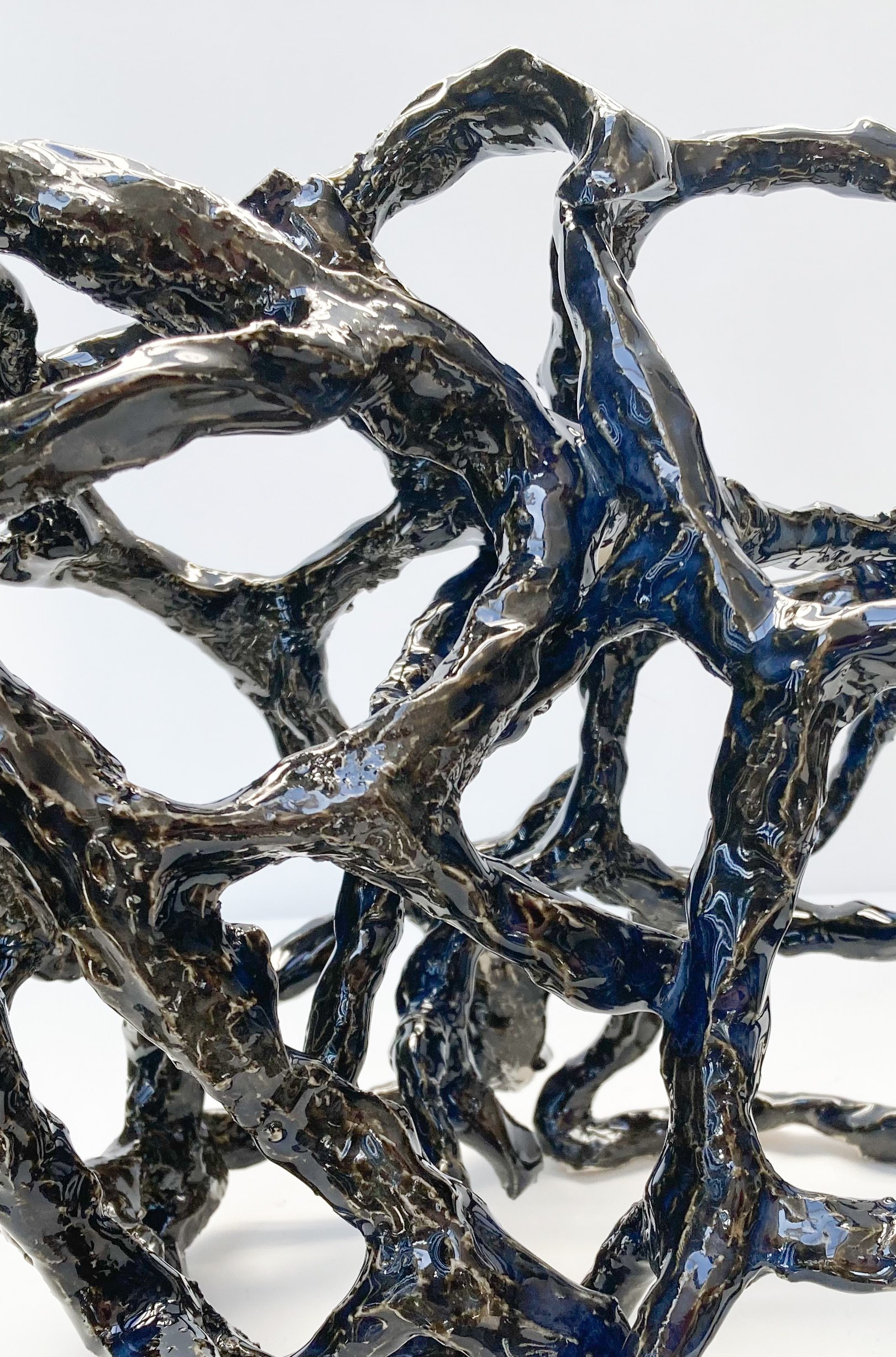
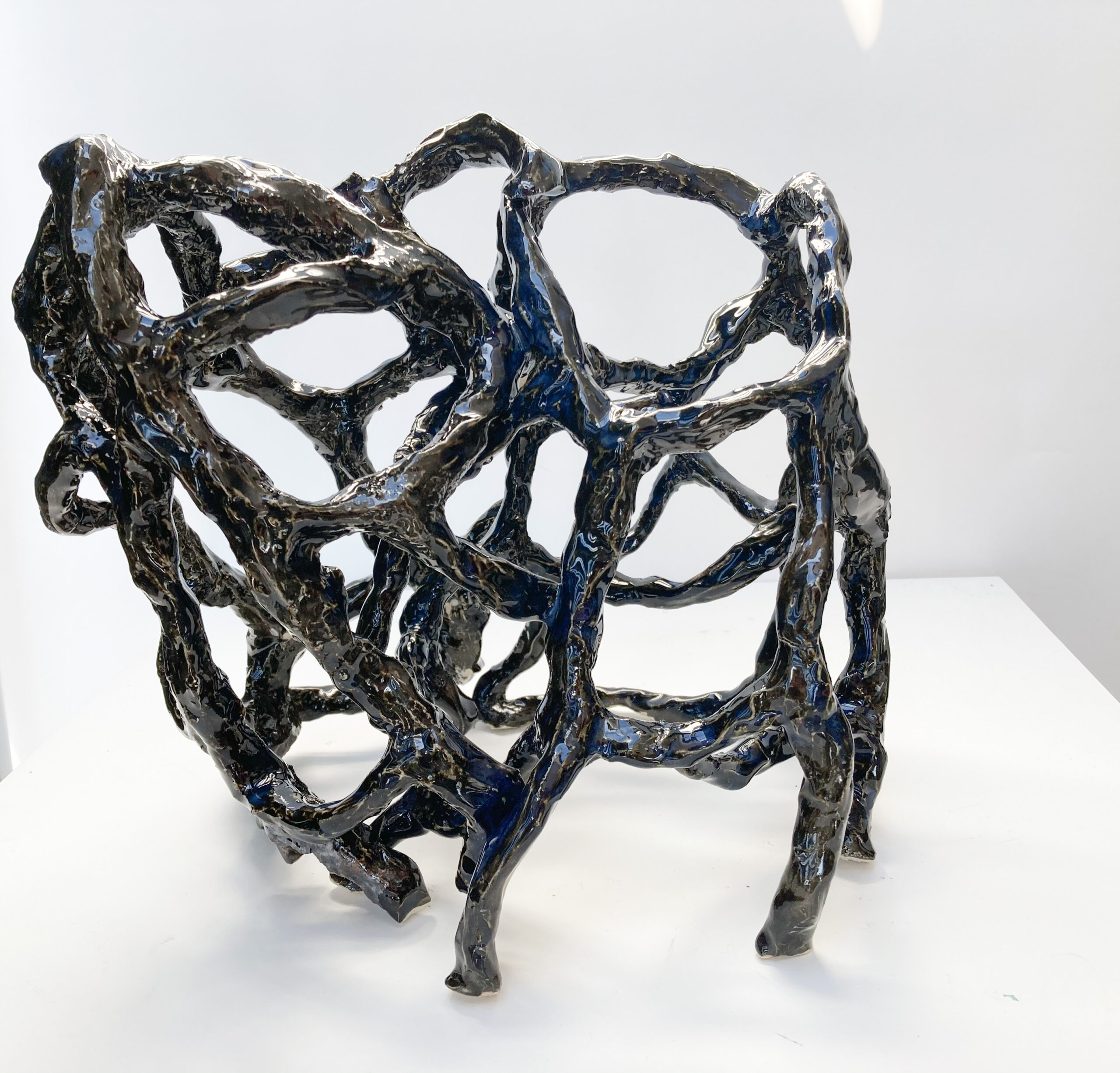
The exhibition deals with a place or state without plan, without level and is a connection between a physical and a psychological place. A place where things can flow together, resign or go in circles.
Themes such as evolutionary theory, metaphysics and mythology are central. The exhibition is inspired by Japanese creation mythology, where all life begins in the swamp and marsh.
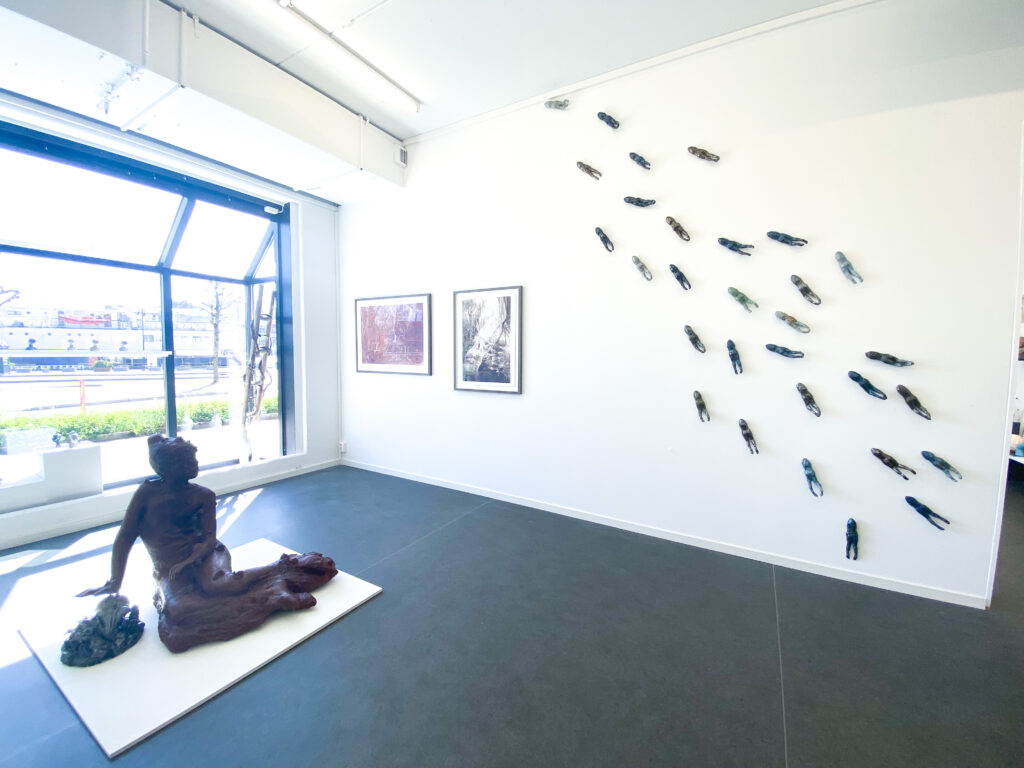
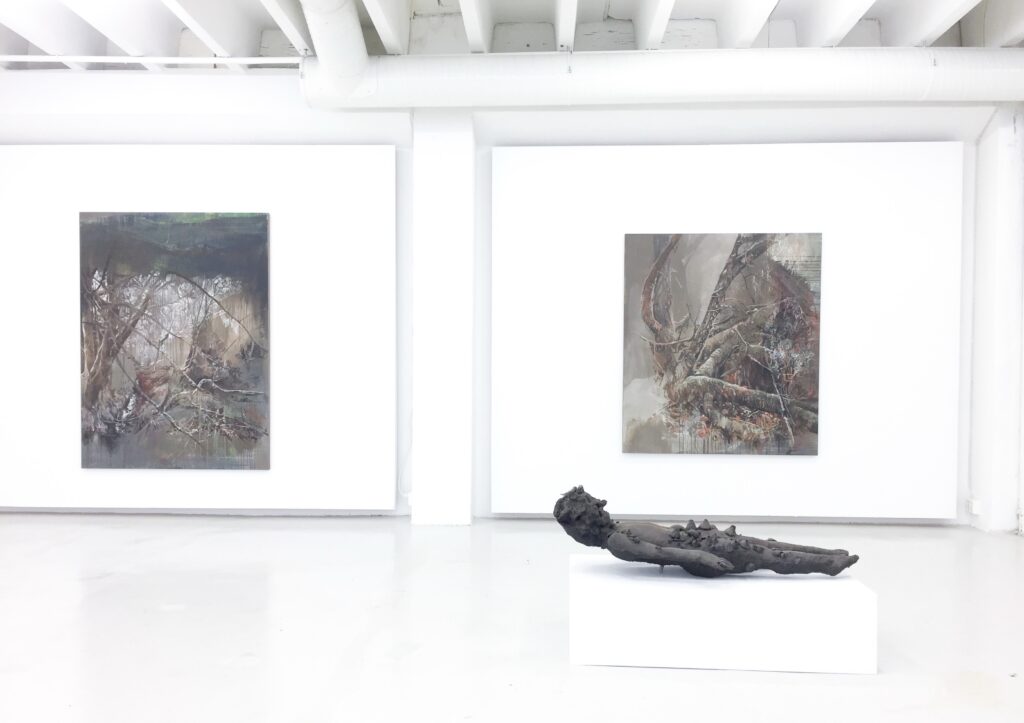
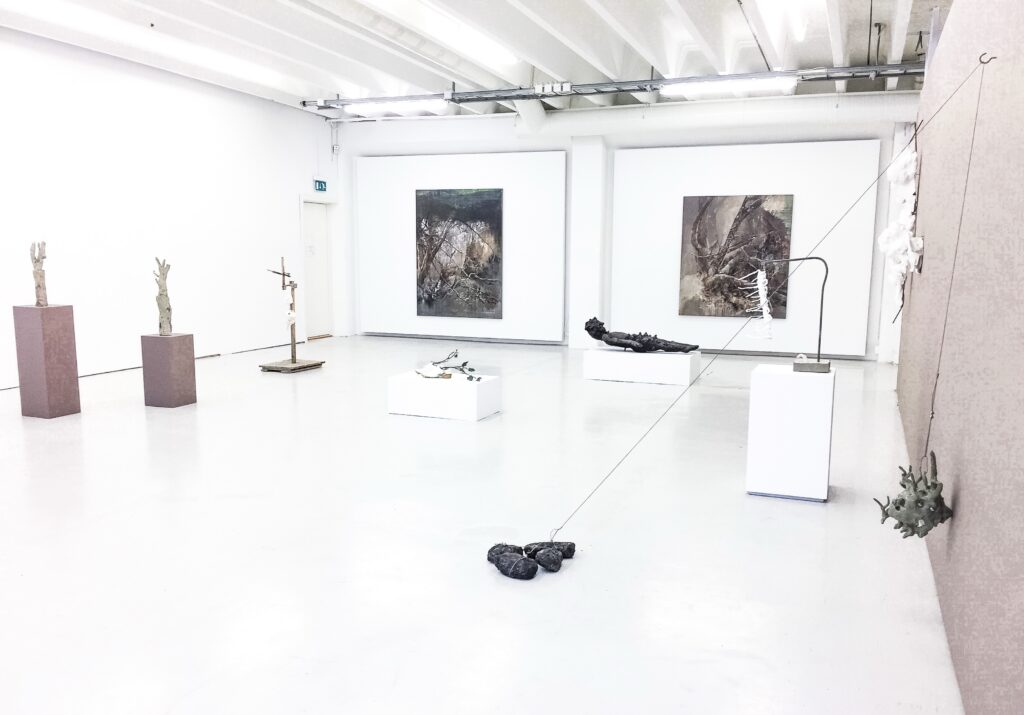
In the exhibition Count Backwards, Inga S. Søreide presented works that include four sculptures, a painting and a series of drawings.
The exhibition refers to themes such as psychology, metaphysics, Japanese creation mythology and the human condition.
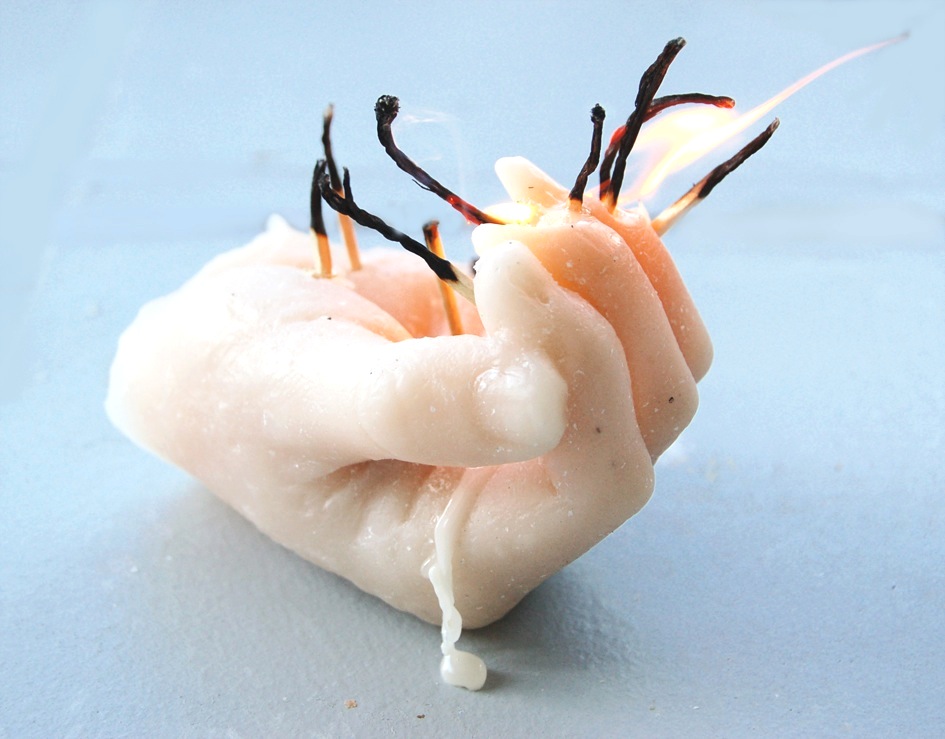
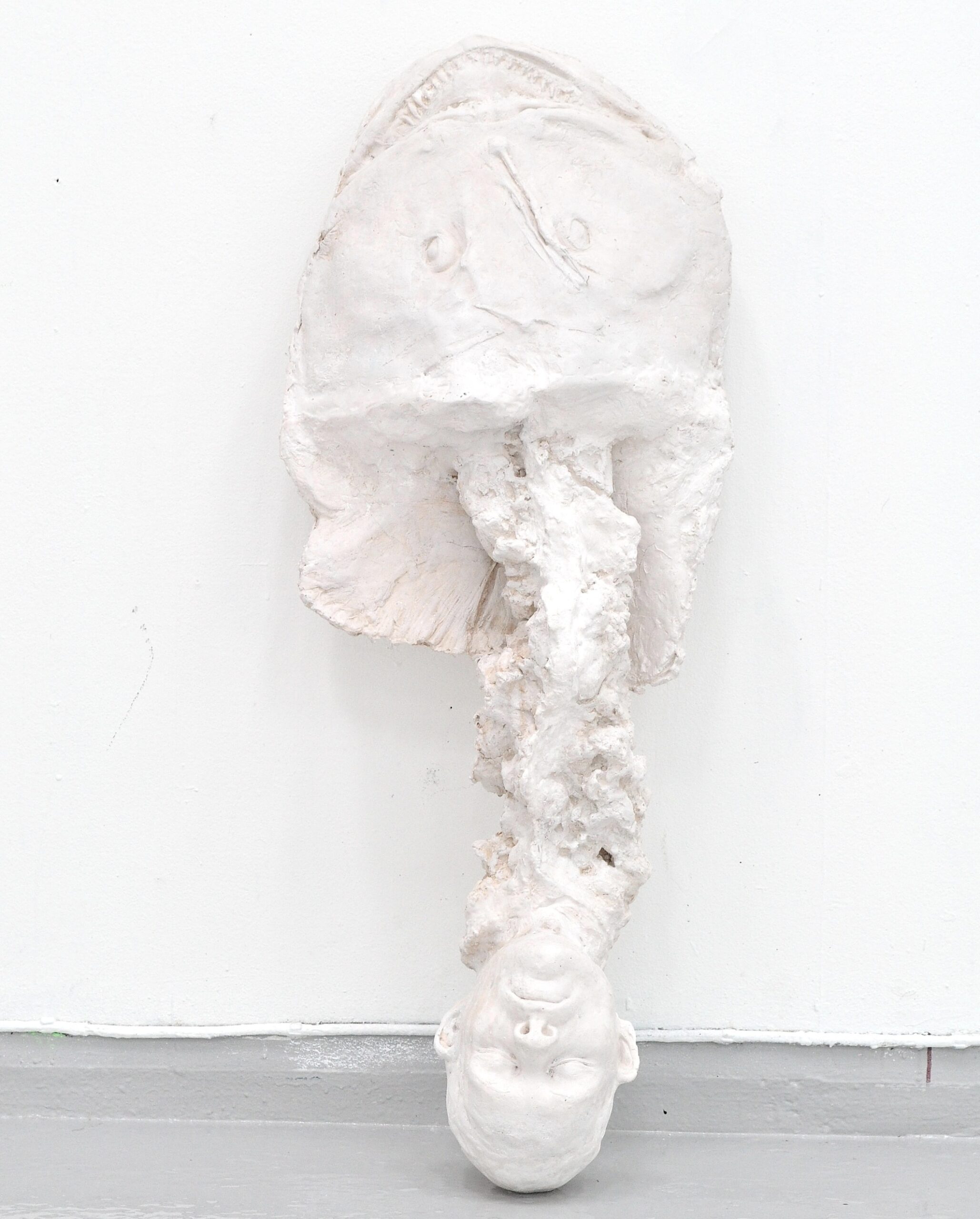
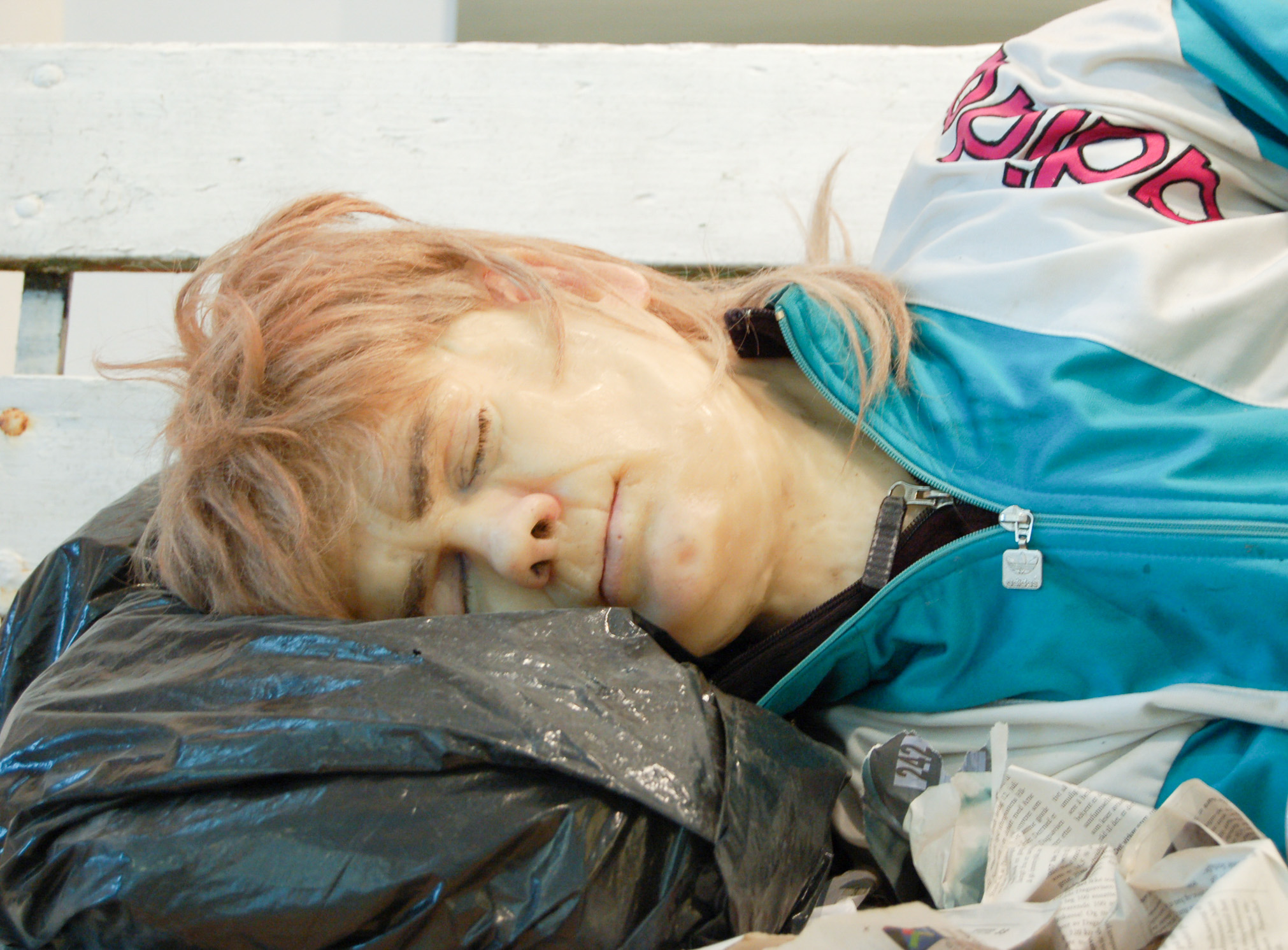
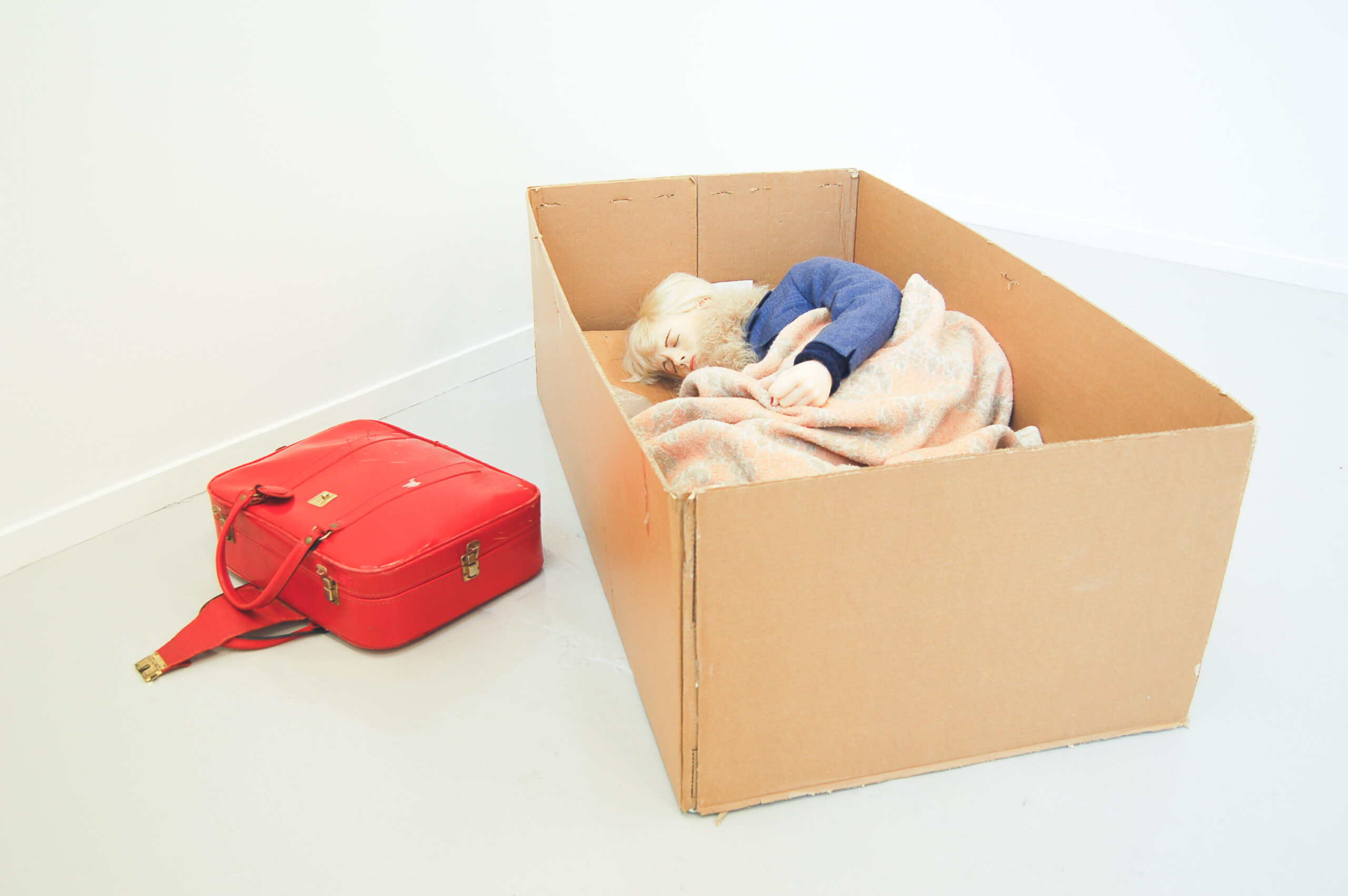
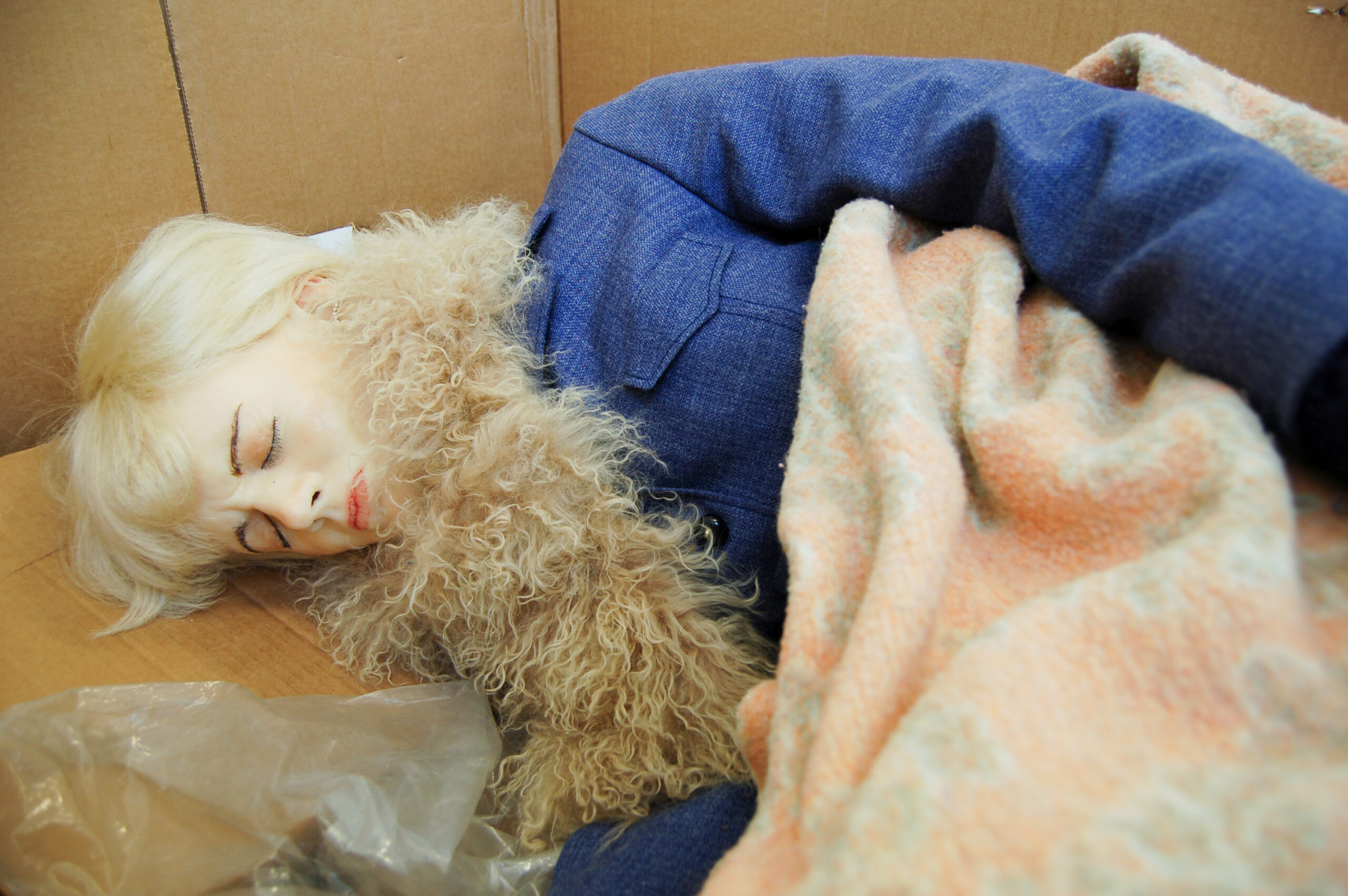
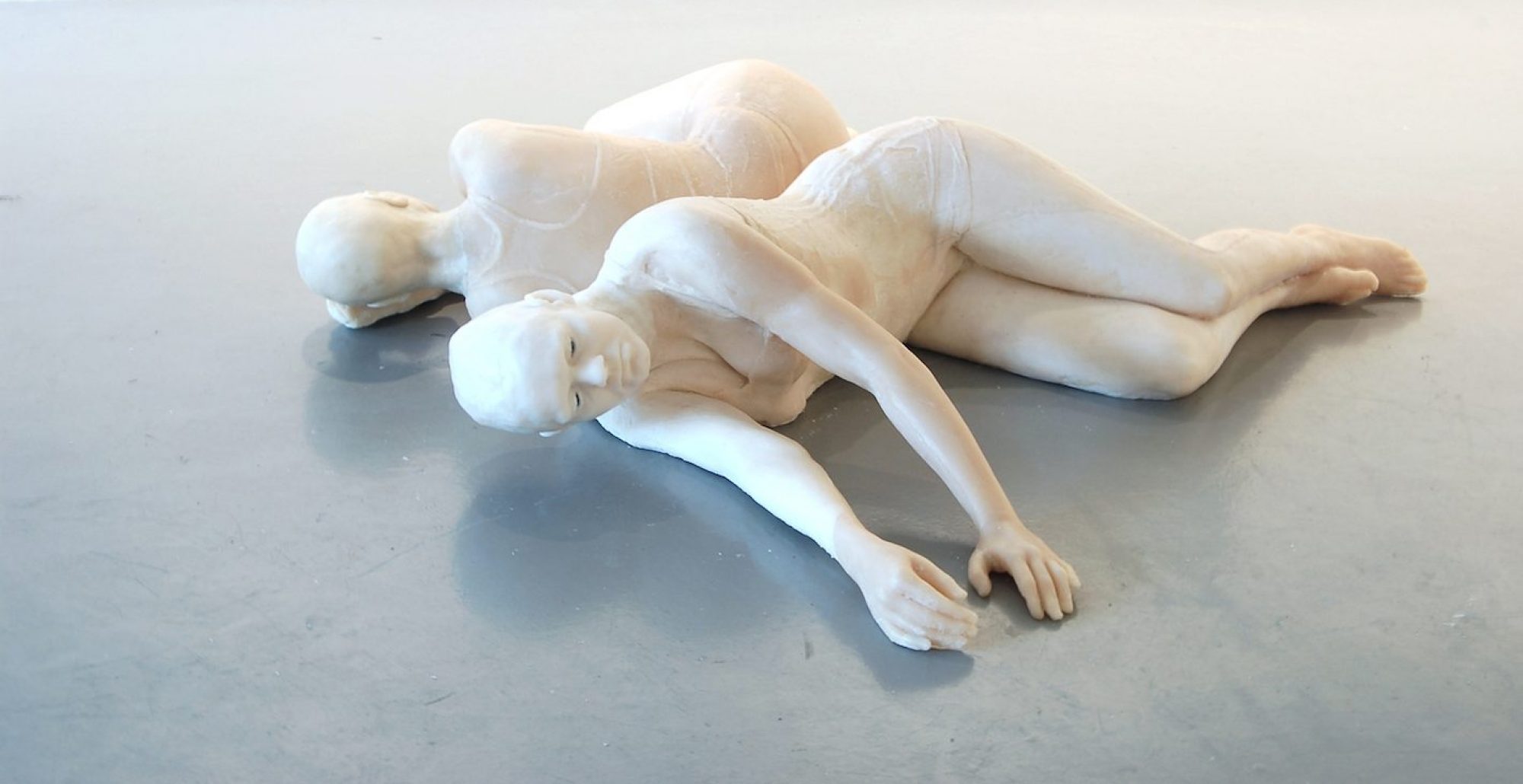
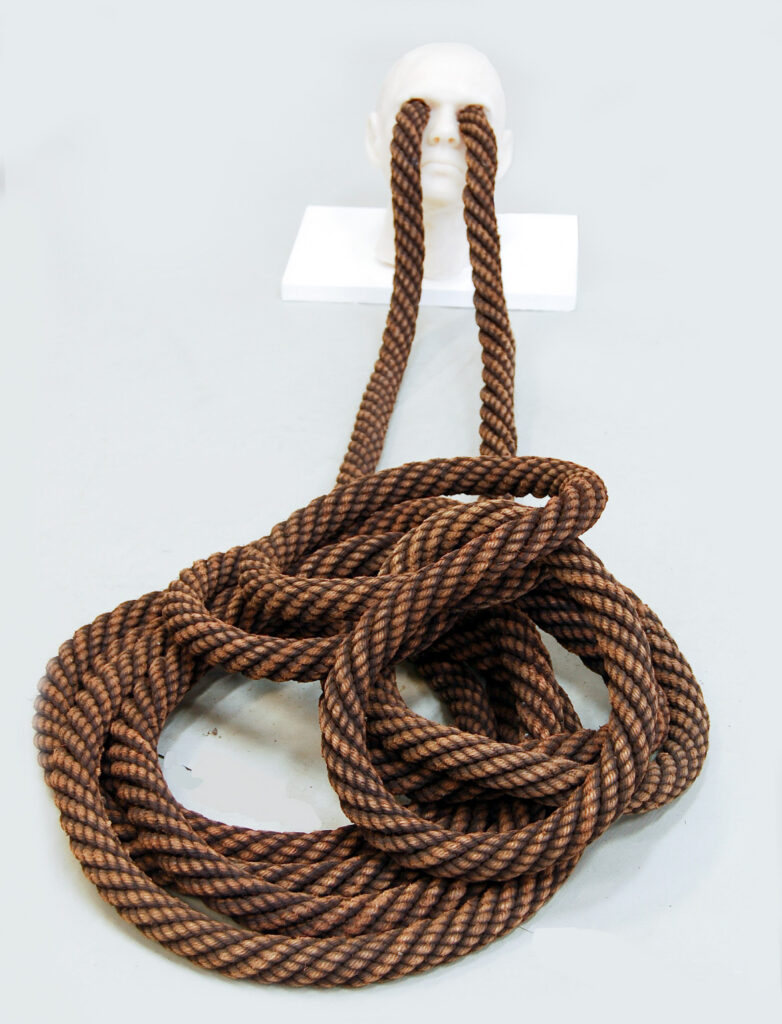
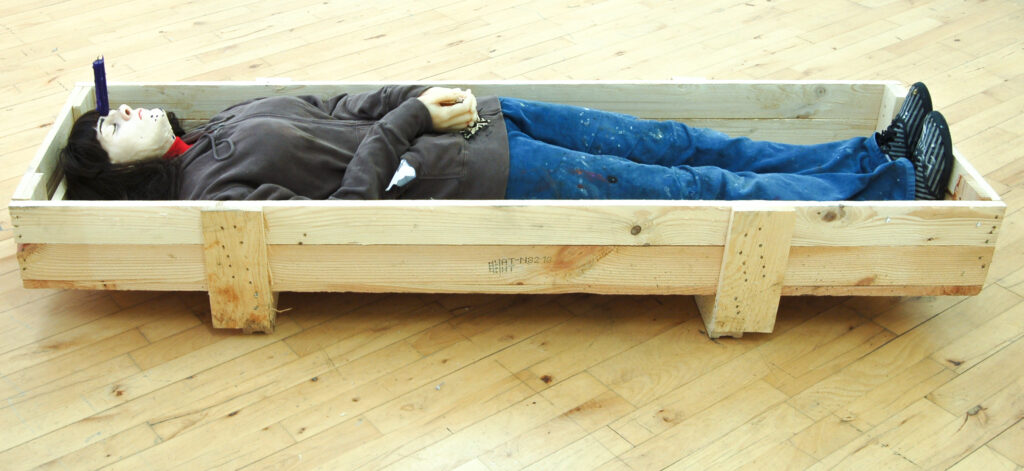
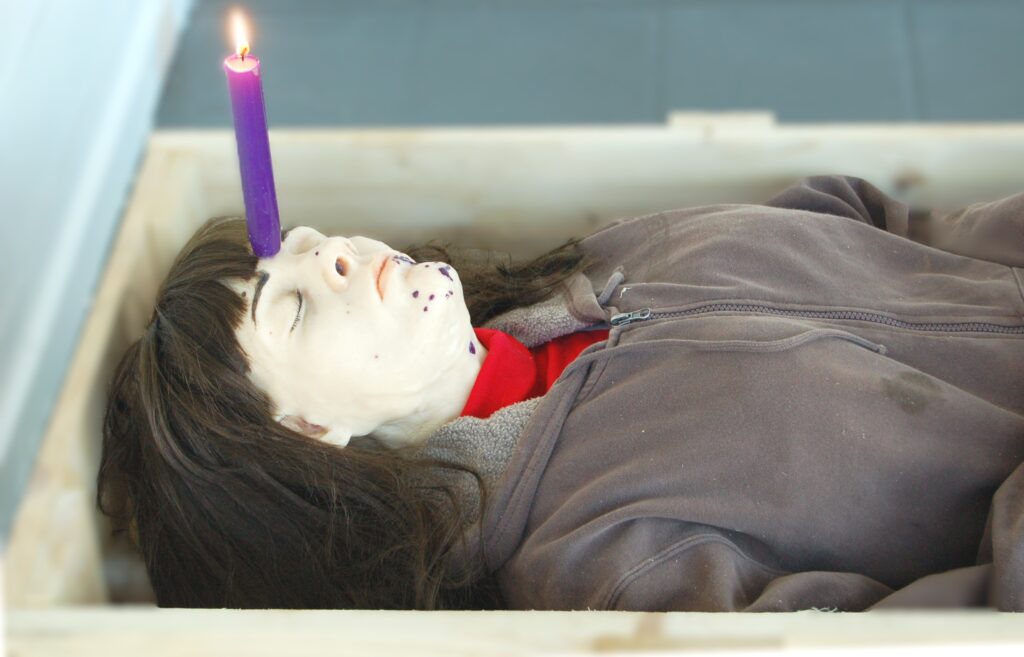
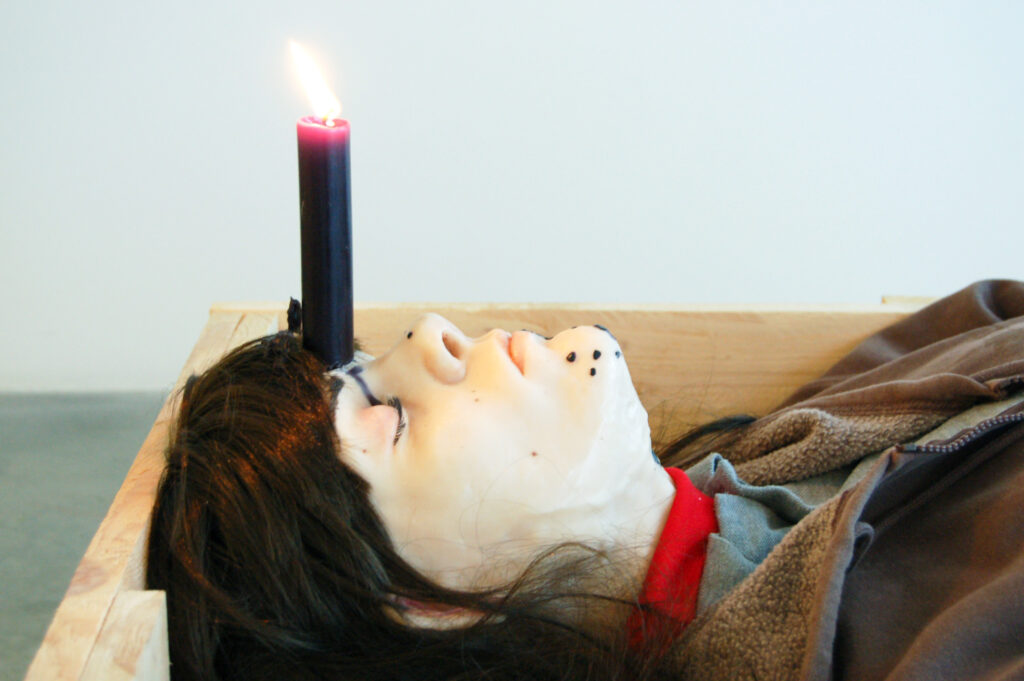
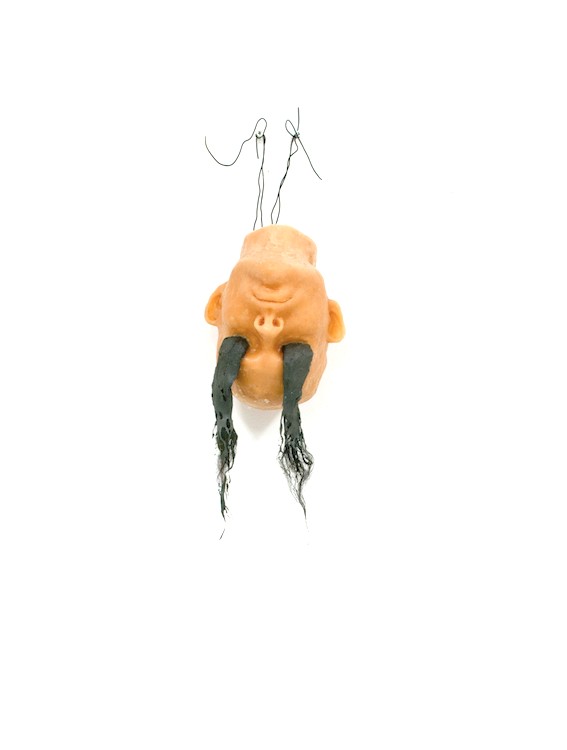
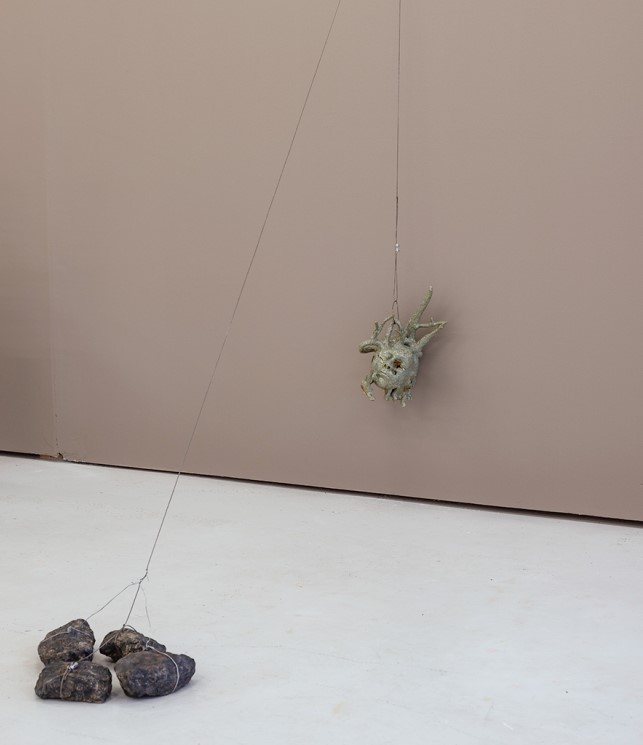
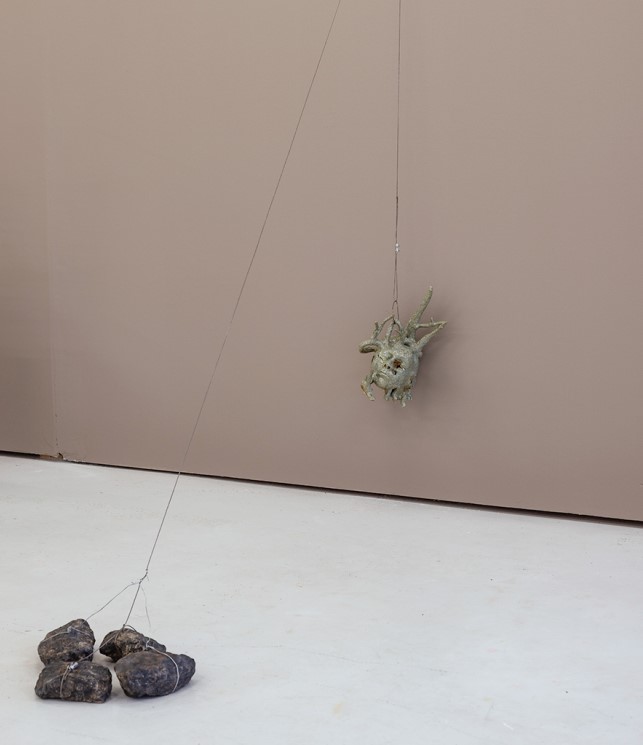
One of the sculptures, Dritt!, shows a head with fluid flowing out of the eye. The work Self-Portrait with Candle shows a wax sculpture that is identical to the artist. A candle is placed on the forehead and burns so that sebum drips down the face.
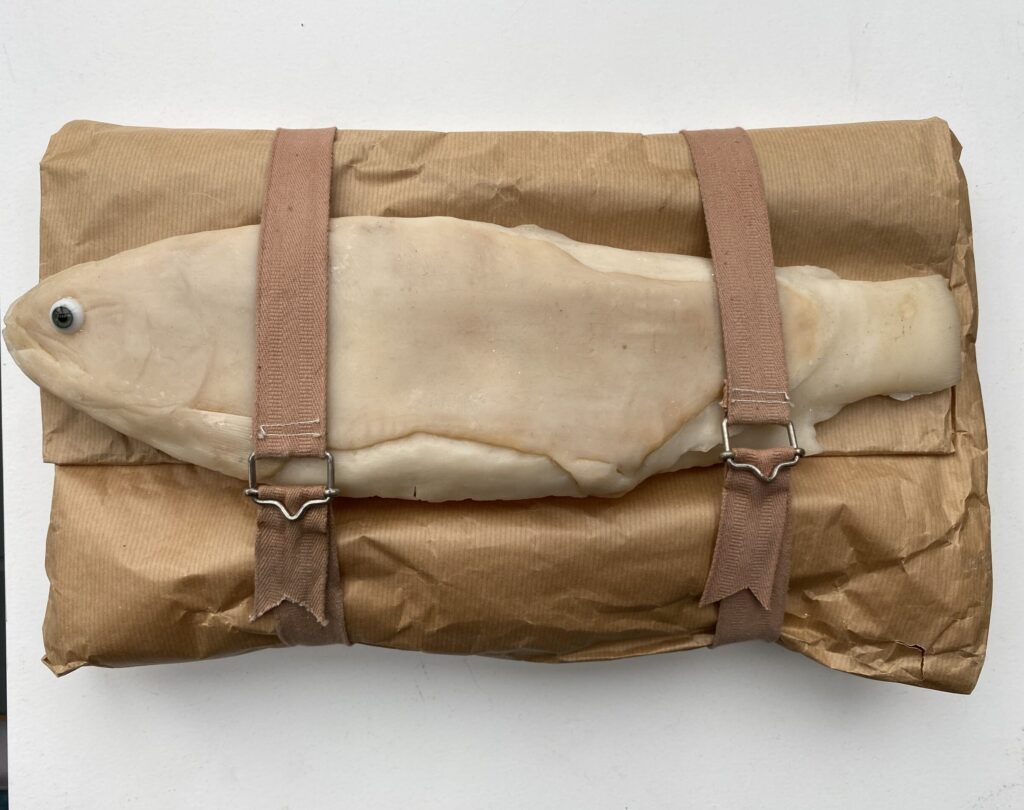
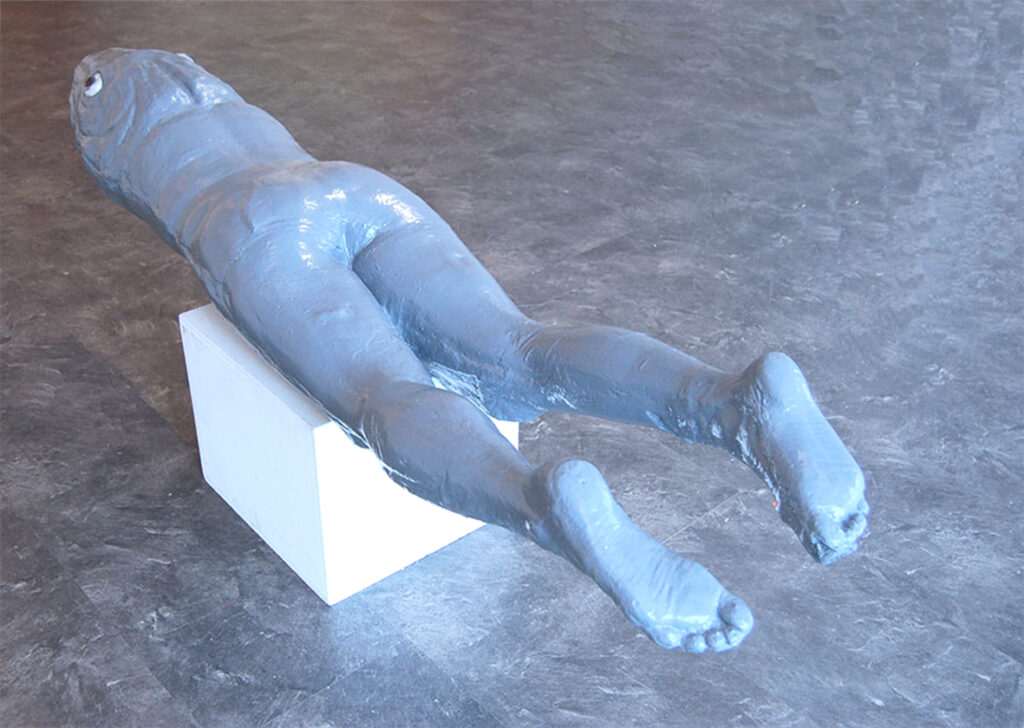
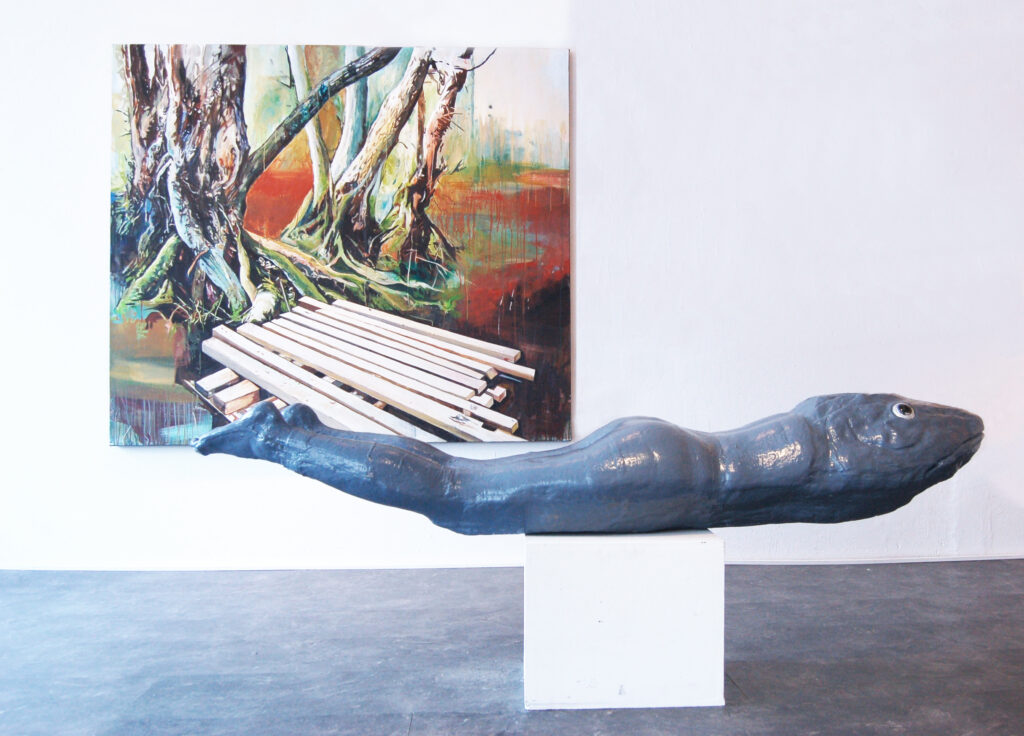
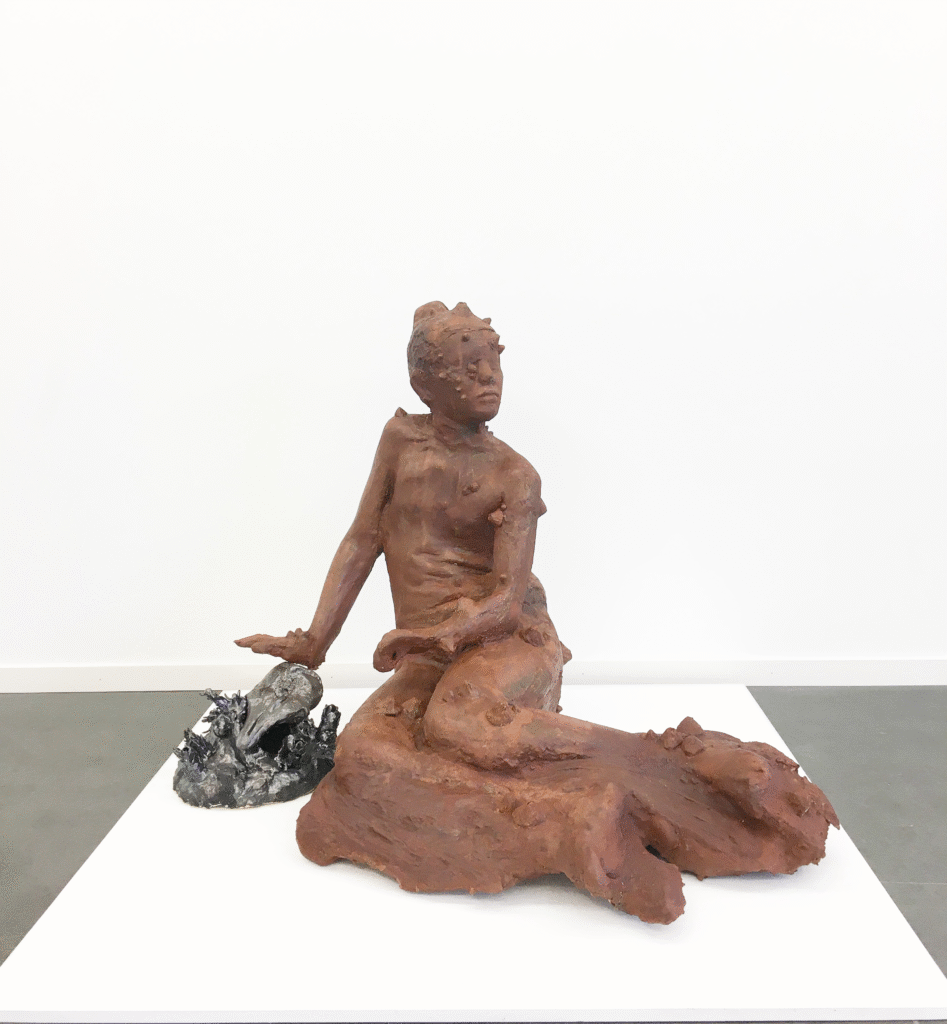
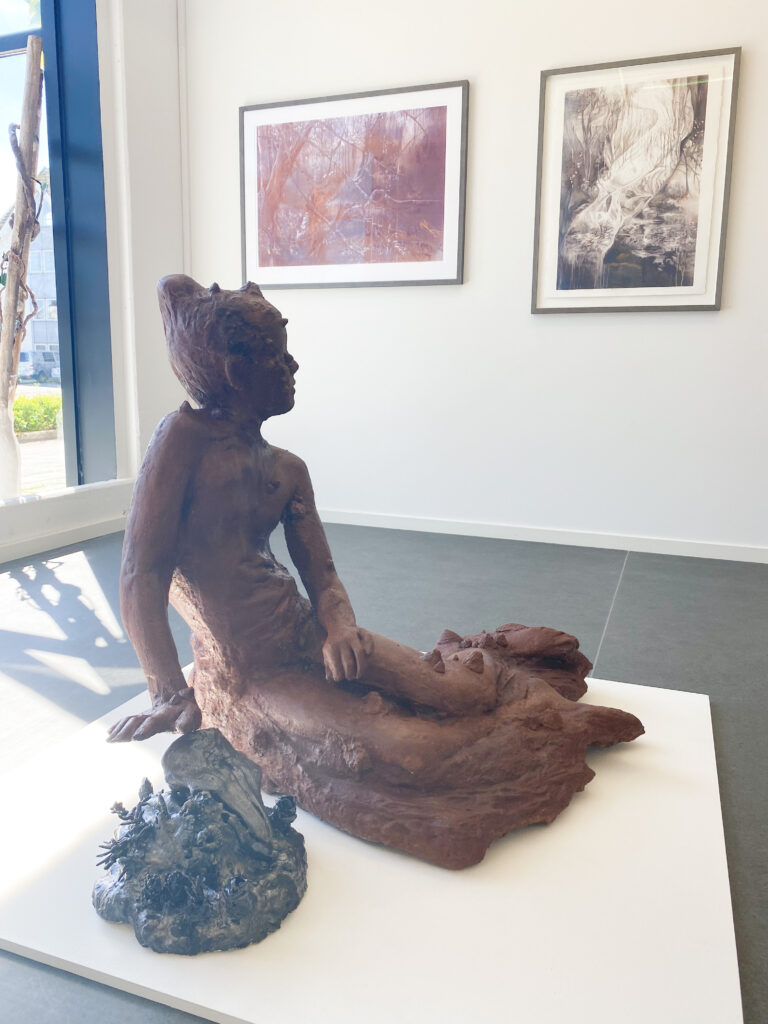
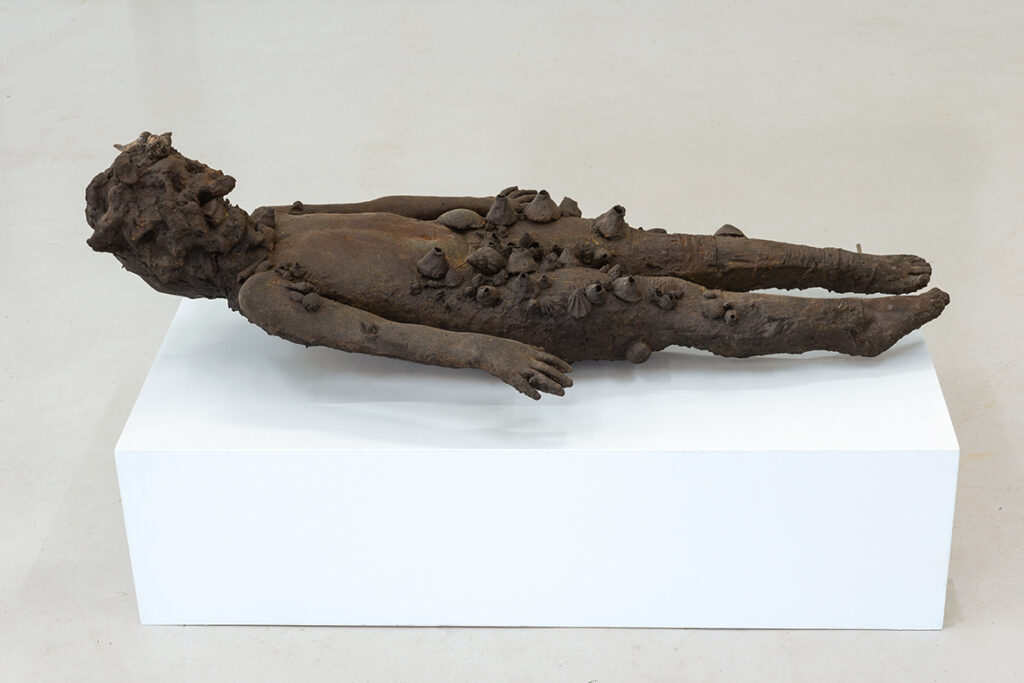
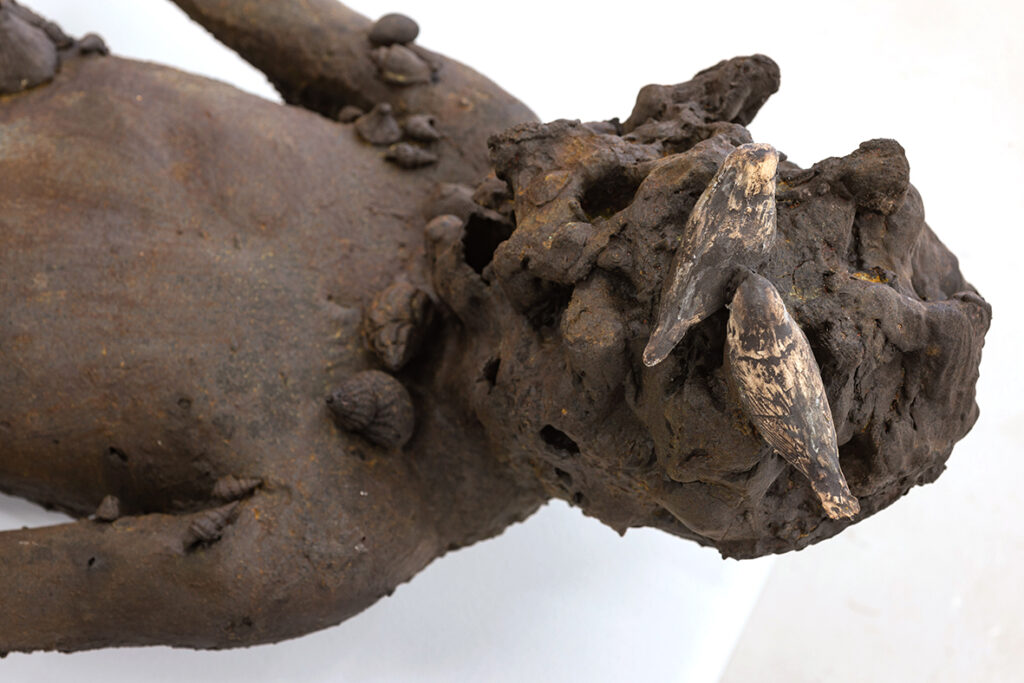
Another larger sculptural work, FishWoman, is a combination of fish and human.
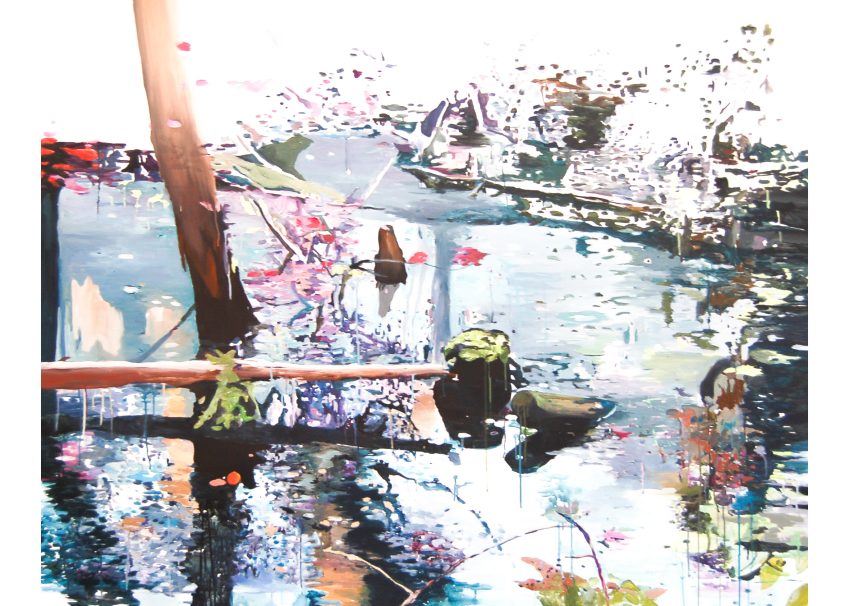
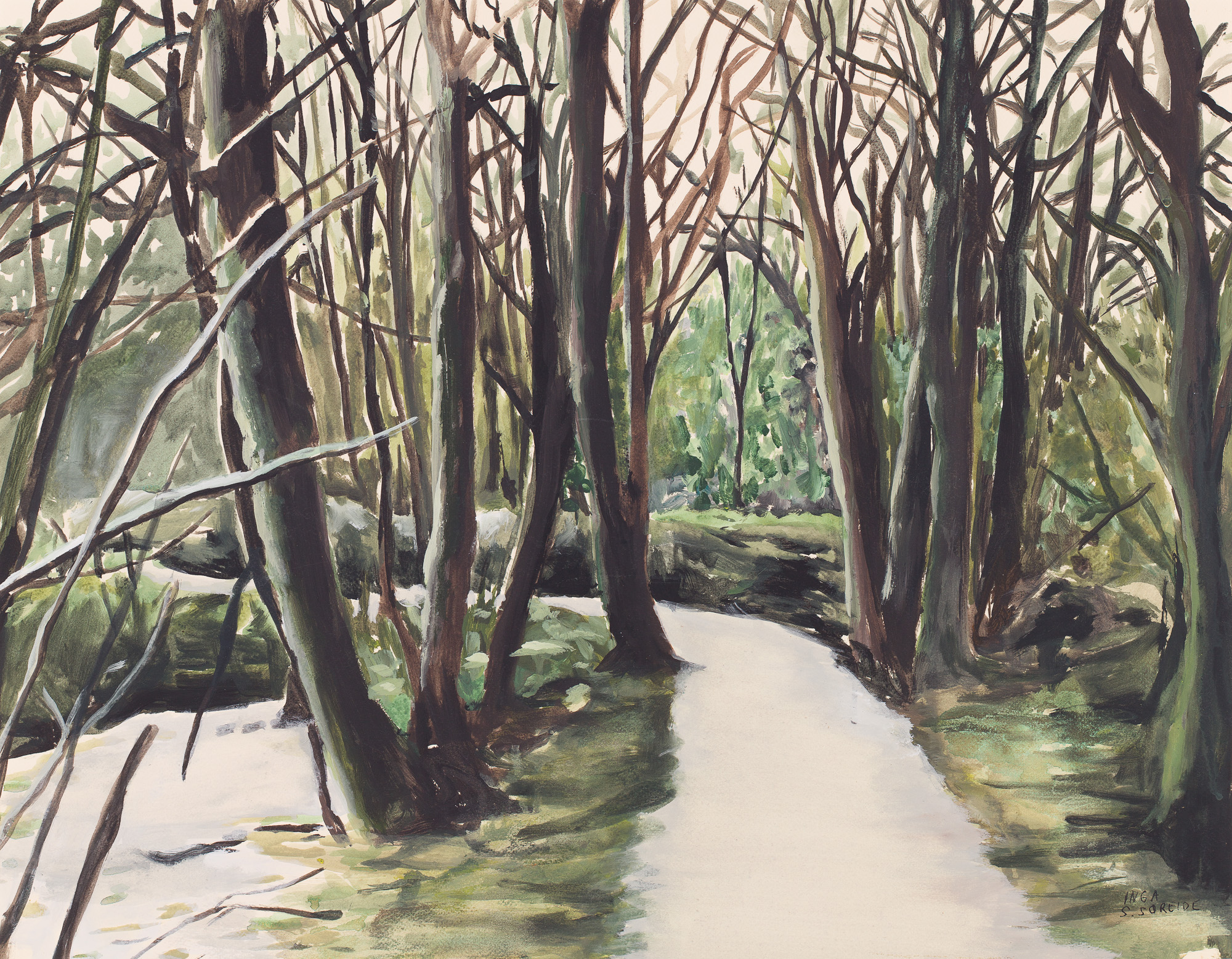
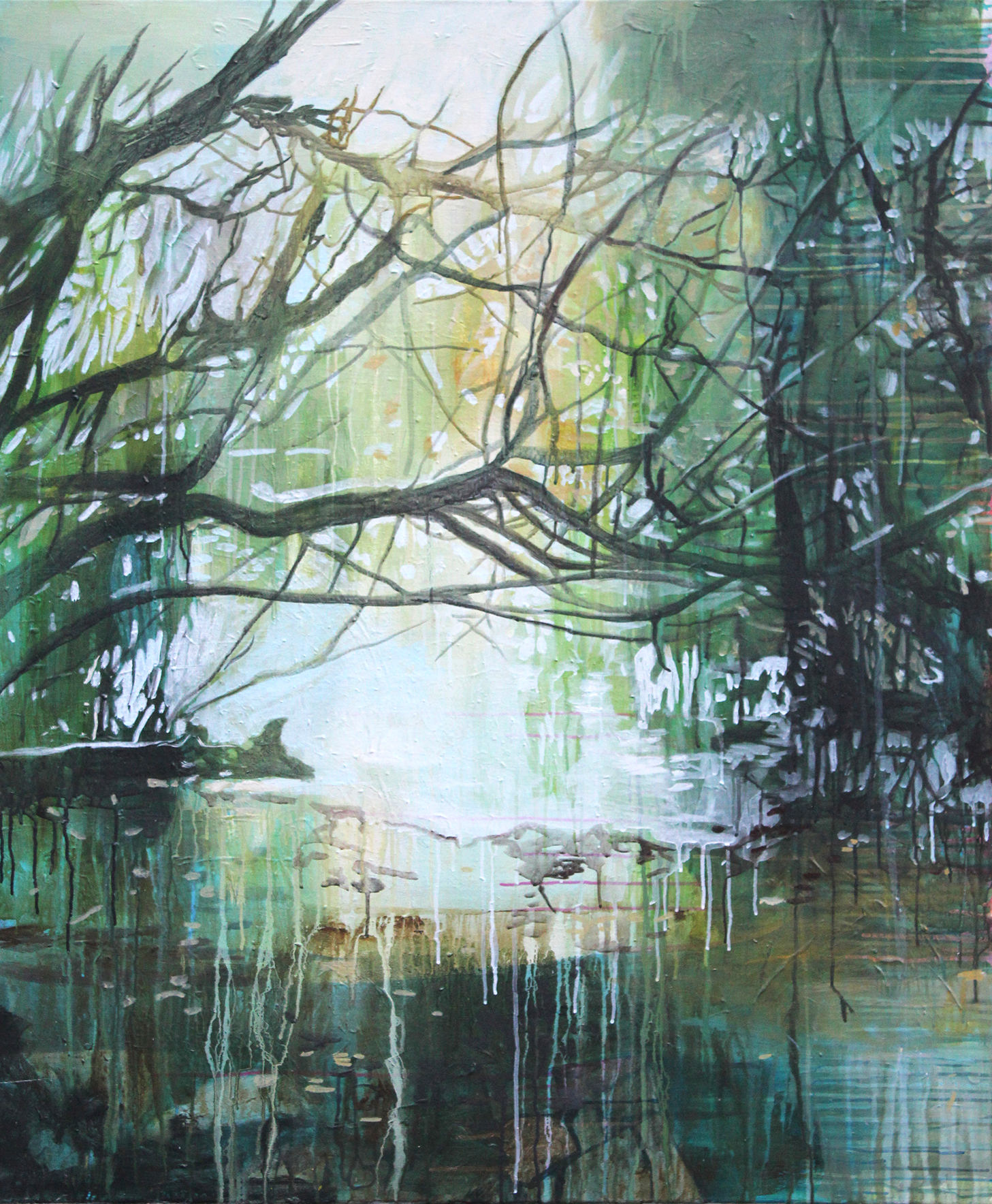
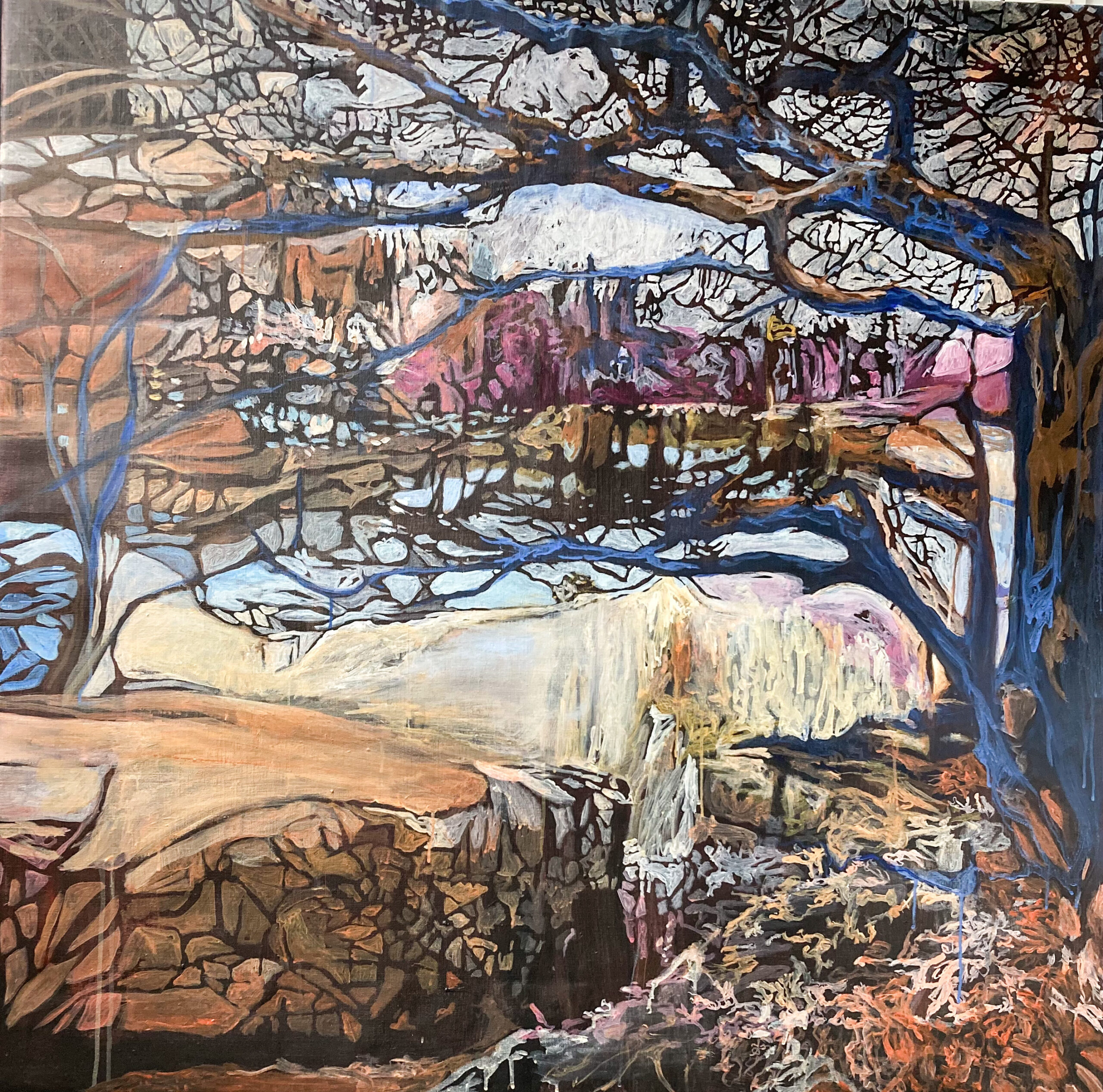
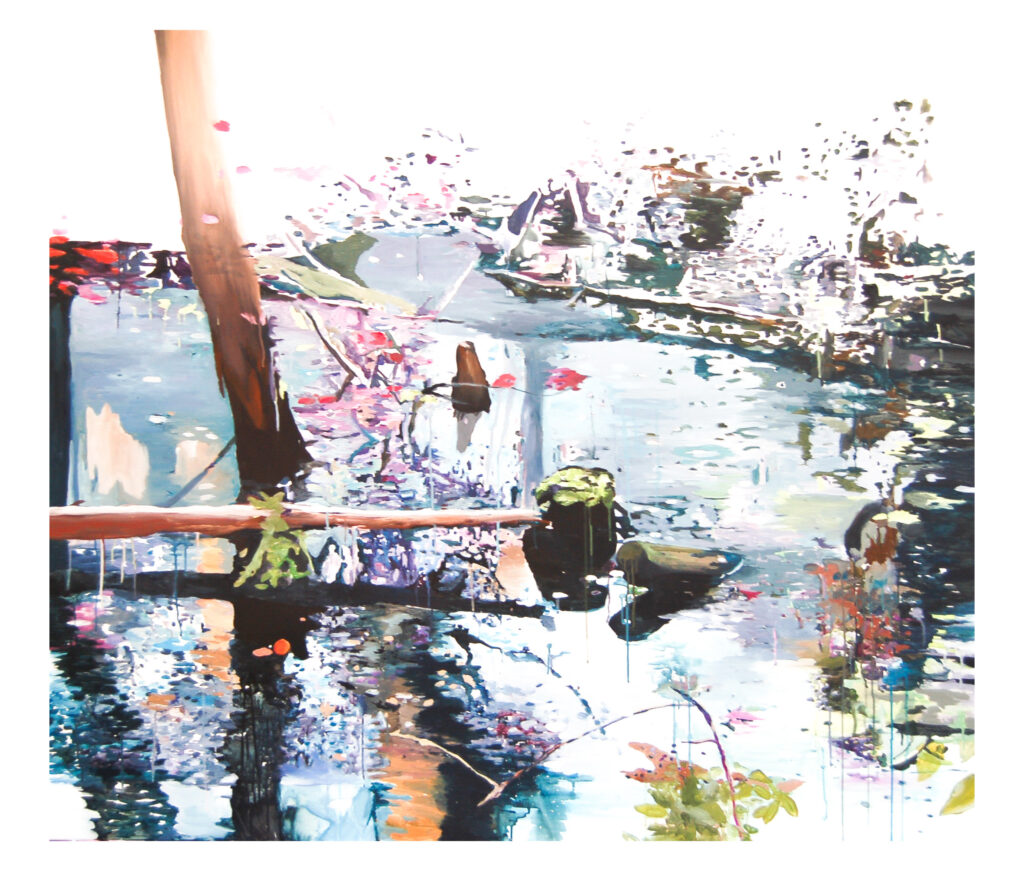
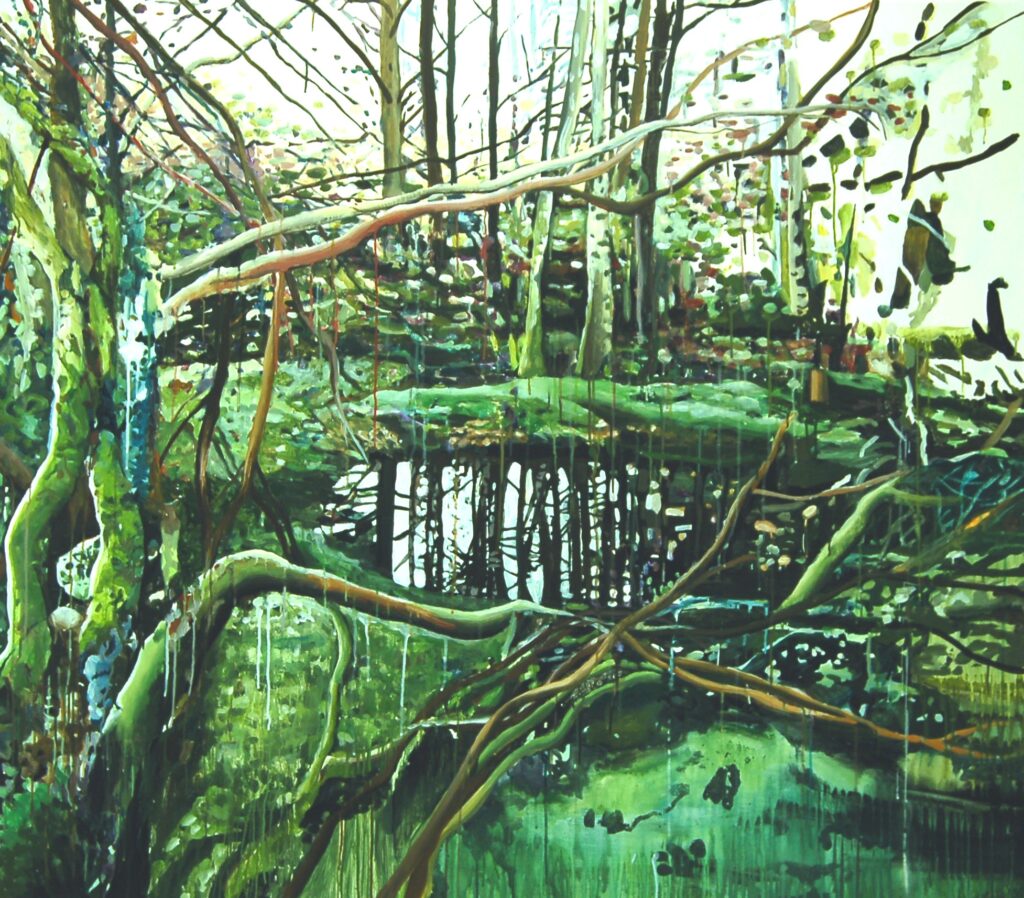
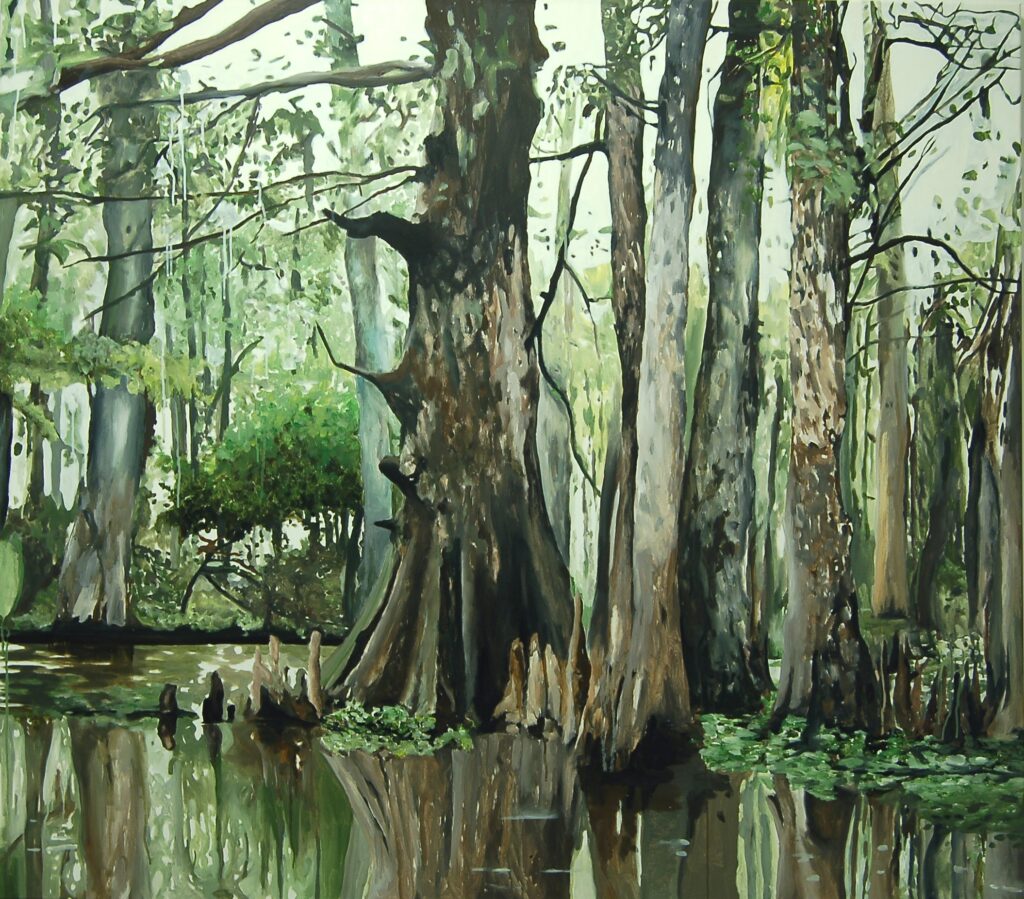
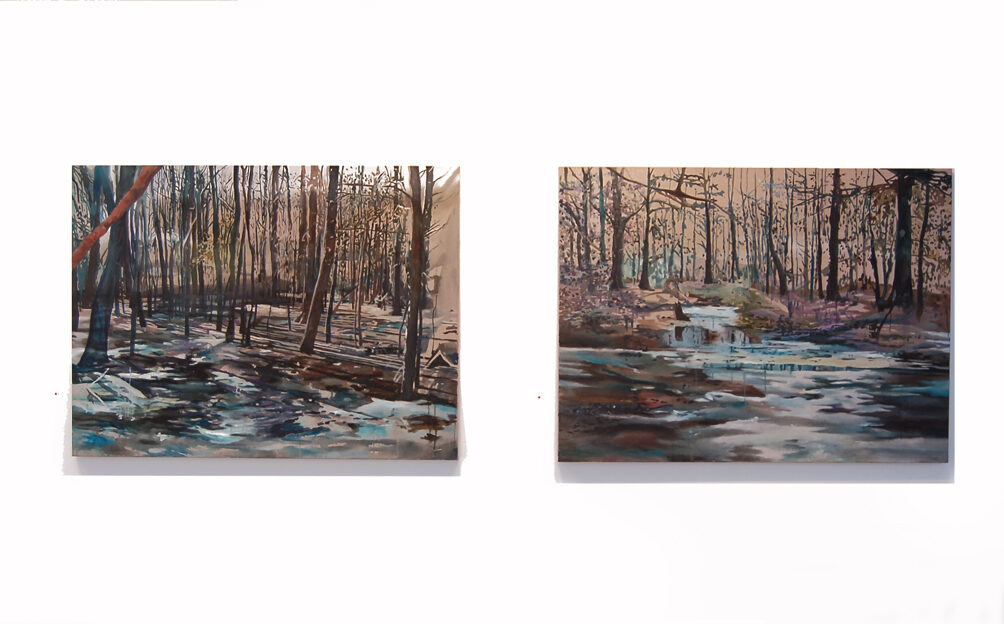
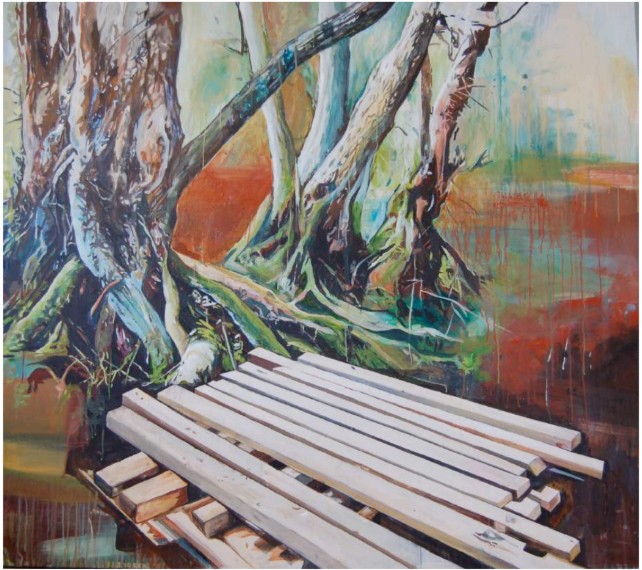
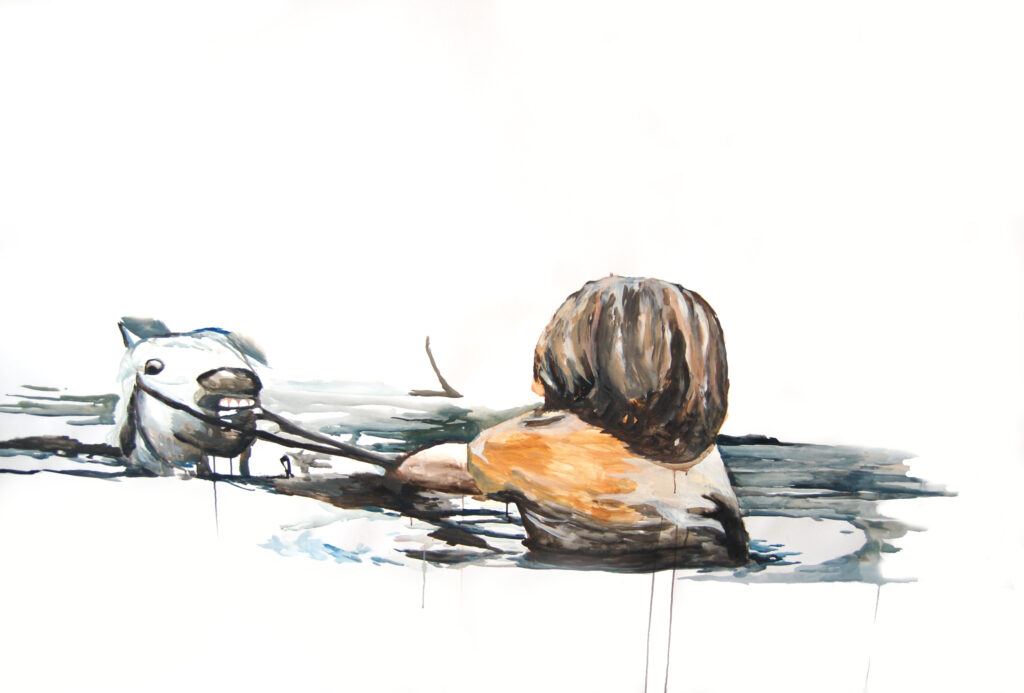
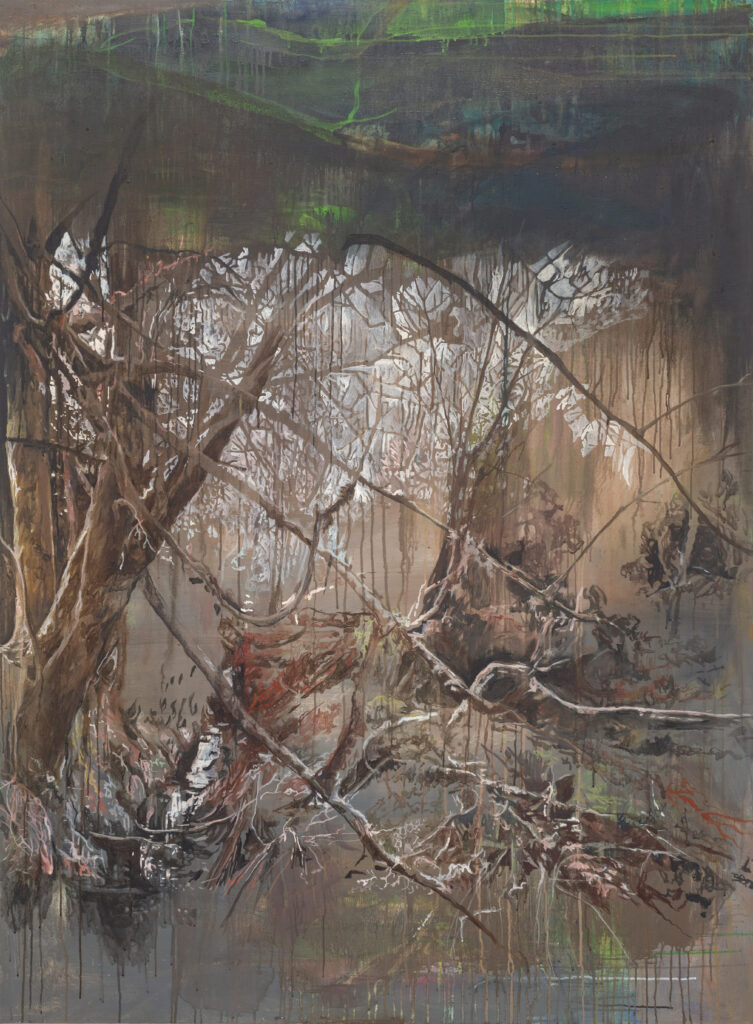
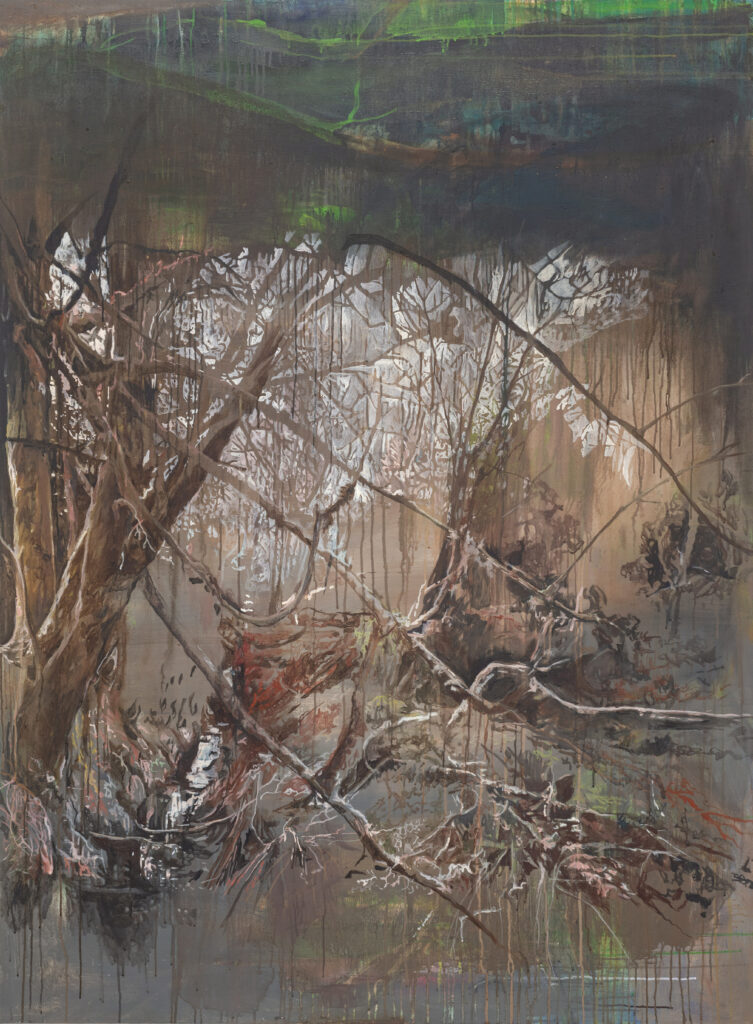
In the paintings, the motifs are swamps and marsh landscapes where the sculptures appear in various situations.
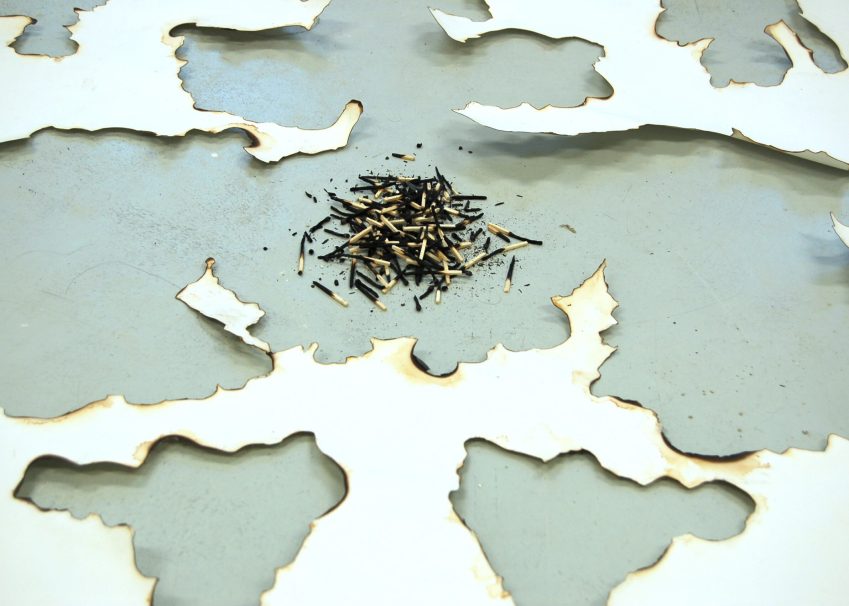
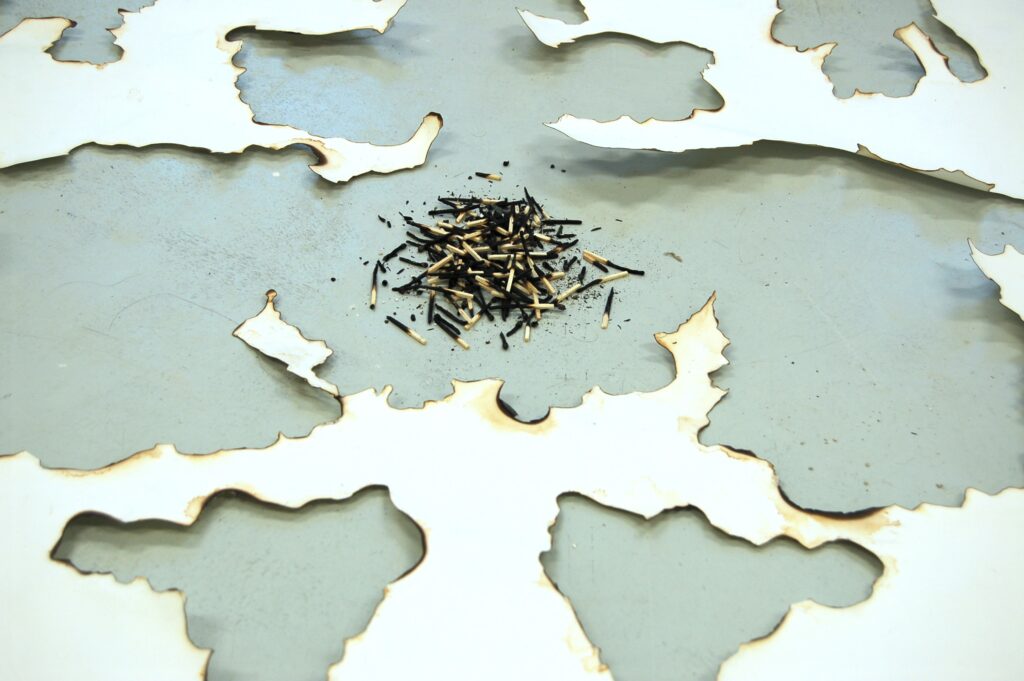
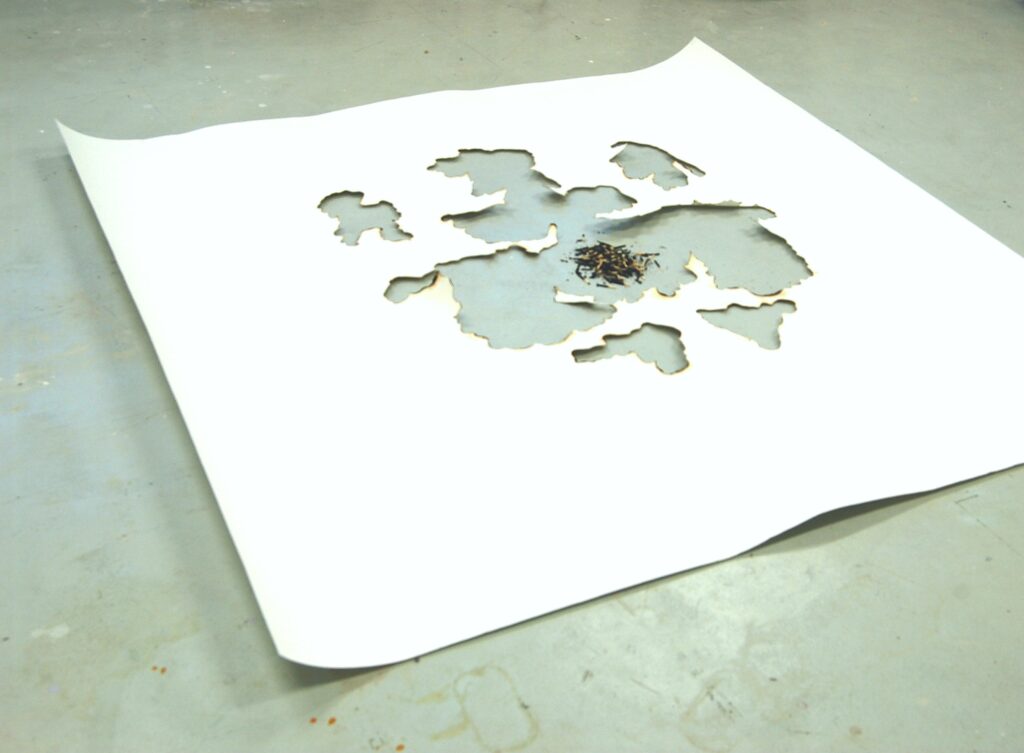
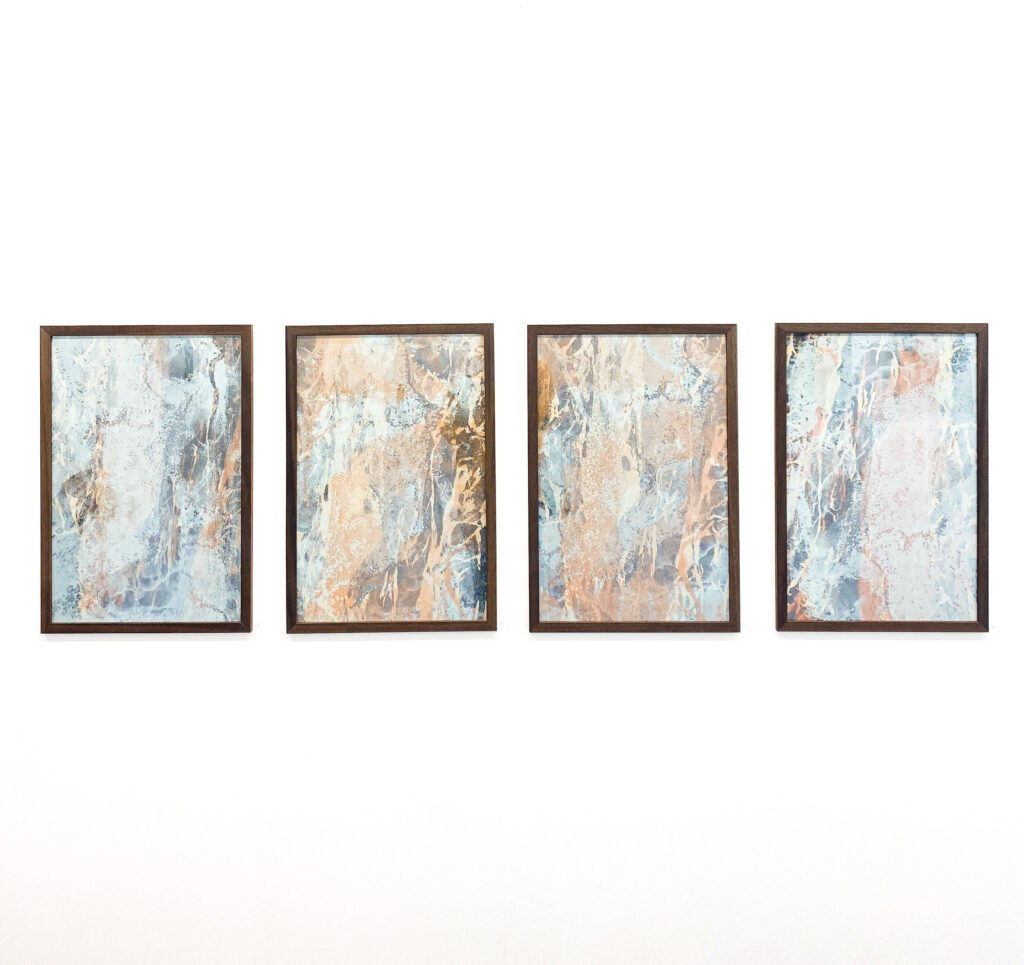
In the drawings, matches and flames are used as tools to burn out Rorschach motifs on paper surfaces. The drawings are an attempt to control and direct fire.
The exhibition title refers to a room or a place where everything is about to resign or be transformed into something new.
An exhibition with contrasts between the beautiful and the cruel, the light and the dark.
“My works for this exhibition are based on constructions of memory and dreams woven into different stories. The works address interests in psychology, within the metaphysical and subconscious, together with the more tangible, human states. One can imagine the works as codes, metaphors, symbols or portraits, inserted into a theatrical landscape with forms that grow into one or more stories.
I show acrylic paintings, where the motif is marsh, pond and swamp landscape, which both refer to something mental, mythical, insurmountable, helpless, and stagnant. According to Japanese creation mythology, it is said that in the beginning the world was just a muddy swamp of water and earth. In relation to my paintings, four wax sculptures are presented. They contain a surrealist idiom, but touch on existential themes.” – Inga S. Søreide
Lorem ipsum dolor sit amet, consectetur adipiscing elit, sed do eiusmod tempor incididunt ut labore et dolore magna aliqua. Ut enim ad minim veniam, quis nostrud exercitation ullamco laboris nisi ut aliquip ex ea commodo consequat. Duis aute irure dolor in reprehenderit in voluptate velit esse cillum dolore eu fugiat nulla pariatur. Excepteur sint occaecat cupidatat non proident, sunt in culpa qui officia deserunt mollit anim id est laborum
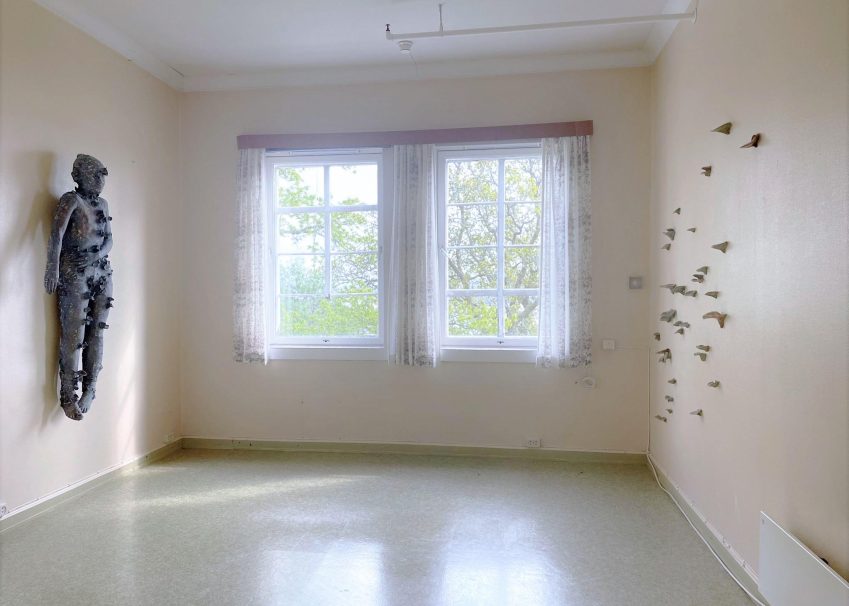
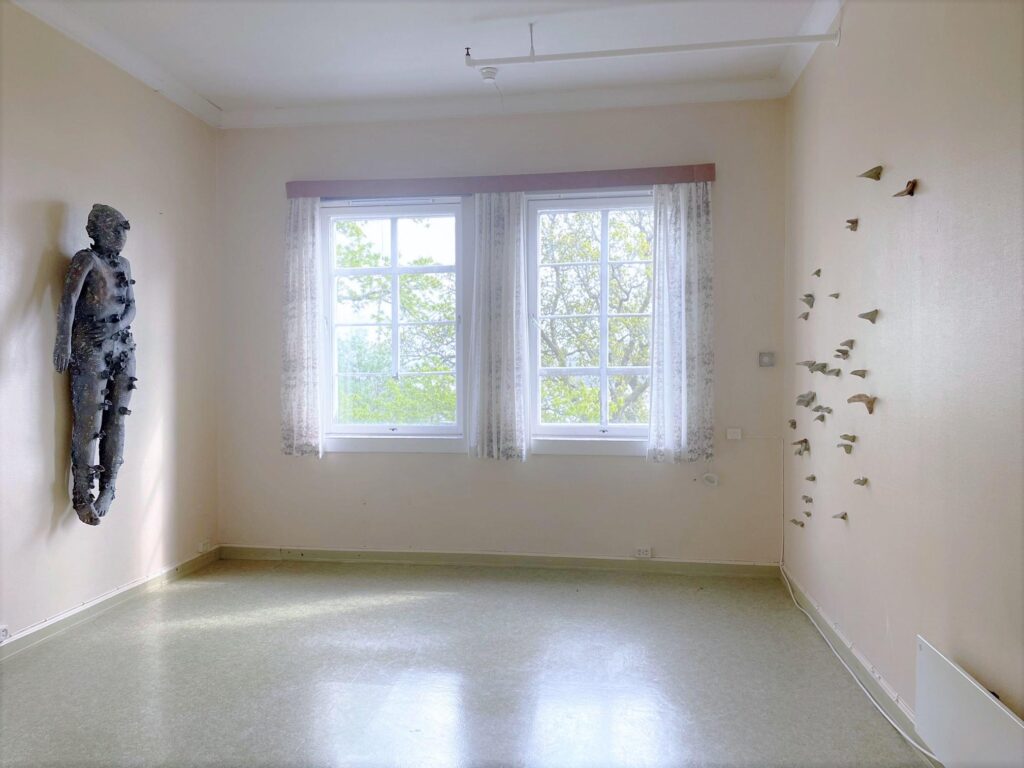
Lindås Tuberculosis Institution – now Lindåstunet – has been a central part of health and care work in Nordhordland for nearly 100 years.
The building reflects and preserves a century of medical history, architectural expression, building techniques, and local craft traditions. Traditional materials from the area were used, and the exterior has remained unchanged.
From 1927 to 1952, it served as a tuberculosis home. In 1954, it was converted into a psychiatric nursing home, described at the time as a place for “sinnsjuke og åndssvake.” Later, around the 1990s, it became a residential and day care center for the elderly.
The house stood empty and neglected for many years.
In 2023, Alver Municipality invited artists to take part in a group exhibition in these historic, worn, and characteristic surroundings – a gesture to bring new life and renewed attention to the building.
From 2025, Lindåstunet will be privately owned.
Lindås Tuberculosis Institution – now Lindåstunet – has been a central part of health and care work in Nordhordland for nearly 100 years.
The building reflects and preserves a century of medical history, architectural expression, building techniques, and local craft traditions. Traditional materials from the area were used, and the exterior has remained unchanged.
From 1927 to 1952, it served as a tuberculosis home. In 1954, it was converted into a psychiatric nursing home, described at the time as a place for “sinnsjuke og åndssvake.” Later, around the 1990s, it became a residential and day care center for the elderly.
The house stood empty and neglected for many years.
In 2023, Alver Municipality invited artists to take part in a group exhibition in these historic, worn, and characteristic surroundings – a gesture to bring new life and renewed attention to the building.
From 2025, Lindåstunet will be privately owned.
H A V G A P E T was an outdoor sculpture exhibition located on Syltøy, at the far western edge of Øygarden facing the open sea.
Nine sculptures were installed across a 3-acre area designated for agriculture, nature, and recreation (LNF). From July 3 to August 28, 2021—a time when much of society remained closed due to Covid—visitors could experience the works in direct dialogue with the elements: wind, weather, and shifting light.
The site was freely accessible 24 hours a day throughout the exhibition period, whether by foot or from the sea.
H A V G A P E T attracted approximately 2,000 visitors and received strong media attention and positive feedback.
The project was initiated, developed, coordinated, and executed by Inga, who also created the sculptures.
Hover for description
H A V G A P E T was an outdoor sculpture exhibition located on Syltøy, at the far western edge of Øygarden facing the open sea.
Nine sculptures were installed across a 3-acre area designated for agriculture, nature, and recreation (LNF). From July 3 to August 28, 2021—a time when much of society remained closed due to Covid—visitors could experience the works in direct dialogue with the elements: wind, weather, and shifting light.
The site was freely accessible 24 hours a day throughout the exhibition period, whether by foot or from the sea.
H A V G A P E T attracted approximately 2,000 visitors and received strong media attention and positive feedback.
The project was initiated, developed, coordinated, and executed by Inga, who also created the sculptures.
The exhibition title refers to a room or a place where everything is about to resign or be transformed into something new.
An exhibition with contrasts between the beautiful and the cruel, the light and the dark.
“My works for this exhibition are based on constructions of memory and dreams woven into different stories. The works address interests in psychology, within the metaphysical and subconscious, together with the more tangible, human states. One can imagine the works as codes, metaphors, symbols or portraits, inserted into a theatrical landscape with forms that grow into one or more stories.
I show acrylic paintings, where the motif is marsh, pond and swamp landscape, which both refer to something mental, mythical, insurmountable, helpless, and stagnant. According to Japanese creation mythology, it is said that in the beginning the world was just a muddy swamp of water and earth. In relation to my paintings, four wax sculptures are presented. They contain a surrealist idiom, but touch on existential themes.” – Inga S. Søreide
Hover for description
The exhibition title refers to a room or a place where everything is about to resign or be transformed into something new.
An exhibition with contrasts between the beautiful and the cruel, the light and the dark.
“My works for this exhibition are based on constructions of memory and dreams woven into different stories. The works address interests in psychology, within the metaphysical and subconscious, together with the more tangible, human states. One can imagine the works as codes, metaphors, symbols or portraits, inserted into a theatrical landscape with forms that grow into one or more stories.
I show acrylic paintings, where the motif is marsh, pond and swamp landscape, which both refer to something mental, mythical, insurmountable, helpless, and stagnant. According to Japanese creation mythology, it is said that in the beginning the world was just a muddy swamp of water and earth. In relation to my paintings, four wax sculptures are presented. They contain a surrealist idiom, but touch on existential themes.” – Inga S. Søreide
In the exhibition Count Backwards, Inga S. Søreide presented works that include four sculptures, a painting and a series of drawings.
The exhibition refers to themes such as psychology, metaphysics, Japanese creation mythology and the human condition.
One of the sculptures, Dritt!, shows a head with fluid flowing out of the eye. The work Self-Portrait with Candle shows a wax sculpture that is identical to the artist. A candle is placed on the forehead and burns so that sebum drips down the face.
Another larger sculptural work, FishWoman, is a combination of fish and human.
In the paintings, the motifs are swamps and marsh landscapes where the sculptures appear in various situations.
In the drawings, matches and flames are used as tools to burn out Rorschach motifs on paper surfaces. The drawings are an attempt to control and direct fire.
Hover for description
In the exhibition Count Backwards, Inga S. Søreide presented works that include four sculptures, a painting and a series of drawings.
The exhibition refers to themes such as psychology, metaphysics, Japanese creation mythology and the human condition.
One of the sculptures, Dritt!, shows a head with fluid flowing out of the eye. The work Self-Portrait with Candle shows a wax sculpture that is identical to the artist. A candle is placed on the forehead and burns so that sebum drips down the face.
Another larger sculptural work, FishWoman, is a combination of fish and human.
In the paintings, the motifs are swamps and marsh landscapes where the sculptures appear in various situations.
In the drawings, matches and flames are used as tools to burn out Rorschach motifs on paper surfaces. The drawings are an attempt to control and direct fire.
Lindås Tuberculosis Institution – now Lindåstunet – has been a central part of health and care work in Nordhordland for nearly 100 years.
The building reflects and preserves a century of medical history, architectural expression, building techniques, and local craft traditions. Traditional materials from the area were used, and the exterior has remained unchanged.
From 1927 to 1952, it served as a tuberculosis home. In 1954, it was converted into a psychiatric nursing home, described at the time as a place for “sinnsjuke og åndssvake.” Later, around the 1990s, it became a residential and day care center for the elderly.
The house stood empty and neglected for many years.
In 2023, Alver Municipality invited artists to take part in a group exhibition in these historic, worn, and characteristic surroundings – a gesture to bring new life and renewed attention to the building.
From 2025, Lindåstunet will be privately owned.
Hover for description
Lindås Tuberculosis Institution – now Lindåstunet – has been a central part of health and care work in Nordhordland for nearly 100 years.
The building reflects and preserves a century of medical history, architectural expression, building techniques, and local craft traditions. Traditional materials from the area were used, and the exterior has remained unchanged.
From 1927 to 1952, it served as a tuberculosis home. In 1954, it was converted into a psychiatric nursing home, described at the time as a place for “sinnsjuke og åndssvake.” Later, around the 1990s, it became a residential and day care center for the elderly.
The house stood empty and neglected for many years.
In 2023, Alver Municipality invited artists to take part in a group exhibition in these historic, worn, and characteristic surroundings – a gesture to bring new life and renewed attention to the building.
From 2025, Lindåstunet will be privately owned.
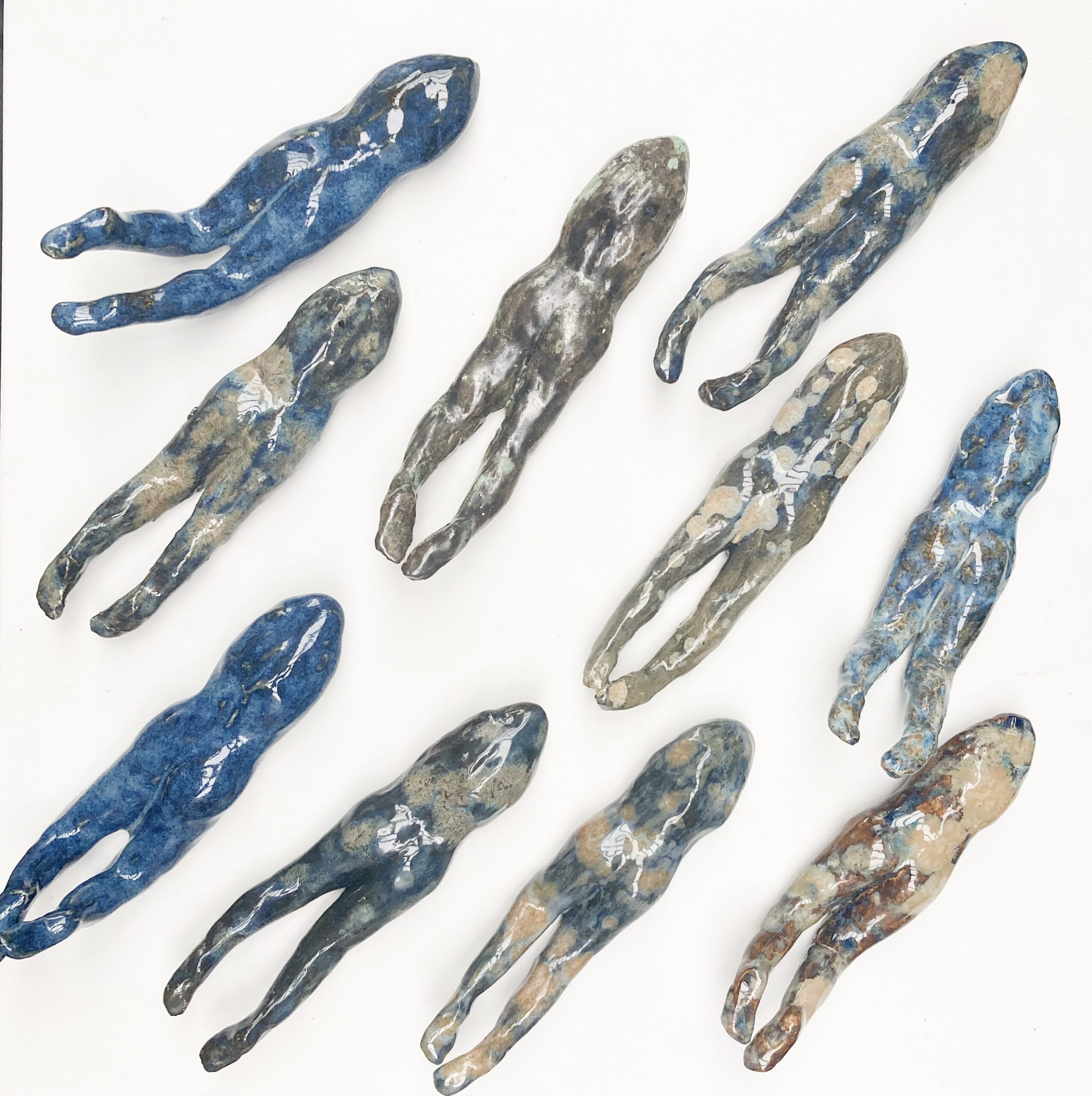
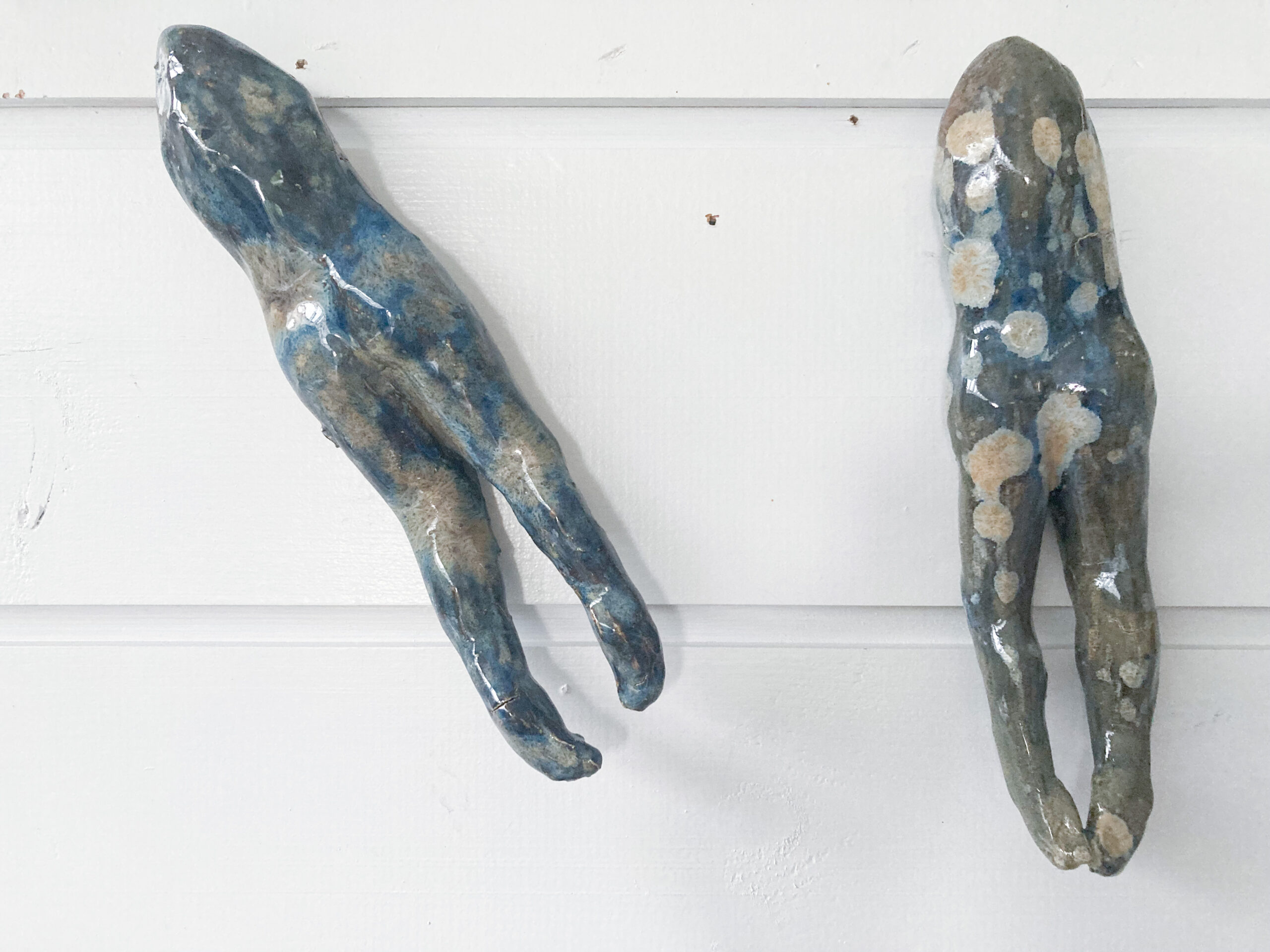
The exhibition deals with a place or state without plan, without level and is a connection between a physical and a psychological place. A place where things can flow together, resign or go in circles.
Themes such as evolutionary theory, metaphysics and mythology are central. The exhibition is inspired by Japanese creation mythology, where all life begins in the swamp and marsh.
Hover for description
The exhibition deals with a place or state without plan, without level and is a connection between a physical and a psychological place. A place where things can flow together, resign or go in circles.
Themes such as evolutionary theory, metaphysics and mythology are central. The exhibition is inspired by Japanese creation mythology, where all life begins in the swamp and marsh.
Forms are not fixed. The form, function and appearance of an organism are not fixed, the interaction between organisms is not fixed. But the content, the secret of the cell, the order on the globe, is not fixed. The form of the interaction is not fixed. But that it is a continuous interaction, an eternal movement, is fixed.
Frøydis Sollid Simonsen. Every morning I crawl up from the sea (Gyldendal 2013).
The exhibition title “Det brer seg” refers to something that is growing, in a movement. The words can function as a backdrop for the motifs, with a reflexive circle, where things extend from a start and outwards.
The exhibition contains new works, which are presented in a larger installation, with different narratives and take shape in different media and formats.
The starting point is parts of the human body, where artisanal processes such as modeling and casting are used. Furthermore, these parts are connected with other forms and objects, often found materials or leftovers. The intuitive and subconscious play a major role in the practice.
The exhibition has a text written by philosopher Rune Salomonsen.
Inga has previously had exhibitions at, among others, Galleri GAD (Oslo), in Örebro Kunsthall, at Galleri 21 (Malmö), Visningsrommet USF, participated in group exhibitions such as at Høstutstillingen, in Kunstnerforbundet, Haugar Vestfold Kunstmuseum, Forumbox (Helsinki) and others. This year she is participating in the Vestlandsutstillingen.
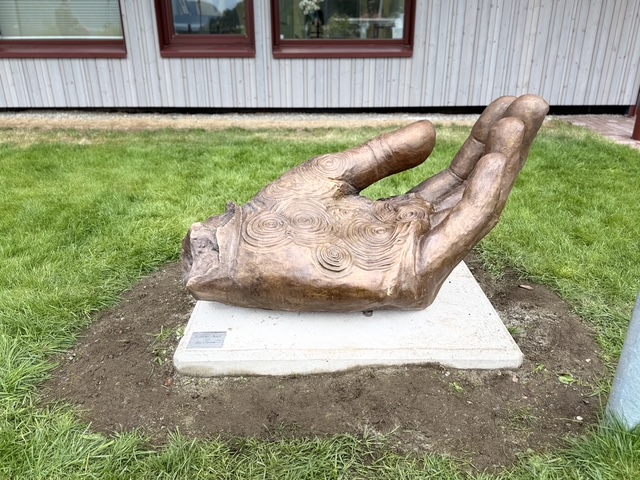
Inga has education from the Academy of Fine Arts in Bergen, the Kunsthochschule Berlin-Weissensee and the Norwegian Academy of Fine Arts in Oslo.
Hover for description
Forms are not fixed. The form, function and appearance of an organism are not fixed, the interaction between organisms is not fixed. But the content, the secret of the cell, the order on the globe, is not fixed. The form of the interaction is not fixed. But that it is a continuous interaction, an eternal movement, is fixed.
Frøydis Sollid Simonsen. Every morning I crawl up from the sea (Gyldendal 2013).
The exhibition title “Det brer seg” refers to something that is growing, in a movement. The words can function as a backdrop for the motifs, with a reflexive circle, where things extend from a start and outwards.
The exhibition contains new works, which are presented in a larger installation, with different narratives and take shape in different media and formats.
The starting point is parts of the human body, where artisanal processes such as modeling and casting are used. Furthermore, these parts are connected with other forms and objects, often found materials or leftovers. The intuitive and subconscious play a major role in the practice.
The exhibition has a text written by philosopher Rune Salomonsen.
Inga has previously had exhibitions at, among others, Galleri GAD (Oslo), in Örebro Kunsthall, at Galleri 21 (Malmö), Visningsrommet USF, participated in group exhibitions such as at Høstutstillingen, in Kunstnerforbundet, Haugar Vestfold Kunstmuseum, Forumbox (Helsinki) and others. This year she is participating in the Vestlandsutstillingen.
Inga has education from the Academy of Fine Arts in Bergen, the Kunsthochschule Berlin-Weissensee and the Norwegian Academy of Fine Arts in Oslo.
“Forms are not fixed. The form, function and appearance of an organism are not fixed, the interaction between organisms is not fixed. But the content, the secret of the cell, the order on the globe, is not fixed. The form of the interaction is not fixed. But that it is a continuous interaction, an eternal movement, is fixed.”
Frøydis Sollid Simonsen. Every morning I crawl up from the sea (Gyldendal 2013).
The exhibition title “Det brer seg” refers to something that is growing, in a movement. The words can function as a backdrop for the motifs, with a reflexive circle, where things extend from a start and outwards.
The exhibition contains new works, which are presented in a larger installation, with different narratives and take shape in different media and formats.
The starting point is parts of the human body, where artisanal processes such as modeling and casting are used. Furthermore, these parts are connected with other forms and objects, often found materials or leftovers. The intuitive and subconscious play a major role in the practice.
The exhibition has a text written by philosopher Rune Salomonsen.
Inga has previously had exhibitions at, among others, Galleri GAD (Oslo), in Örebro Kunsthall, at Galleri 21 (Malmö), Visningsrommet USF, participated in group exhibitions such as at Høstutstillingen, in Kunstnerforbundet, Haugar Vestfold Kunstmuseum, Forumbox (Helsinki) and others. This year she is participating in the Vestlandsutstillingen.
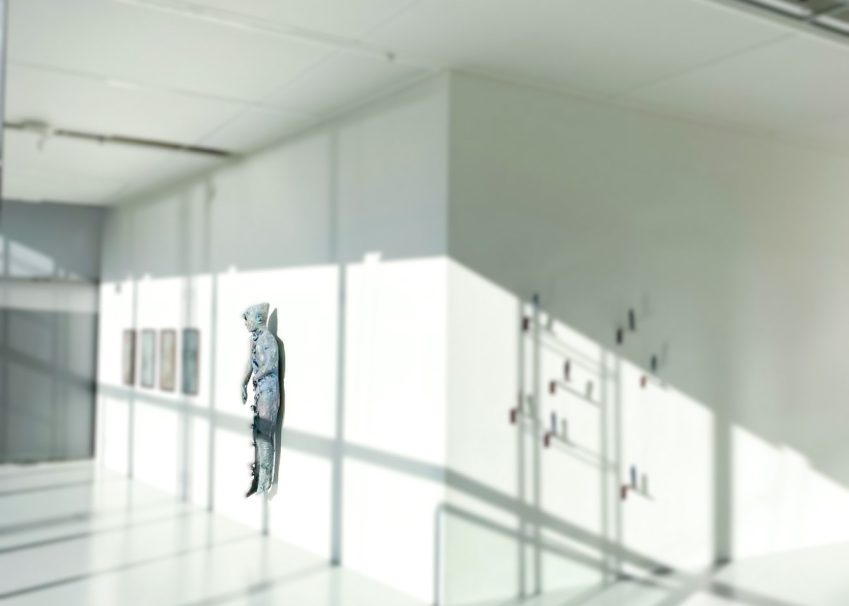
Hover for description
“Forms are not fixed. The form, function and appearance of an organism are not fixed, the interaction between organisms is not fixed. But the content, the secret of the cell, the order on the globe, is not fixed. The form of the interaction is not fixed. But that it is a continuous interaction, an eternal movement, is fixed.”
Frøydis Sollid Simonsen. Every morning I crawl up from the sea (Gyldendal 2013).
The exhibition title “Det brer seg” refers to something that is growing, in a movement. The words can function as a backdrop for the motifs, with a reflexive circle, where things extend from a start and outwards.
The exhibition contains new works, which are presented in a larger installation, with different narratives and take shape in different media and formats.
The starting point is parts of the human body, where artisanal processes such as modeling and casting are used. Furthermore, these parts are connected with other forms and objects, often found materials or leftovers. The intuitive and subconscious play a major role in the practice.
The exhibition has a text written by philosopher Rune Salomonsen.
Inga has previously had exhibitions at, among others, Galleri GAD (Oslo), in Örebro Kunsthall, at Galleri 21 (Malmö), Visningsrommet USF, participated in group exhibitions such as at Høstutstillingen, in Kunstnerforbundet, Haugar Vestfold Kunstmuseum, Forumbox (Helsinki) and others. This year she is participating in the Vestlandsutstillingen.
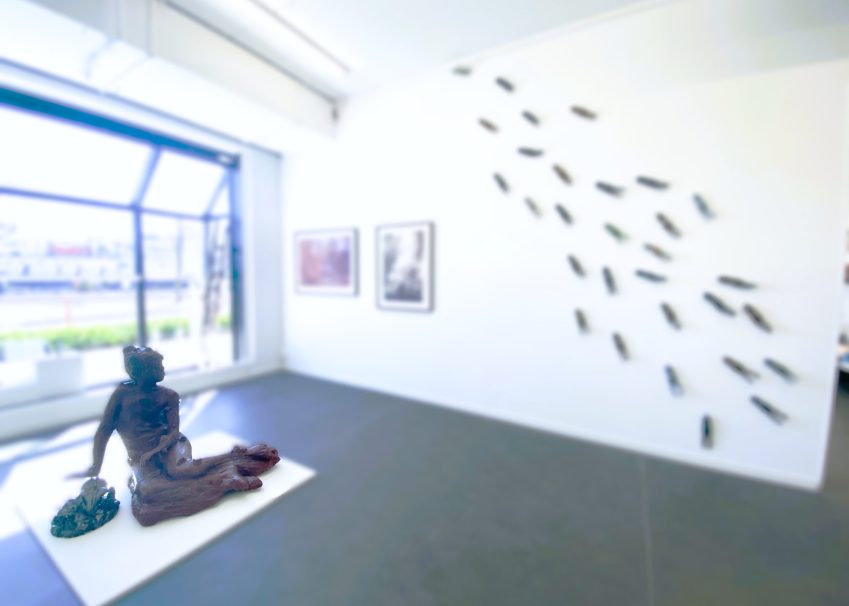
EIN GJENKLANG I KRANERIET
“A Resonance in the Skull” evokes a sense of movement—something echoing, repeating, or reverberating. Perhaps even something on the verge of breaking down, surrendering, or looping endlessly.
These words serve as a backdrop for the works in this exhibition: pieces in flux and transformation, echoing themes of evolution and evolutionary psychology.
Inga’s works balance between the familiar and the unknown, nature and culture.
Reality is often turned on its head—inviting reflections on human existence, our states of being, and the conditions we live within.
Through these juxtapositions, my aim is to discover new meanings that emerge at the edges—within contrasts, tensions, and the outer limits.
Hover for description
EIN GJENKLANG I KRANERIET
“A Resonance in the Skull” evokes a sense of movement—something echoing, repeating, or reverberating. Perhaps even something on the verge of breaking down, surrendering, or looping endlessly.
These words serve as a backdrop for the works in this exhibition: pieces in flux and transformation, echoing themes of evolution and evolutionary psychology.
Inga’s works balance between the familiar and the unknown, nature and culture.
Reality is often turned on its head—inviting reflections on human existence, our states of being, and the conditions we live within.
Through these juxtapositions, my aim is to discover new meanings that emerge at the edges—within contrasts, tensions, and the outer limits.
Forms are not fixed. The form, function and appearance of an organism are not fixed, the interaction between organisms is not fixed. But the content, the secret of the cell, the order on the globe, is not fixed. The form of the interaction is not fixed. But that it is a continuous interaction, an eternal movement, is fixed.
Frøydis Sollid Simonsen. Every morning I crawl up from the sea (Gyldendal 2013).
The exhibition title “Det brer seg” refers to something that is growing, in a movement. The words can function as a backdrop for the motifs, with a reflexive circle, where things extend from a start and outwards.
The exhibition contains new works, which are presented in a larger installation, with different narratives and take shape in different media and formats.
The starting point is parts of the human body, where artisanal processes such as modeling and casting are used. Furthermore, these parts are connected with other forms and objects, often found materials or leftovers. The intuitive and subconscious play a major role in the practice.
The exhibition has a text written by philosopher Rune Salomonsen.
Inga has previously had exhibitions at, among others, Galleri GAD (Oslo), in Örebro Kunsthall, at Galleri 21 (Malmö), Visningsrommet USF, participated in group exhibitions such as at Høstutstillingen, in Kunstnerforbundet, Haugar Vestfold Kunstmuseum, Forumbox (Helsinki) and others. This year she is participating in the Vestlandsutstillingen.
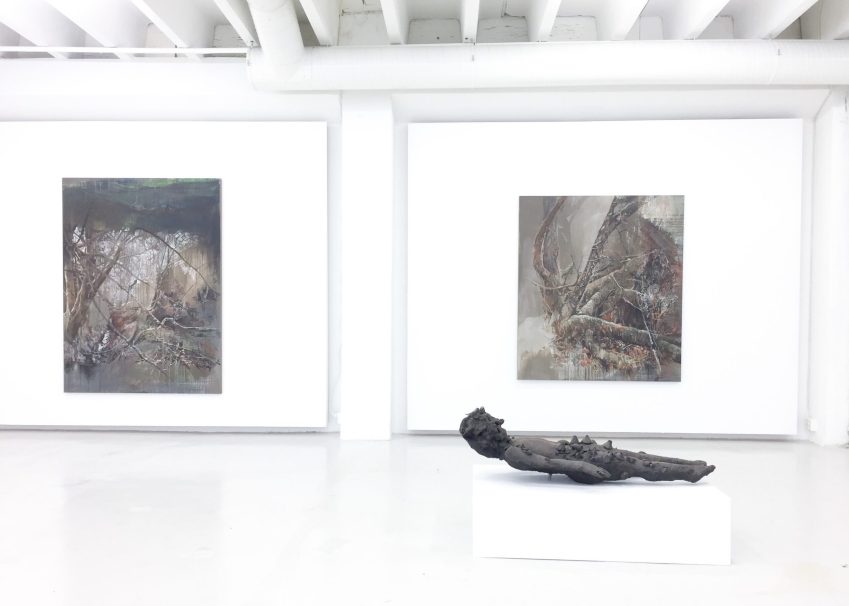
Inga has education from the Academy of Fine Arts in Bergen, the Kunsthochschule Berlin-Weissensee and the Norwegian Academy of Fine Arts in Oslo.
Hover for description
Forms are not fixed. The form, function and appearance of an organism are not fixed, the interaction between organisms is not fixed. But the content, the secret of the cell, the order on the globe, is not fixed. The form of the interaction is not fixed. But that it is a continuous interaction, an eternal movement, is fixed.
Frøydis Sollid Simonsen. Every morning I crawl up from the sea (Gyldendal 2013).
The exhibition title “Det brer seg” refers to something that is growing, in a movement. The words can function as a backdrop for the motifs, with a reflexive circle, where things extend from a start and outwards.
The exhibition contains new works, which are presented in a larger installation, with different narratives and take shape in different media and formats.
The starting point is parts of the human body, where artisanal processes such as modeling and casting are used. Furthermore, these parts are connected with other forms and objects, often found materials or leftovers. The intuitive and subconscious play a major role in the practice.
The exhibition has a text written by philosopher Rune Salomonsen.
Inga has previously had exhibitions at, among others, Galleri GAD (Oslo), in Örebro Kunsthall, at Galleri 21 (Malmö), Visningsrommet USF, participated in group exhibitions such as at Høstutstillingen, in Kunstnerforbundet, Haugar Vestfold Kunstmuseum, Forumbox (Helsinki) and others. This year she is participating in the Vestlandsutstillingen.
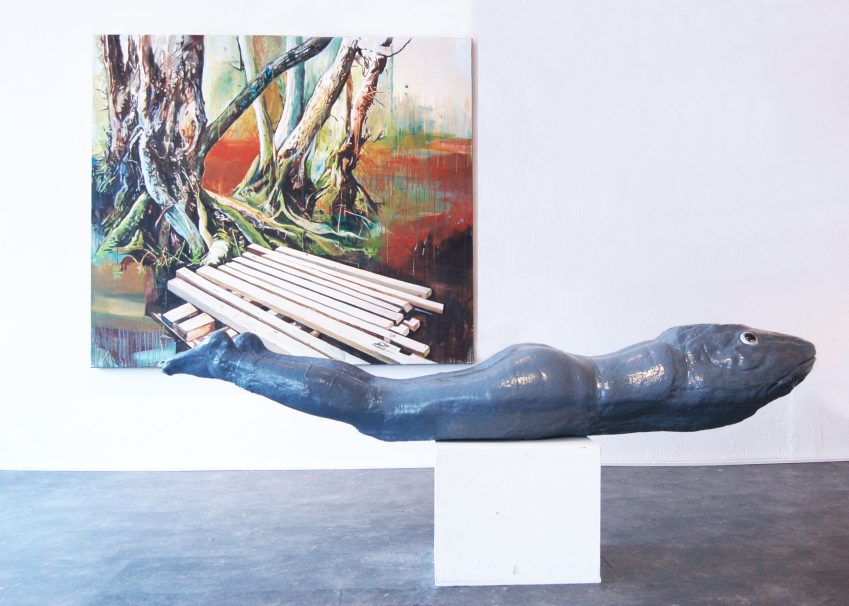
Inga has education from the Academy of Fine Arts in Bergen, the Kunsthochschule Berlin-Weissensee and the Norwegian Academy of Fine Arts in Oslo.
Hover for description
60°18′36″N 4°58′48″E
H A V G A P E T was an outdoor sculpture exhibition located on Syltøy, at the far western edge of Øygarden facing the open sea.
Nine sculptures were installed across a 3-acre area designated for agriculture, nature, and recreation (LNF). From July 3 to August 28, 2021—a time when much of society remained closed due to Covid—visitors could experience the works in direct dialogue with the elements: wind, weather, and shifting light.
The site was freely accessible 24 hours a day throughout the exhibition period, whether by foot or from the sea.
H A V G A P E T attracted approximately 2,000 visitors and received strong media attention and positive feedback.
The project was initiated, developed, coordinated, and executed by Inga, who also created the sculptures.
Hover for description
60°18′36″N 4°58′48″E
H A V G A P E T was an outdoor sculpture exhibition located on Syltøy, at the far western edge of Øygarden facing the open sea.
Nine sculptures were installed across a 3-acre area designated for agriculture, nature, and recreation (LNF). From July 3 to August 28, 2021—a time when much of society remained closed due to Covid—visitors could experience the works in direct dialogue with the elements: wind, weather, and shifting light.
The site was freely accessible 24 hours a day throughout the exhibition period, whether by foot or from the sea.
H A V G A P E T attracted approximately 2,000 visitors and received strong media attention and positive feedback.
The project was initiated, developed, coordinated, and executed by Inga, who also created the sculptures.